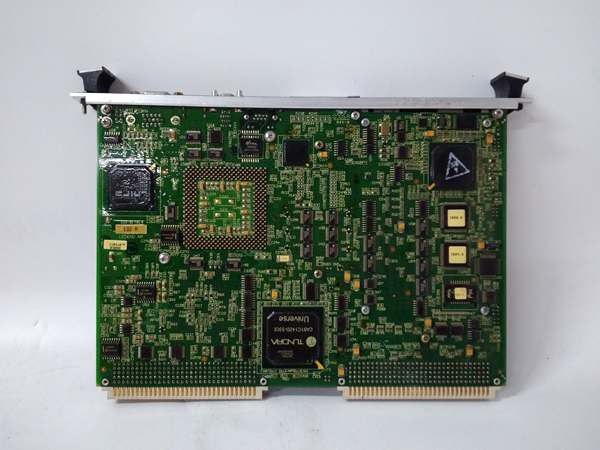
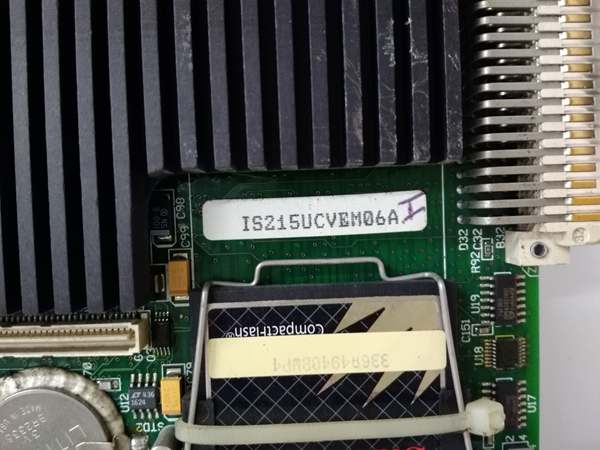
Description
Hard-Numbers: Technical Specifications
-
Processor: 300 MHz Intel Celeron (x86 architecture)
-
Memory: 128 MB flash memory (firmware/storage)
-
Operating System: QNX Neutrino real-time OS
-
Bus Interface: VME64 (6U form factor, single-slot)
-
Ethernet: 10BaseT/100BaseTX (RJ-45)
, multiple ports of varying shapes/sizes
-
Serial Ports: COM ports (RS-232) on front panel
-
Storage: SD card slot for data logging
-
Power Supply: +5 VDC from VME backplane
-
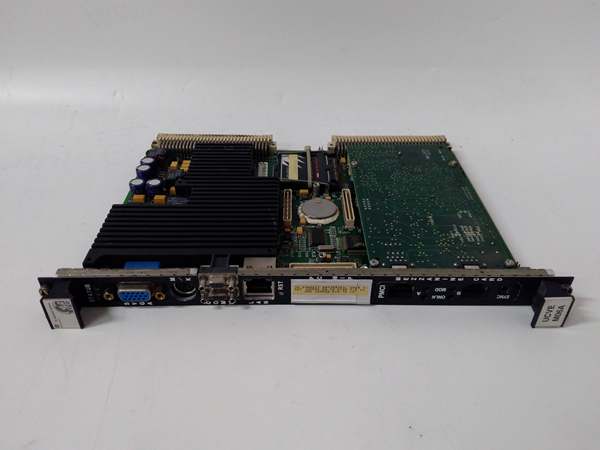
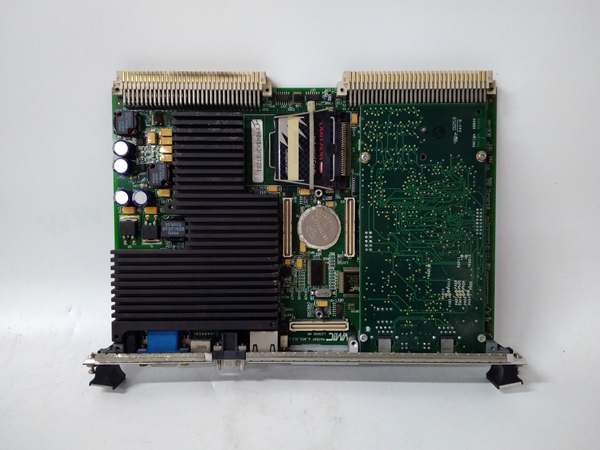
Cooling: Large passive heatsink (occupies ~50% of board area)
-
Operating Temperature: -30°C to +65°C
-
Dimensions: 15.9 cm (H) × 17.8 cm (W) or 6U VME standard
-
Weight: 0.9 kg (2 lbs)
-
Manual: GEH-6421
-
Related Components: IS200EPDMG1BAA (exciter power distribution), IS215VPROH2B (emergency protection)

GE IS215UCVEM06A
The Real-World Problem It Solves
You know the scenario: a Mark VI turbine control rack where the original VME CPU is failing, and you need a replacement that maintains compatibility with legacy IS200-series I/O boards while providing Ethernet connectivity for HMI integration. The IS215UCVEM06A bridges that gap—it’s a 300 MHz Celeron-based VME controller that drops into existing Mark VI chassis, runs the proven QNX real-time OS, and provides multiple Ethernet and serial ports for communication to operator stations and peer controllers. Unlike the newer IS420-series for Mark VIe, this maintains backward compatibility with your existing VME backplane and I/O infrastructure.
Where you’ll typically find it:
-
Legacy Mark VI control racks in Frame 7/9 gas turbines where the original UCVE or UCVEM controller needs replacement
-
Steam turbine governor control systems in refineries and paper mills running Mark VI (not upgraded to Mark VIe)
-
Backup controller spares for critical turbine applications where Mark VIe migration hasn’t been approved
Bottom line: It keeps aging but reliable Mark VI control systems operational by providing a compatible VME CPU replacement with modern Ethernet connectivity, avoiding the cost and risk of full Mark VIe upgrades.
Hardware Architecture & Under-the-Hood Logic
The IS215UCVEM06A is a VME-based single board computer, not a distributed I/O pack. It mounts in a 6U VME slot and acts as the bus master for the Mark VI control rack, polling I/O boards (IS200-series) across the VME backplane while handling Ethernet communication to the HMI and other controllers. The large heatsink indicates this is a passively cooled design—no fans to fail in vibrating turbine control cabinets.
Signal flow and processing logic:
-
VME Bus Master: The 300 MHz Celeron initiates VME bus cycles to read inputs from and write outputs to IS200-series I/O boards (discrete I/O, analog I/O, speed inputs)
-
Control Execution: Under QNX, the processor executes the turbine control application—speed control, fuel scheduling, protection logic—with deterministic timing
-
Ethernet Communication: Multiple Ethernet ports provide redundant paths to operator stations (CIMPLICITY) and peer controllers; front panel LEDs indicate link status and activity
-
Serial Backup: COM ports provide legacy serial communication for configuration, diagnostics, or connection to older DCS interfaces
-
Data Logging: The SD card slot stores event logs, alarm history, and diagnostic data for post-trip analysis
GE IS215UCVEM06A
Field Service Pitfalls: What Rookies Get Wrong
Confusing Mark VI with Mark VIe Rookies see “UCVEM” and assume this works in Mark VIe systems with IONet and distributed I/O packs. It doesn’t. The IS215UCVEM06A is for Mark VI (VME backplane, IS200 I/O), not Mark VIe (Ethernet I/O packs like IS420YDOAS). The connectors, software, and architecture are completely different.
Field Rule: Verify your system generation before ordering. Mark VI = VME backplane, IS200 I/O, UCVEM controllers. Mark VIe = distributed I/O packs, UCS controllers, IONet. The IS215UCVEM06A will not function in a Mark VIe system and may damage the backplane if forced.
Ignoring the Heatsink Orientation The heatsink occupies half the board area and must have unobstructed airflow. Rookies install the board in a VME chassis with the heatsink against the adjacent board or the chassis wall. Thermal shutdown occurs within minutes.
Quick Fix: Verify the VME chassis slot spacing—Mark VI racks have specific keep-out zones for the UCVEM heatsink. If the board doesn’t slide in smoothly, check for bent sheet metal or foreign objects blocking the heatsink path. The heatsink should face the chassis airflow direction (typically front-to-back). If the chassis lacks forced air, add a fan tray immediately—passive cooling requires at least 200 LFM (linear feet per minute) airflow across the fins.
Forgetting the SD Card for Data Logging The SD card slot on the front panel is for event logging and diagnostics. Rookies install the board without an SD card and lose all diagnostic history when the controller faults. The QNX OS can run without it, but you lose the “black box” data needed for root cause analysis.
Field Rule: Install a high-quality industrial SD card (2GB minimum, SLC type for reliability) in the front panel slot before commissioning. The card holds the syslog, alarm history, and crash dumps. When replacing a failed UCVEM, remove the SD card from the old unit and install it in the replacement—otherwise you lose the historical data needed to diagnose what caused the original failure. Replace the SD card every 3 years; flash memory wears out with write cycles.