Description
Product Introduction
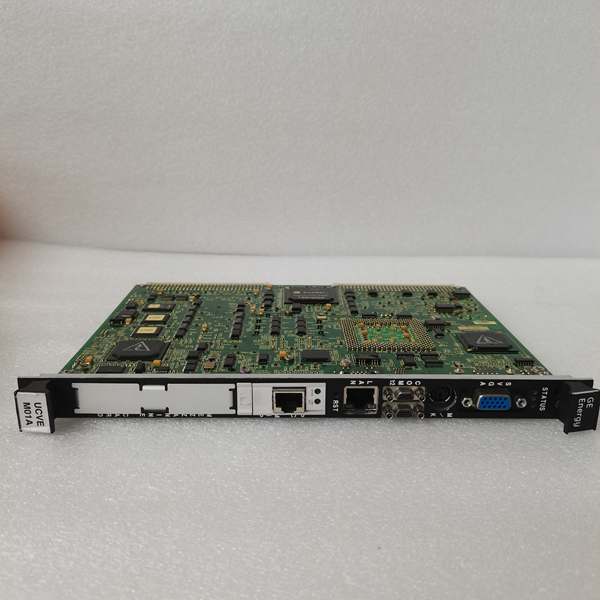
The is the core “brain” of the Mark VIe turbine control system, occupying the Controller slot in the VME rack. It runs the QNX Real-Time OS and hosts the control application (.appl) to manage sequencing, speed/load control, and protection logic.
The “H2AF” suffix is significant: this revision typically features Fiber Optic IONet interfaces (upgraded from copper in earlier “AE” revisions) for noise immunity in high-EMI environments (e.g., VFD-heavy plants). It supports Triple Modular Redundant (TMR) architectures, where three boards (R, S, T) vote on outputs to ensure fault tolerance. The unit houses a 300 MHz Intel Celeron processor with 32 MB DRAM and battery-backed SRAM for retentive variables .
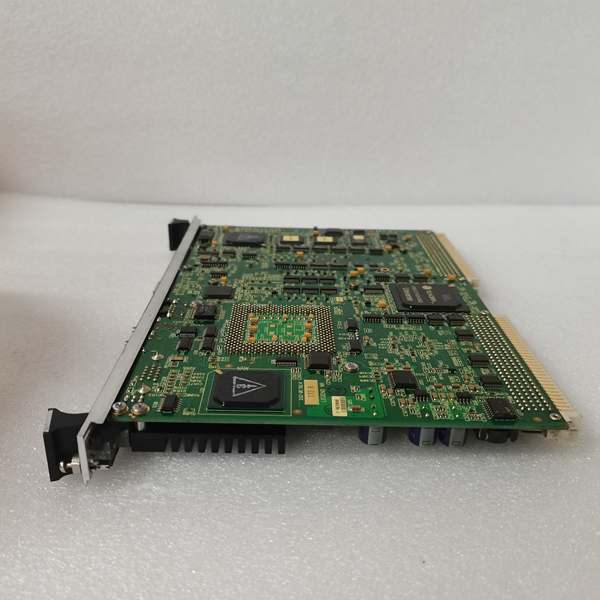
IS215UCVEH2AF
Key Technical Specifications
- System Role: UCVE (Universal Control & Voter Electronics)
- Processor: Intel Celeron, 300 MHz
- Memory: 32 MB DRAM (Runtime), 8 KB Battery-Backed SRAM (NVRAM)
- Storage: CompactFlash Slot (16 MB or 128 MB card for OS/App)
- Networking: 2x IONet Ports (Often LC Fiber in “AF” rev, 100 Mbps)
- Serial: 2x RS-232 (Front Panel, for Diags/BootMon)
- VME Interface: 32-bit, Master/Slave Capable
- Power Req: +5 V DC (~6-8 A), +12/-12 V DC (Low current)
- Indicators: OK (Health), Active (Voting), Link/Act LEDs
- Temp Range: -30 °C to +65 °C
- Safety: TMR Capable (IEC 61508 SIL-3 context)
Quality Control Process (Engineer’s Perspective)
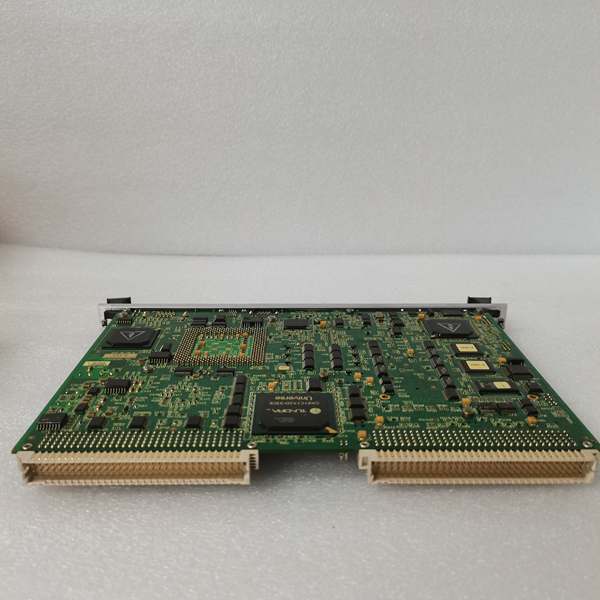
- Incoming Verification: Match serial to manifest. Inspect 96-pin VME fingers (P1/P2) for gold creep or carbon arcs. Check the CompactFlash card seat—vibration loosens these, causing “Boot Device Not Found” errors.
- Boot Test: Seat in a Mark VIe rack with 5V DC. Monitor “OK” LED. It should blink (boot) then go Steady Green. A blinking “OK” post-boot indicates a checksum mismatch or missing
.applfile. - Fiber Link Test: Connect Port 1 to a VCMI/IONet switch via LC fiber. Verify Link LED illuminates. Run a ping flood from ToolboxST; 0% packet loss is required for TMR sync.
- NVRAM Battery Check: Measure the onboard coin cell (usually CR2032 or tabbed). Voltage < 2.8V risks losing setpoints during power loss. Replace if weak.
- Final QC & Packaging: Clean VME fingers with isopropanol. Bag in rigid ESD foam (6U is heavy). Label “QC Passed – Boot/Fiber OK” with the date.
Replacement Pitfall Guide
❗ Application Download (Mandatory): The hardware is useless without the Control Application (.appl) and I/O Config (.cfg).
- Scenario:You swap the board, power up, “OK” blinks 5x, stops. It’s waiting for code.
- Fix:You must connect via ToolboxST and “Send Application” from the project file. Always back up the old unit’s
.applvia File > Retrieve before swapping.
❗ Fiber vs Copper (AE vs AF): If upgrading from IS215UCVEH2AE(usually Copper/RJ45) to H2AF(Fiber/LC), you must change the cabling. Attempting to plug an RJ45 copper patch into a Fiber port damages the transceiver. Ensure site has LC-LC multimode fibers.
❗ TMR Synchronization: In a TMR rack (R, S, T), all three UCVE boards should ideally be H2AF. Mixing an “AF” with an “AE” can cause “Vote Mismatch” or timing skew during the “Align” phase, forcing the system to Simplex. If mixing, verify timing parameters in ToolboxST.
❗ CompactFlash Compatibility: The “AF” rev often ships with newer CF card formats (e.g., 128MB Industrial). Swapping in an old 16MB card from a Mark VI era might fail to boot if the firmware expects larger block sizes.
❗ ESD to Fingers: The 96-pin P1/P2 are dense. Discharge to the VME chassis before insertion—static in dry shops (common in northern China winters) kills the SDRAM instantly.
Keep these in mind and you’ll cut 90% of rework time.
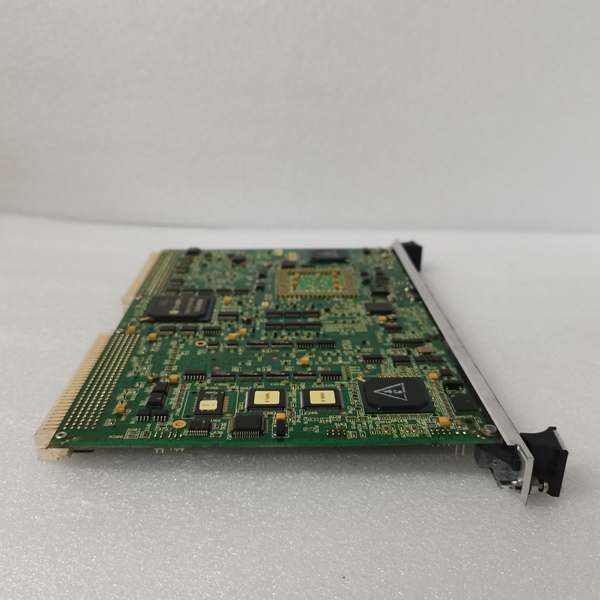
IS215UCVEH2AF
Compatibility Matrix & Benchmarks
- → GE IS215UCVEH2AE: Upgrade/Compatible— “AF” usually upgrades Copper to Fiber IONet. Electrically compatible, but requires fiber cabling. Software (
.appl) is generally forward compatible. - → GE IS200UCVEH2A: Form Factor Diff— IS200 is often the Simplex/Lower tier pack; IS215 is the Full 6U VME Assembly. Do not force an IS200 into an IS215 slot without the carrier bracket.
- → Mark VIe VME Rack (C/IO Core): Direct— Slides into Controller Slot (typically Slot 2 or 3).
- Boot Time: ~30-45 seconds (To Steady “OK”)
- Cycle Time: ~20-50 ms (Typical Control Loop Execution)
- Data Throughput: 100 Mbps (IONet Deterministic)