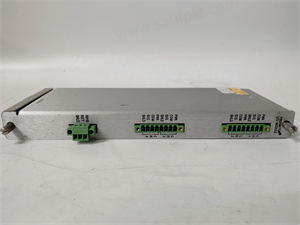
Description
Product Introduction
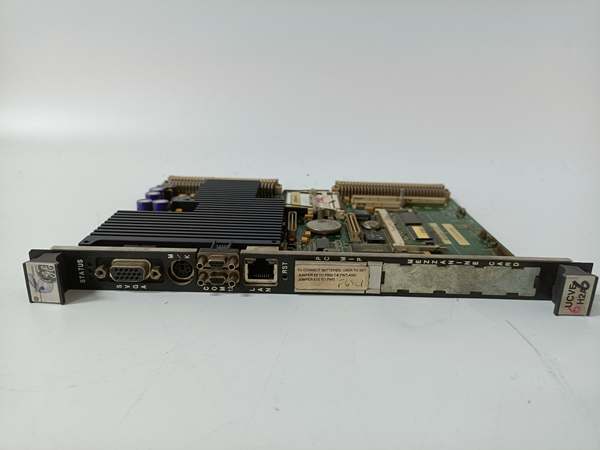
The is a core controller module (Single Board Computer) used in GE’s Mark VI turbine control systems. It occupies a slot in the VME rack (typically R, S, or T cores) and serves as the “brain” that runs the QNX Real-Time Operating System (RTOS) and the turbine application code (.appl).
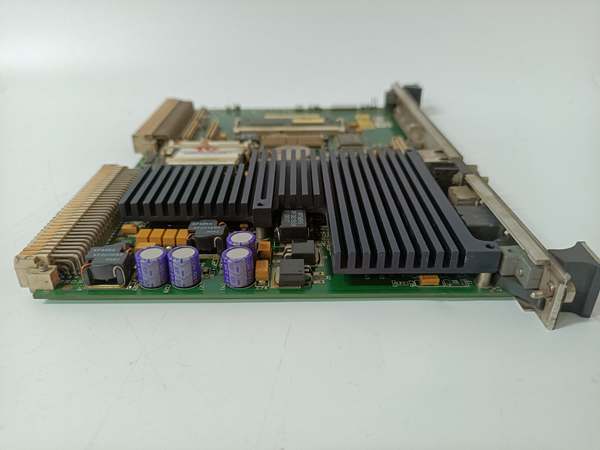
This “H2AB” revision is a 6U VME form-factor board featuring an Intel Celeron 300MHz processor. It handles communication with I/O boards (like SIOB, TRLY, TSVCH) via the VME backplane and interfaces with HMIs or DCS systems via its front-panel Ethernet (RJ45) and serial ports. It supports both Simplex and Triple Modular Redundant (TMR) configurations, making it suitable for critical gas and steam turbine applications .
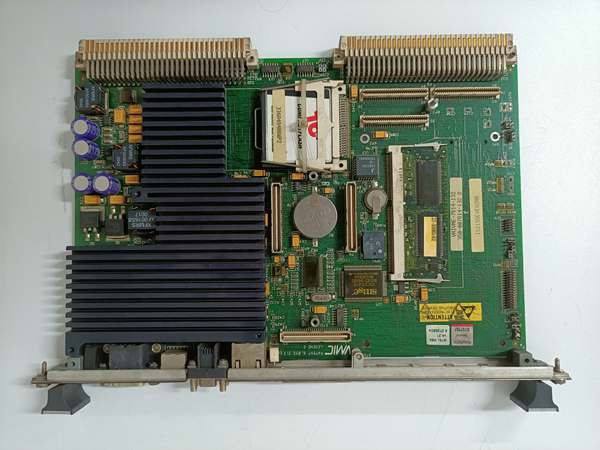
IS215UCVEH2AB
Key Technical Specifications
- System Role: UCVE (Universal Control & Voter Electronics) / Controller
- Processor: Intel Celeron 300 MHz
- Memory (RAM): 32 MB DRAM (Battery-backed options historically available)
- Storage (Flash): 16 MB Flash (For OS & App storage)
- Cache: 128 KB L2 Cache
- Bus Interface: VME (6U Height, Single Slot)
- Front Interfaces:
- 1x RJ45 Ethernet (Often UDH or Control Network)
- 2x RS-232 (COM1/COM2)
- 1x SVGA (Monitor/Display Port)
- Keyboard/Mouse Ports
- Indicators: Status LEDs (Run/Fault/Status)
- Power Req: +5 V DC (Typical 6A, Max 8A)
- OS: QNX Real-Time OS
- Temp Range: -40 °C to +70 °C (Operational)
- Compatibility: Mark VI Systems (May require backplane checks for Mark VIe migration)
Quality Control Process (Engineer’s Perspective)
- Incoming Verification: Match serial to manifest. Inspect the 96-pin VME fingers (P1) for gold creep corrosion (common in humid/coastal plants) or carbon scoring from backplane surges.
- Boot Test: Seat in a Mark VI VME rack with 5V DC. Monitor the Status LEDs. The board should pass POST (Power-On Self-Test) and attempt to load the OS (blinking “Run” light or steady “OK” depending on config).
- Interface Check: Connect a serial cable to COM1. Use a terminal emulator (e.g., PuTTY) to access the BootMon/Loader menu. Verify the processor speed reads 300MHz and memory reports 32MB.
- Thermal/Load: If possible, load a dummy control application. The heatsink should warm evenly; hot spots on the Celeron CPU indicate dried thermal paste (common in refurbished units).
- Final QC & Packaging: Clean VME fingers with isopropanol. Bag in anti-static foam (6U boards are rigid but static-sensitive). Label “QC Passed – Boot/Diags OK”.
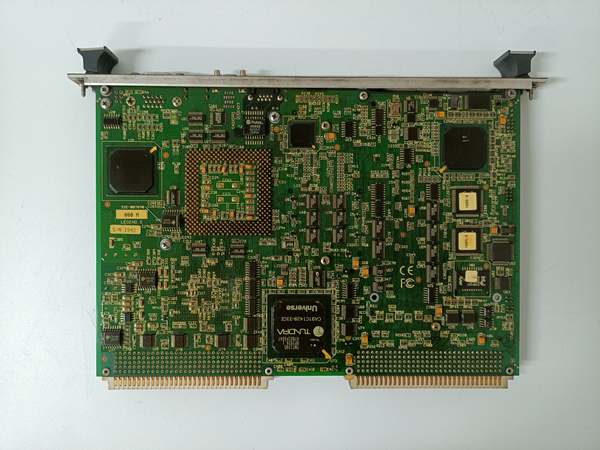
IS215UCVEH2AB
Replacement Pitfall Guide
❗ Firmware/App Mismatch: The is hardware; the “smarts” are in the Application File (.appl) and OS image. Swapping the board without downloading the site-specific .applfile via Toolbox results in a “No Application” state—the turbine will not start. Always have the project file ready on a laptop/USB.
❗ TMR Consistency: In a Triple Modular Redundant (TMR) setup (<R>, <S>, <T>), all three UCVE boards should ideally be the same revision (H2AB). Mixing an H2AB with an older H1A canwork but may cause “Vote Mismatch” or timing skew alarms during alignment. Check the TMR_ALIGNprocedure in GEH-6421.
❗ Battery Hazard (Critical): Many UCVE boards have a coin cell or barrel battery on the underside (for NVRAM retention). If this battery is leaking/corroded, it will eat the PCB traces and cause random “NVRAM Fail” or “Checksum Error” on boot. Check the battery condition before racking.
❗ Backplane Compatibility: While this is a Mark VI board, attempting to force it into a Mark VIe rack (IS215UCVEH2AE) usually requires a backplane change or specific adapter. The “H2AB” is native to Mark VI VME architectures.
❗ ESD Sensitivity: The processor and DRAM are dense. Discharge to the VME chassis frame before insertion—static in dry turbine halls (common in northern China winters) can corrupt the Flash memory invisibly.
Keep these in mind and you’ll cut 90% of rework time.
Compatibility Matrix & Benchmarks
- → GE IS215UCVEH2AE: Architectural Difference— “H2AB” is typically Mark VI (VME). “H2AE” is typically Mark VIe (Enhanced/PC-based). They are not directly interchangeable without system migration/hardware changes.
- → Mark VI VME Rack (R1/S1/T1): Direct— Slides into standard VME slots.
- → Older ICVB Controllers: Replacement— can replace legacy ICVB models, but usually requires updating Ethernet cabling and verifying backplane jumper settings (refer GEH-6421) .
- Execution Speed: ~100,000 logic operations/sec (Typical for 300MHz Celeron)
- Boot Time: ~30-60 seconds (To OS Ready)
- Data Bus: VME64 (Theoretical 40-80 MB/s)