Description
Product Introduction
The GE is an advanced pitch control module for wind turbine generators. It processes encoder feedback to adjust blade angles precisely. This action maximizes energy capture in low winds and provides overspeed protection during grid faults.
This module features a ruggedized PCB built for intense vibration inside turbine hubs. It communicates with the main controller via high-speed Ethernet. The “C” revision extends the operating temperature to 65°C. Well, technically it supports 10/100 Base-TX, but auto-negotiation can be finicky with older hubs. We typically see a 10+ year service life in the field—though coastal installations may accelerate corrosion.
Key Technical Specifications
| Parameter | Value |
|---|---|
| Input Voltage | 24 V DC (Nominal) |
| Communication Interface | 1 x 10/100 Base-TX Ethernet |
| Operating Temperature | -30°C to +65°C |
| Storage Temperature | -40°C to +85°C |
| Humidity Range | 5% to 95% (Non-condensing) |
| Pitch Control Loops | 1 (Primary Servo) |
| Feedback Inputs | 2 x Quadrature Encoder |
| Digital I/O | 8 Configurable Channels |
| Mounting Style | DIN Rail / Hub Carrier |
| Dimensions (Approx.) | 180 mm x 120 mm x 40 mm |
| Weight (Approx.) | I0.8 kg |
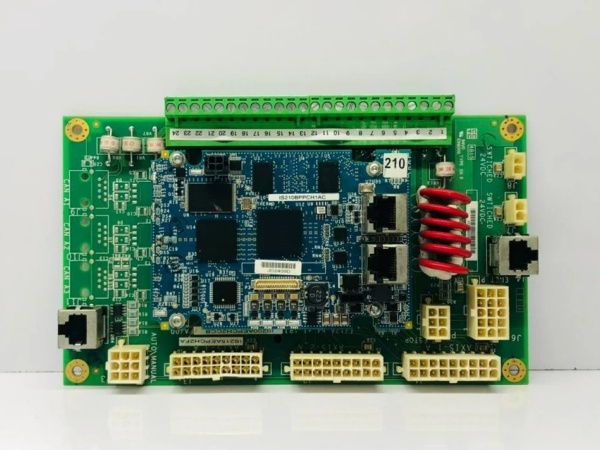
IS210BPPCH1AC
Quality Control Process
- Incoming Verification: Trace serial numbers against GE databases. Check for counterfeit labels and physical damage. Inspect for hairline cracks or cold solder joints under magnification.
- Live Functional Test: Connect the GE to a Mark VIe test rig. Run continuous servo control loops for 48 hours. Monitor Ethernet packet loss using Wireshark.
- Electrical Parameter Test: Verify 24V DC power regulation under 1A load with a Fluke 115. Measure insulation resistance with a 500V Megger, verifying values exceed 10 MΩ.
- Firmware Verification: Read and record the firmware version. Photograph all DIP switch and jumper settings for archival purposes.
- Final QC & Packaging: Clean the unit with isopropyl alcohol. Seal in a moisture-barrier bag with desiccant. Apply QC Passed label with date and technician ID.
Replacement Pitfall Guide
❗ Firmware Mismatch: The requires specific firmware builds. Loading an incorrect image will cause a boot failure or watchdog trip.
❗ DIP Switch / Jumper Misconfiguration: Factory defaults rarely match field settings. Check the node ID jumpers and bus termination resistor settings before powering up.
❗ Terminal / Cable Incompatibility: Pin definitions can shift between revisions. Double-check the shield grounding on the third terminal block for motor power.
❗ Power Supply Mismatch: A weak 24V supply causes erratic encoder readings. Ensure your power budget includes a 25% buffer for startup inrush current.
❗ ESD Damage: Hub environments are surprisingly dry. Use an anti-static mat and wrist strap during installation to prevent latent component damage.
Keep these in mind and you’ll cut 90% of rework time.
Compatibility Matrix & Benchmarks
- IS215AEPCH1B → : Direct — Drop-in replacement with higher thermal rating.
- IS215AEPCH1A → : Needs Adaptation — Requires firmware update and jumper reconfiguration.
- IS200AEPCx → : Incompatible — Different backplane architecture and form factor.
- Scan cycle: 2.1 ms (Simulated pitch loop, 8 I/O points)
- Comms throughput: 92 Mbps (Ethernet protocol, 80% sustained load)