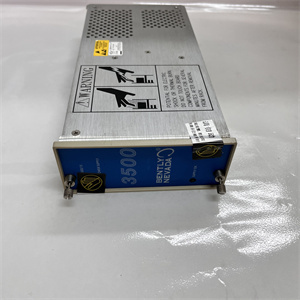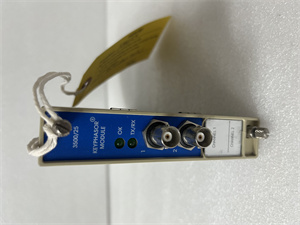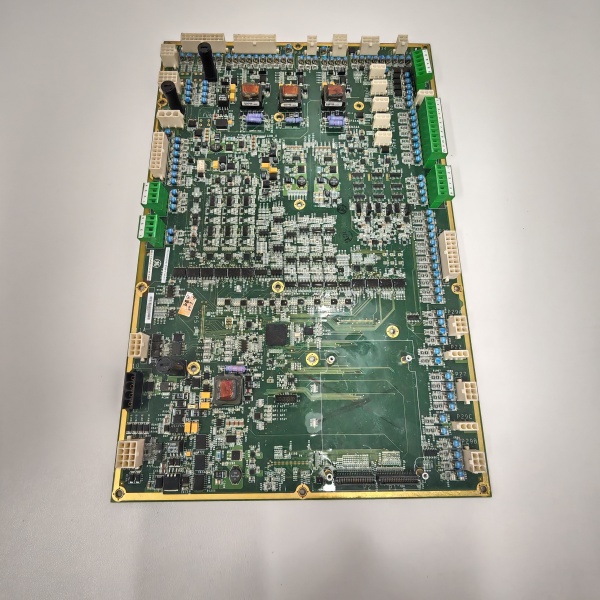
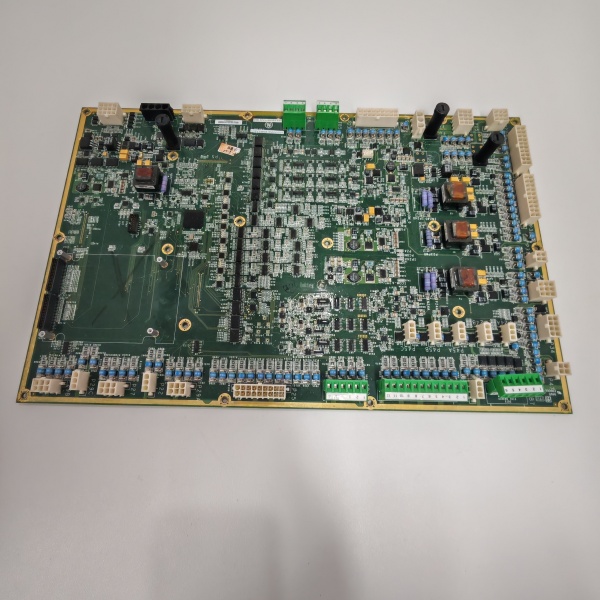
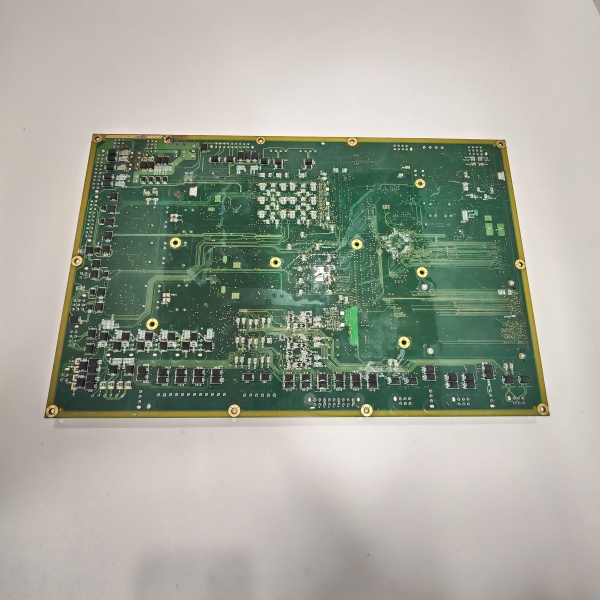
Description
Hard-Numbers: Technical Specifications
- Processor: High-speed Digital Signal Processor (DSP) (Executes real-time control algorithms for power regulation, current loop control, and high-speed data acquisition).
- Communication Interface: GE Serial Peripheral Interface (SPI) / IONet for internal rack communication, plus external interfaces to drives and exciters (likely high-speed serial or fiber-optic links).
- Functional Revision: H (8th Revision) (Signifies a mature hardware build. The “H1” designation indicates the foundational hardware variant of the 8th revision, incorporating standard EMI/ESD protection for power electronics environments).
- Configuration Suffix: 1B (Denotes Hardware Revision 1 and Firmware Baseline B. This suffix points to a specific, standard factory firmware load and hardware configuration distinct from the “A” or “C” variants.)
- Operating Voltage: 24V DC to 48V DC (Nominal, via backplane or dedicated terminals).
- Operating Temperature: -40°C to +70°C (Built to withstand harsh industrial and power generation environments, including temperature extremes in wind nacelles or power converter cabinets).
- Signal Isolation: 1500V AC Channel-to-Channel, 2500V AC Channel-to-Ground (Provides robust protection against electrical noise and transient voltages generated by nearby power converters and switching devices).
- Mounting: VME Rack Mount or DIN Rail (Dependent on the specific panel assembly).
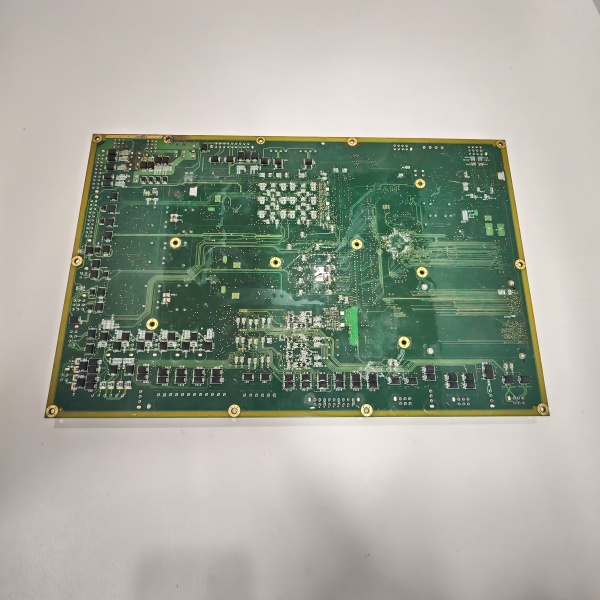
GE IS200WETAH1AEC
The Real-World Problem It Solves
Imagine you are the lead controls engineer at a wind farm facing persistent “Converter Overcurrent” faults during high-wind gusts. The turbines utilize GE Mark VIe controllers paired with legacy power converters. The existing AEPCH1A modules struggle to process the rapid current feedback signals, causing the converter to trip during transient wind conditions.
The elegant solution is to standardize on the module across the fleet. Leveraging the stable “H1” hardware, the “B” firmware baseline features optimized current loop tuning parameters and faster analog-to-digital conversion routines. After swapping the modules during a scheduled maintenance window, the turbines handle wind gusts seamlessly. The “Overcurrent” faults drop to zero, maximizing energy capture and eliminating costly unplanned downtime.
Where you’ll typically find it:
- Wind Farms: Interfacing Mark VIe controls with doubly-fed induction generators (DFIG) or full-converter systems to manage pitch and power regulation.
- Hydroelectric Plants: Controlling generator excitation systems and governing turbine speed.
- Industrial Gas Turbines: Managing the interface between the Mark VIe and the turbine’s liquid fuel pump drives or starting systems.
It acts as a reliable, deterministic processing node, ensuring that critical power system commands are executed precisely and without delay.
Hardware Architecture & Under-the-Hood Logic
In the GE AE series ecosystem, the “IS210AEPC” is fundamentally a power and communication interface board tailored for demanding control applications. The “H1B” suffix dictates the module’s specific operational parameters and compatibility within a Mark VIe rack.
- Unique Hardware Identification (HW_ID) & Firmware Binding: The Mark VIe controller performs a strict handshake to verify connected hardware. The “H1B” suffix corresponds to a unique HW_ID and a specific firmware image stored in the module’s memory. This binding ensures the module operates exactly as defined in the ToolboxST project, preventing configuration drift or unauthorized hardware substitutions.
- Foundational “H1” Hardware Revision: The “H1” hardware provides the necessary baseline architecture for high-speed processing. It includes updated timing circuits, improved voltage regulation for the DSP, and standard EMI/ESD suppression components required to operate reliably in the electrically noisy environments surrounding power converters and switchgear.
- Standard “B” Firmware Load: The “B” configuration represents a specific iteration of the factory firmware. Compared to the “A” baseline, the “B” firmware may include updated control algorithms, expanded diagnostic capabilities, or specific protocol handling enhancements required for seamless integration with certain generations of power electronic equipment.
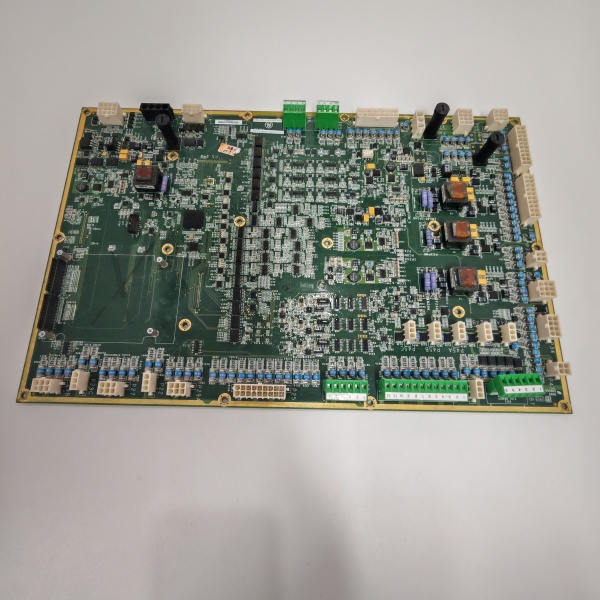
GE IS200WETAH1AEC
Field Service Pitfalls: What Rookies Get Wrong
The “Silent” Firmware Mismatch
A technician at a combined-cycle power plant needs to replace a failed module in a gas turbine control panel. The plant’s central warehouse only has IS210AEPCH1A modules in stock. Figuring that the hardware (H1) is the same and both are standard Mark VIe parts, the technician installs the “A” module as a direct replacement.
When the system is powered back up, the Mark VIe controller fails to establish proper communication with the turbine’s liquid fuel pump drive. The controller logs a “Hardware Key Mismatch” error, and the turbine is blocked from starting. The plant loses several days of startup time while waiting for the correct “B” firmware module to be shipped from a regional supplier.
- The Mistake: Assuming that modules with the same base part number (IS210AEPC) and hardware revision (H1) are universally interchangeable. The technician ignored the critical firmware suffix (“B” vs “A”), which dictated the specific control algorithms and communication protocols expected by the rest of the system.
- Field Rule: Never swap a Mark VIe I/O module with another unit unless the entire suffix matches exactly (e.g., H1B must be replaced with H1B). The Mark VIe architecture tightly couples the hardware ID and firmware version. If a direct replacement isn’t available, you must use the GE ToolboxST software to re-flash the firmware of the replacement module to match the original configuration, a task that requires advanced authorization and should only be performed by certified controls engineers.