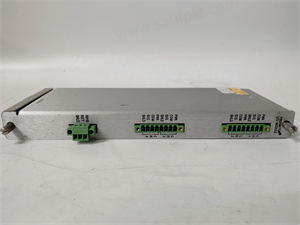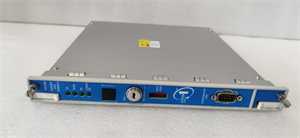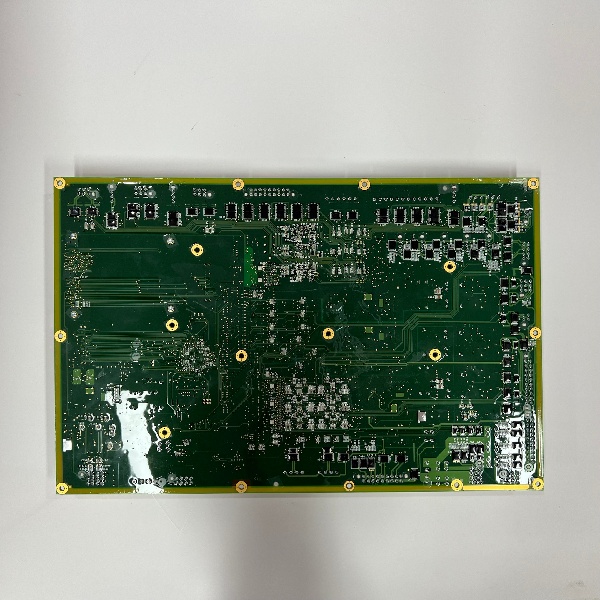
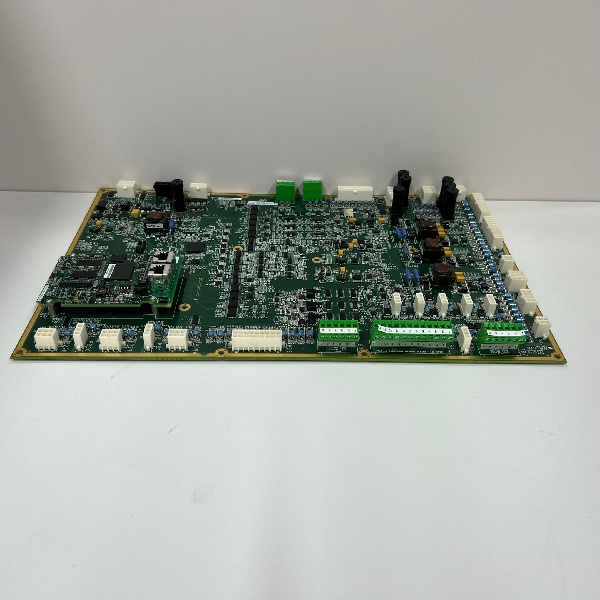
Description
Hard-Numbers: Technical Specifications
- Processor: High-speed Digital Signal Processor (DSP) (Handles deterministic control algorithms, power quality analysis, and high-speed communication protocol conversion).
- Communication Interface: GE Serial Peripheral Interface (SPI) / IONet for internal rack communication, plus external interfaces to power converters, exciters, or safety controllers (likely high-speed serial, fiber-optic, or Ethernet-based protocols).
- Functional Revision: H (8th Revision) (Signifies a mature hardware build. The “H1” designation indicates the foundational hardware variant of the 8th revision, incorporating standard EMI/ESD protection suitable for power electronics environments).
- Configuration Suffix: 1ACC (Denotes a unique factory hardware baseline and specific firmware image. The “1” indicates the hardware revision digit, while “ACC” points to a highly specific firmware load, safety certificate set, or customer/application-specific configuration).
- Operating Voltage: 24V DC to 48V DC (Nominal, via backplane or dedicated terminals).
- Operating Temperature: -40°C to +70°C (Built to withstand harsh industrial and power generation environments).
- Signal Isolation: 1500V AC Channel-to-Channel, 2500V AC Channel-to-Ground (Provides robust protection against electrical noise and transient voltages generated by power converters and switching devices).
- Mounting: VME Rack Mount or DIN Rail (Dependent on the specific panel assembly).
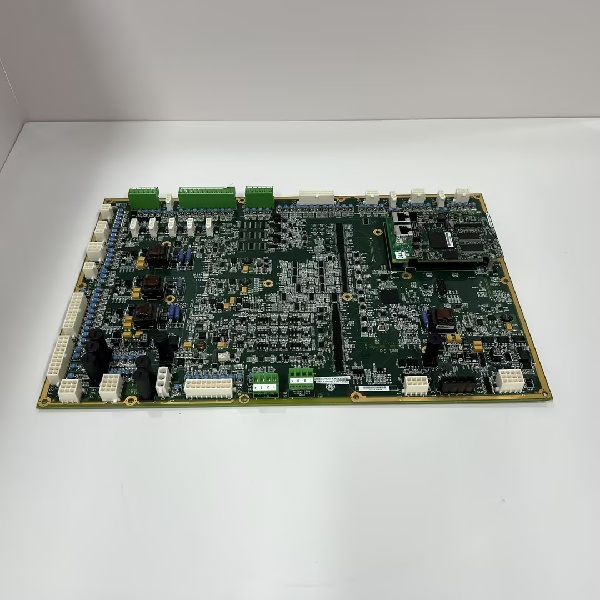
GE IS200WETAH1AHC
The Real-World Problem It Solves
Imagine you are the lead commissioning engineer for a utility-scale wind farm. The project involves integrating GE Mark VIe controls with a third-party energy storage system (ESS) to provide grid stabilization services. The challenge lies in the precise timing requirements for active power control and the need to comply with stringent regional grid codes (e.g., NERC PRC standards in North America). A standard I/O module introduces too much latency, and the third-party ESS requires a specific, legacy communication protocol that the Mark VIe doesn’t natively support.
The elegant solution is to deploy the IS210AEPCH1ACC module into the Mark VIe control rack. Leveraging the stable “H1” hardware, the module’s “ACC” firmware baseline is pre-configured to act as a high-precision protocol gateway and power system controller. It seamlessly translates Mark VIe global variables into the exact command structures the ESS requires, while simultaneously processing high-speed feedback signals for real-time power adjustment.
The commissioning is completed ahead of schedule. The turbines and ESS respond instantly to grid frequency deviations, passing the rigorous utility acceptance tests. The “ACC” module ensures full compliance with grid codes, avoiding costly non-compliance penalties and enabling the farm to participate in lucrative ancillary service markets.
Where you’ll typically find it:
- Utility-Scale Wind & Solar Farms: Facilitating high-speed communication between Mark VIe turbine controllers and external energy storage systems or STATCOMs for reactive power support.
- Power Conversion Facilities: Interfacing Mark VIe systems with medium-voltage drive systems or advanced generator exciter controls.
- Retrofit Projects: Upgrading existing turbine controls to meet evolving grid code requirements (e.g., Fault Ride Through capabilities) without replacing the entire control architecture.
It acts as a highly specialized, deterministic protocol bridge and power system controller, ensuring that modern turbine controls can seamlessly interact with complex power electronics and grid compliance systems.
Hardware Architecture & Under-the-Hood Logic
In the GE AE series ecosystem, the “IS210AEPC” is fundamentally a power and communication interface board tailored for demanding power conversion and control applications. The “H1ACC” suffix dictates the module’s specific operational parameters and compatibility within a Mark VIe rack.
- Unique Hardware Identification (HW_ID) & Firmware Binding: The Mark VIe controller performs a strict handshake to verify connected hardware. The “H1ACC” suffix corresponds to a unique HW_ID and a specific firmware image stored in the module’s memory. This binding ensures the module operates exactly as defined in the ToolboxST project, preventing configuration drift or unauthorized hardware substitutions that could impact power system stability.
- Foundational “H1” Hardware Revision: The “H1” hardware provides the necessary baseline architecture for high-speed processing. It includes updated timing circuits, improved voltage regulation for the DSP, and standard EMI/ESD suppression components required to operate reliably in the electrically noisy environments surrounding power converters and switchgear.
- Application-Specific “ACC” Firmware Load: The “ACC” configuration is meticulously mapped to specific customer application codes, regional grid compliance standards, or third-party equipment interfaces. This firmware allows the module to handle complex tasks like real-time power calculation, converter gating signals, and high-speed fault detection, making it a critical component in grid-interactive applications.
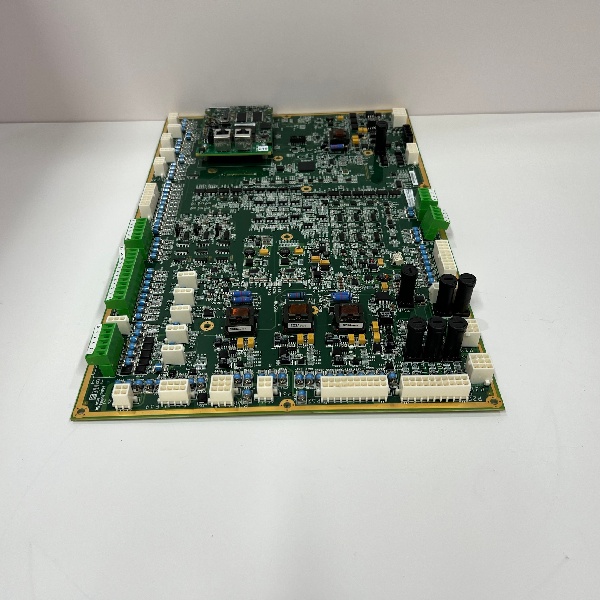
GE IS200WETAH1BB
Field Service Pitfalls: What Rookies Get Wrong
The “Grid Compliance” Catastrophe
A regional system operator mandates that all generating units under its jurisdiction must implement a new, stricter Fault Ride Through (FRT) curve within six months or face steep fines and potential curtailment. A wind farm’s maintenance team decides to proactively update their Mark VIe controls. During the upgrade, a junior technician replaces a faulty IS210AEPCH1ACC module with a standard IS210AEPCH1A module from the central spares warehouse, assuming the “A” firmware is a universal baseline.
Two weeks later, a minor grid disturbance occurs. The turbine with the substituted module fails to ride through the voltage dip correctly because the generic “A” firmware lacks the specific, utility-mandated FRT logic embedded in the “ACC” load. The turbine trips offline, drawing the ire of the system operator and resulting in a six-figure fine for the wind farm operator.
- The Mistake: Treating the configuration suffix (“ACC” vs “A”) as interchangeable. The technician failed to realize that the “ACC” firmware contained highly specific, utility-approved grid compliance algorithms essential for the plant’s operating license.
- Field Rule: In applications involving grid interconnection, power conversion, or safety systems, never substitute a module with a specialized firmware suffix (like ACC, CAFA, BED) with a generic baseline firmware (like A or B). The alphanumeric suffixes in GE’s naming convention often represent months of custom engineering, site-specific certification, or compliance testing. Always verify the Bill of Materials (BOM) and use the exact specified suffix to avoid catastrophic compliance failures and financial penalties.