Description
Hard-Numbers: Technical Specifications
- Processor: High-speed Digital Signal Processor (DSP) (Optimized for rapid deterministic scanning of discrete events and low-latency protocol conversion).
- Communication Interface: GE Serial Peripheral Interface (SPI) / IONet for internal rack communication, plus external discrete bridging interfaces (Ethernet or Serial).
- Functional Revision: H (8th Revision) (Signifies a highly mature hardware build with extensive EMI/ESD hardening).
- Configuration Suffix: 4AGD (Denotes Hardware Revision 4, Firmware Baseline A, and the “GD” specialization—which typically refers to enhanced Galvanic isolation, Global environmental ratings, or Dirty/Dual-channel configurations for harsh environments).
- Operating Voltage: 24V DC to 48V DC (Nominal, via backplane or dedicated terminals).
- Operating Temperature: -40°C to +70°C (Designed for harsh outdoor and industrial environments, potentially including conformal coating for humidity/salt mist resistance).
- Signal Isolation: 2500V AC Channel-to-Channel, 4000V AC Channel-to-Ground (Enhanced ratings compared to standard modules to provide superior protection against severe industrial electrical noise and power surges).
- Mounting: VME Rack Mount or DIN Rail (Dependent on the specific panel assembly).
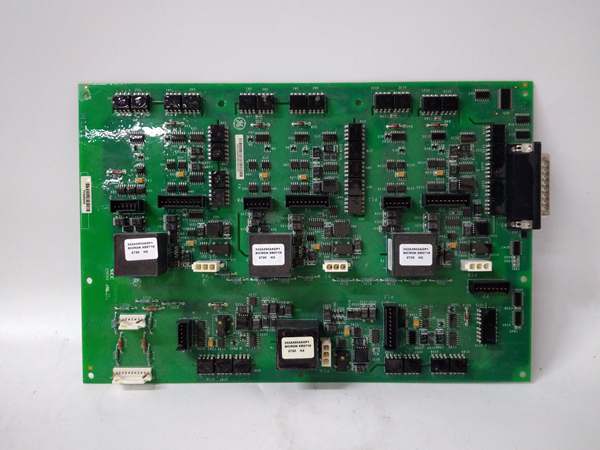
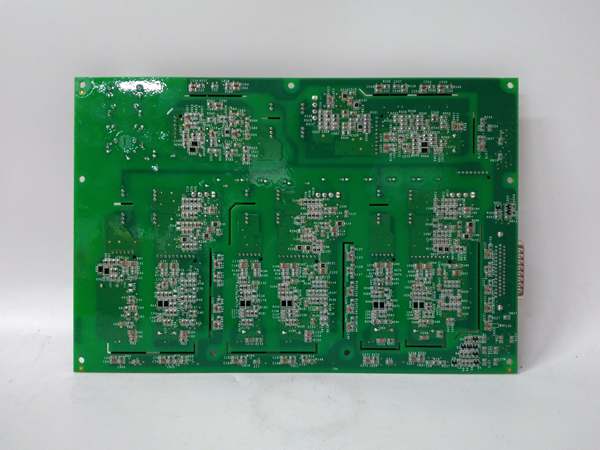
GE IS210AEDBH4A
The Real-World Problem It Solves
Imagine you are the lead controls engineer at a heavy oil sands extraction facility in Northern Canada. The site utilizes massive electric motor-driven compressors controlled by a Mark VIe system. The problem is the severe electrical noise generated by the Variable Frequency Drives (VFDs) and the harsh, hydrocarbon-laden atmosphere. Standard communication modules frequently suffer from bit-level data corruption, leading to nuisance turbine trips during compressor startups.
The elegant solution is to specify and deploy the module into the Mark VIe racks. Leveraging the mature “H4A” hardware for low-latency processing, the “GD” suffix indicates the presence of heavy-duty galvanic isolation, enhanced EMI shielding, and a protective conformal coating on the PCB. This module shrugs off the VFD electrical noise and resists the corrosive atmosphere.
You map your critical compressor anti-surge valve positions and trip signals to the module, and it delivers the data to the plant’s DCS with 100% uptime, completely eliminating nuisance trips caused by electrical noise. The facility avoids costly unplanned downtime, and the module continues to operate reliably through temperature extremes and electrical storms.
Where you’ll typically find it:
- Offshore Oil & Gas Platforms: Where explosive atmospheres, salt mist, and cramped electrical quarters demand “GD” (Galvanic Dual/Dirty Environment) rated electronics.
- Heavy Refineries & Petrochemical Plants: Managing discrete signals in areas with high concentrations of large induction motors, arc furnaces, or VFDs that inject massive electrical noise into the ground grid.
- Mining & Metals Processing: Retrofitting crushers and conveyor systems where vibration, dust, and power surges are daily occurrences.
It acts as a heavily armored, noise-immune sentinel, ensuring that critical discrete signals are delivered accurately across disparate control architectures, even when the surrounding environment is trying to tear the signal apart.
Hardware Architecture & Under-the-Hood Logic
In the GE AE series ecosystem, the “IS210AEDB” is fundamentally a discrete I/O and communication bridge board. The “H4AGD” suffix dictates the module’s specific operational tolerances and defensive architecture within a Mark VIe rack.
- Unique Hardware Identification (HW_ID) & Firmware Binding: The Mark VIe controller performs a strict handshake to verify connected hardware. The “H4AGD” suffix corresponds to a unique HW_ID and a specific firmware image. This binding ensures the module operates within the exact parameters defined in the ToolboxST project, preventing configuration drift or unauthorized hardware substitutions that could compromise safety.
- Mature “H4” Hardware Revision: Moving beyond the H3 foundation, the H4 hardware digit incorporates significant refinements, including faster DSP clock speeds for reduced latency in discrete scanning and improved thermal dissipation for greater long-term reliability in hot enclosures.
- “GD” (Galvanic Dual/Dirty Environment) Specialization: This is the defining characteristic of this module. The “GD” variant features enhanced isolation transformers, heavy-duty optocouplers, and aggressive Transient Voltage Suppressor (TVS) diodes on all I/O lines to clamp voltage spikes. Furthermore, the PCB likely features a “Type G” conformal coating (MIL-I-46058C) to protect against moisture, fungus, and corrosion, making it truly bulletproof in harsh industrial settings.
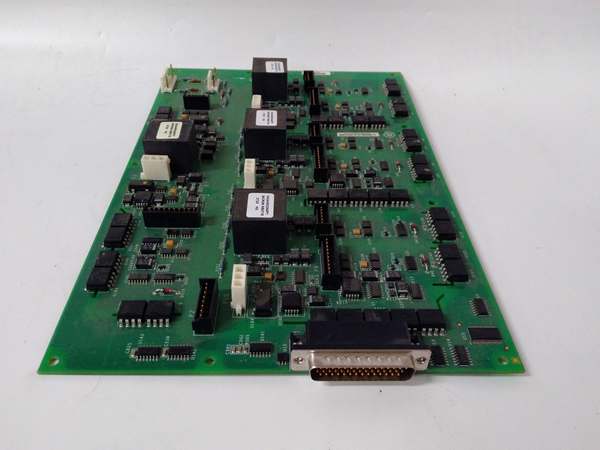
GE IS210AEDBH4A
Field Service Pitfalls: What Rookies Get Wrong
The “False Economy” Substitution
A maintenance planner at a coastal LNG terminal notices that the site’s Bill of Materials (BOM) calls for an to interface the Mark VIe turbine controls with the emergency shutdown system (ESD). Looking at the $500 price difference between the “GD” module and a standard “H4A” module in the warehouse, the planner decides to swap the next failed unit with the cheaper standard part to save on OPEX. Six months later, during a severe thunderstorm, a lightning strike hits the facility’s transmission line. The induced voltage surge travels through the grounded conduit, fries the standard H4A module’s unprotected input buffers, and causes a total loss of ESD visibility. The turbine goes into an emergency trip, and the facility loses millions in production while replacing the damaged rack components.
- The Mistake: Economizing on critical infrastructure by substituting environmentally/electrically hardened components (“GD”) with standard commercial-grade equivalents (“H4A”) in hazardous or high-interference zones.
- Field Rule: In classified hazardous locations (NEC Class I Div 2 / IEC Zone 2) or areas prone to lightning/power surges, never substitute a “GD” (or otherwise specialized environmental rating) module with a standard variant. The enhanced galvanic isolation and conformal coating of the “GD” suffix are not optional extras—they are essential safeguards. Always match the full suffix, especially the environmental rating codes, to protect your plant from catastrophic failure.