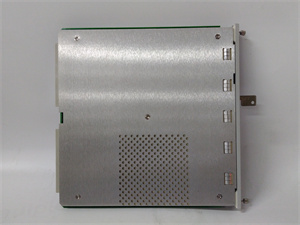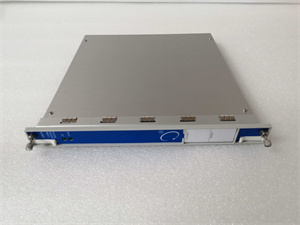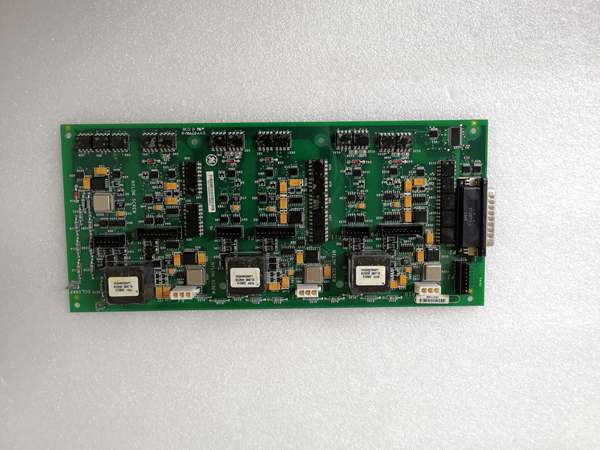
Description
Hard-Numbers: Technical Specifications
- Processor: High-speed Digital Signal Processor (DSP) (Handles deterministic control algorithms and high-speed communication protocol conversion).
- Communication Interface: GE Serial Peripheral Interface (SPI) / IONet for internal rack communication, plus external bridging interfaces (likely Ethernet or serial-based protocols like Modbus).
- Functional Revision: H (8th Revision) (Indicates a highly mature hardware build with extensive EMI/ESD hardening).
- Configuration Suffix: 3B (Denotes a specific factory hardware baseline, firmware image, or hardware revision digit ‘3’ with configuration ‘B’. Often indicates compatibility with specific backplane voltages or termination settings).
- Operating Voltage: 24V DC to 48V DC (Nominal, via backplane or dedicated terminals).
- Operating Temperature: -40°C to +70°C (Designed for harsh outdoor and industrial environments).
- Signal Isolation: 1500V AC Channel-to-Channel, 2500V AC Channel-to-Ground (Protects against severe industrial electrical noise).
- Mounting: VME Rack Mount or DIN Rail (Dependent on the specific panel assembly).
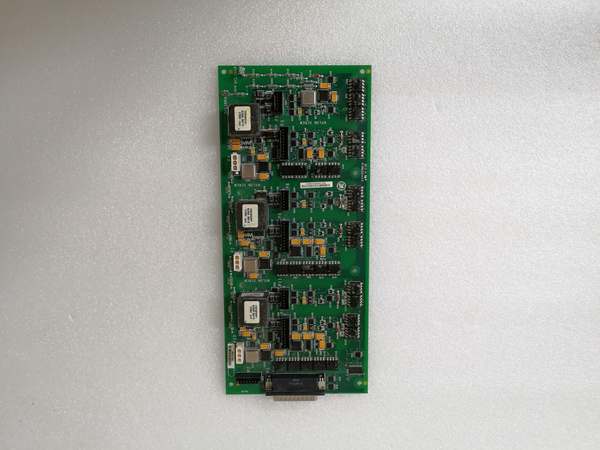
GE IS210AEBIH3B
The Real-World Problem It Solves
Imagine you are the lead instrumentation engineer at a combined-cycle power plant undergoing a major controls retrofit. The original Mark VI racks utilized older H1BEC bridge modules. However, the new plant-wide SCADA upgrade involves significantly higher data throughput requirements, and the older H1 hardware is struggling with occasional packet fragmentation during peak polling rates.
To resolve this, you spec the modules for the new I/O racks. The “3B” hardware baseline incorporates updated timing capacitors and a later silicon revision of the DSP, allowing for faster context switching and more robust handling of high-frequency, multi-protocol data bursts. You seamlessly integrate the new modules into the existing ToolboxST project by importing the new Hardware Definition File.
The result is a rock-solid communication link. The SCADA system receives high-fidelity turbine data without polling delays, and the plant avoids the dreaded “Communications Timeout” alarms that plagued the older hardware. The “H3B” proves its worth during a subsequent lightning strike near the auxiliary plant buildings—while a nearby generic switch resets, the H3B’s superior EMI filtering shrugs off the electrical noise, keeping the turbine online and fully reporting.
Where you’ll typically find it:
- Controls Modernization Projects: Retrofitting older Mark VI/VII systems where increased data traffic demands more robust hardware than the original H1 variants.
- High-Noise Industrial Environments: Power plants or refineries with significant electrical noise, where the H3 hardware’s improved EMI/ESD ratings prevent communication dropouts.
- Multi-Protocol Gateways: Applications requiring simultaneous bridging of Ethernet/IP, Modbus TCP, and legacy serial protocols.
It acts as a hardened, high-performance protocol gateway, ensuring seamless data flow between modern turbine controls and enterprise networks, even under heavy network loads or adverse electrical conditions.
Hardware Architecture & Under-the-Hood Logic
In the GE AE series ecosystem, the “IS210AEBI” is a sophisticated communication and interface board. The “H3B” suffix dictates its specific operational behavior, hardware tolerances, and compatibility within a Mark VIe rack.
- Hardware Revision Progression (H1 vs H3): The jump from “1” to “3” in the revision digit usually signifies subtle but critical hardware optimizations. This can include changes to the clock distribution network for the DSP, upgraded voltage regulators for cleaner power delivery to the processor, or tighter tolerance components for improved signal integrity on the IONet interface.
- Configuration Baseline “B”: The trailing “B” indicates a specific factory configuration regarding I/O addressing, termination resistor values, or the default state of onboard configuration jumpers. It ensures the module behaves predictably when interfacing with specific types of external third-party equipment.
- Firmware Binding & HW_ID: The Mark VIe controller validates the hardware via a unique Hardware ID (HW_ID) stored in the module’s memory. The “H3B” designation maps to a specific range of compatible firmware images. Using the incorrect firmware (e.g., trying to flash an H1 image onto an H3 board) will result in a failed checksum verification and a “Hardware Key Mismatch” fault.
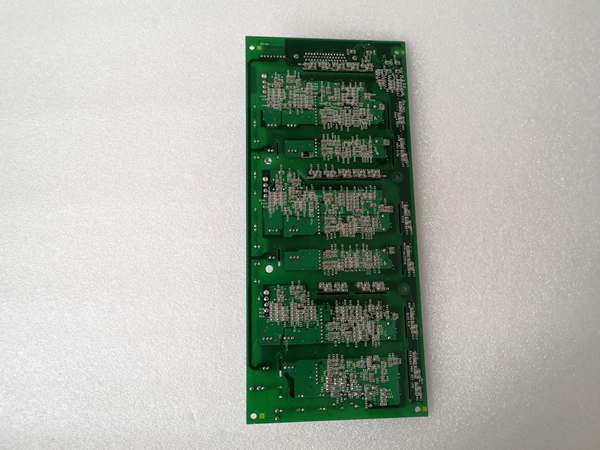
GE IS210AEBIH3B
Field Service Pitfalls: What Rookies Get Wrong
The “It Looks The Same” Substitution Error
A technician at a chemical plant needs to replace a failed IS210AEBIH1BAA module. Finding the exact part number unavailable in the local stores, they notice an sitting on the shelf and assume that because it’s the same base board (AEBI) and same functional revision (H), it will work as a direct drop-in replacement. They install the H3B, and while the controller boots, the system experiences erratic data transmission rates, intermittent loss of SCADA visibility, and eventually logs a “Hardware Configuration Mismatch” error.
- The Mistake: Ignoring the critical nature of the hardware revision digit and suffix. The H1BAA and H3B boards, while visually identical, have different internal timing characteristics and default register settings. The existing ToolboxST project file was meticulously mapped to the H1 hardware’s specific I/O latency and addressing scheme. Introducing the H3 hardware without updating the project’s Hardware Definition File caused a desynchronization between the controller’s expected timing and the physical board’s actual performance.
- Field Rule: Never substitute a control system I/O module with a different hardware revision or suffix unless you are prepared to update and recompile the controller’s application code and Hardware Definition Files. If you must use a different revision (e.g., H3 instead of H1), consult the OEM documentation for compatibility, update the project files accordingly, and perform a full loop-check before returning the unit to service.