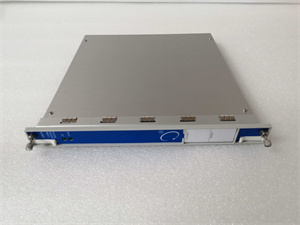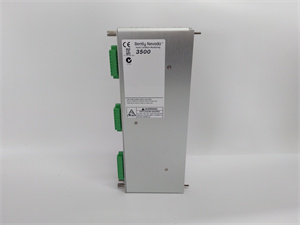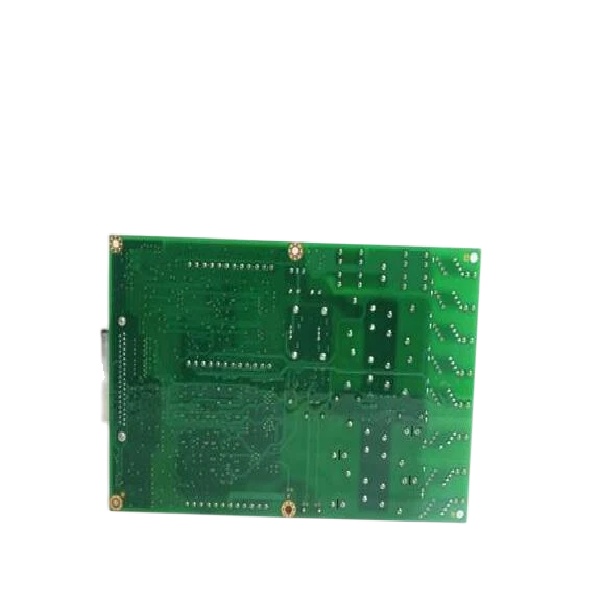
Description
Hard-Numbers: Technical Specifications
- Processor: High-speed Digital Signal Processor (DSP) (Handles deterministic control algorithms and high-speed communication protocol conversion).
- Communication Interface: GE Serial Peripheral Interface (SPI) / IONet for internal rack communication, plus external bridging interfaces (likely Ethernet or serial-based protocols like Modbus).
- Functional Revision: 1 (Base hardware revision, incorporating standard ESD protection and baseline timing tolerances).
- Configuration Suffix: ADB (Denotes a unique factory hardware baseline, specific firmware image, or regional/customer-specific configurations).
- Operating Voltage: 24V DC to 48V DC (Nominal, via backplane or dedicated terminals).
- Operating Temperature: -40°C to +70°C (Designed for harsh outdoor and industrial environments).
- Signal Isolation: 1500V AC Channel-to-Channel, 2500V AC Channel-to-Ground (Protects against severe industrial electrical noise).
- Mounting: VME Rack Mount or DIN Rail (Dependent on the specific panel assembly).
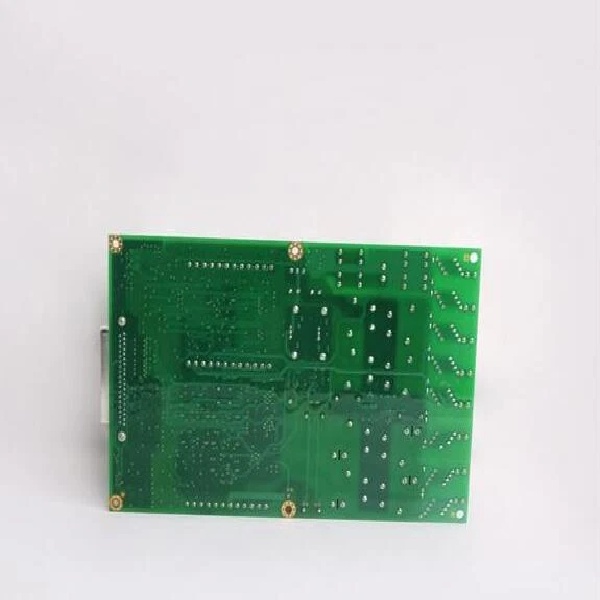
IS210AEAAH1B
The Real-World Problem It Solves
You are the lead controls engineer for a geothermal power plant that was originally commissioned with a standalone Mark VIe turbine control system. Years later, corporate mandates the integration of all rotating equipment into a central OSIsoft PI System for enterprise-wide predictive maintenance. The challenge is that the plant’s original Mark VIe configuration was locked by the OEM, and modifying the core control logic to add external data tags risks voiding the warranty and tripping the turbine.
The solution is to install the IS210AEBIH1ADB into an open VME slot in the existing control rack. This module acts as a passive-yet-intelligent protocol bridge. Its “ADB” firmware configuration is specifically designed to poll data from the Mark VIe’s global memory via the IONet and repackage it into Modbus TCP/IP packets. It then pushes this data directly to the plant’s SCADA historian without requiring any modifications to the core turbine protection logic. The project comes in under budget, the turbine remains under warranty, and corporate gets their real-time steam flow and bearing temperature data.
Where you’ll typically find it:
- Geothermal & Biomass Plants: Retrofitting legacy Mark VIe racks to communicate with modern DCS platforms without altering core control strategies.
- Oil & Gas Pipelines: Serving as a secure gateway between compressor station controls and cloud-based Asset Performance Management (APM) tools.
- University Research Turbines: Providing a flexible, high-speed data acquisition interface for professors and students conducting thermodynamic experiments.
It acts as a highly specialized, trusted protocol bridge, ensuring that external enterprise networks can securely access vital turbine data without introducing latency or security vulnerabilities to the core control loops.
Hardware Architecture & Under-the-Hood Logic
The “ADB” suffix indicates a specific manufacturing variant of the base IS210AEBIH1 module, tailored for energy bridge applications. While it shares the same core architecture as other AE series modules, the “ADB” designation is critical for system integrity in specific networking applications.
- Unique Hardware Identification (HW_ID) & Firmware Binding: The Mark VIe controller uses a strict handshake protocol to verify the identity of connected hardware. The “ADB” suffix corresponds to a unique HW_ID stored in the module’s memory. The controller will only execute the control program if the HW_ID and firmware checksums match the expectations of the downloaded application code, preventing unauthorized or incompatible hardware from compromising plant safety.
- Protocol Translation & Data Bridging: Unlike standard I/O modules that merely condition signals, the AEBI series is designed to handle complex communication tasks. The “ADB” variant likely contains a specialized firmware image (
.fwifile) that enables it to act as a protocol gateway—translating Mark VIe’s native IONet/SPI data packets into standard industrial protocols (e.g., Modbus TCP/IP, EGD, or SRTP) for consumption by external systems. - Network Segmentation & Security: By designating a specific module like the IS210AEBIH1ADB for external communications, engineers can physically and logically isolate the critical turbine control network from the corporate or plant-wide network. This adheres to the Purdue Model for Industrial Cybersecurity, ensuring that a cyberattack on the corporate network cannot propagate to the turbine controller.
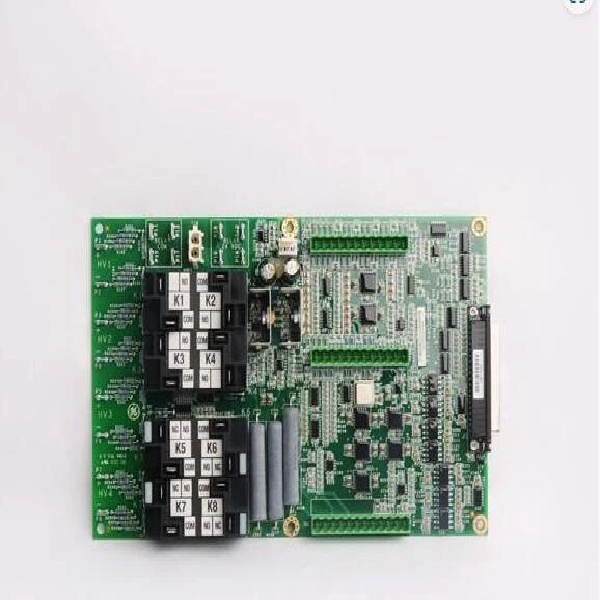
IS210AEAAH1B
Field Service Pitfalls: What Rookies Get Wrong
Ignoring the HW_ID When Swapping Bridge Modules
A maintenance technician is called to replace an IS210AEBIH1ADB module after the plant’s DCS loses communication with the turbine. The turbine remains running, but the control room cannot see real-time data. The technician finds a spare IS210AEBIH1B in the cabinet and installs it. Immediately, the Mark VIe controller detects a “Hardware Key Mismatch,” forces the turbine into a “Maintenance Test” mode, and drops the connection to the DCS entirely.
- The Mistake: Assuming that because both modules are “AEBI” cards, they are functionally identical. The technician failed to realize that the “ADB” suffix contains a unique hardware fingerprint and a specific IP addressing schema required by the plant’s IT/OT network. The standard “H1B” module, while electrically compatible, failed the controller’s security checksum and lacked the correct network configuration.
- Field Rule: Bridge and communication modules are strictly tied to the plant’s network architecture. Always verify the full part number matches exactly before performing a hot-swap. If the exact spare is unavailable, do not swap the hardware. Instead, troubleshoot the network cabling and external switches first. Forcing a mismatched bridge module can sever critical data links and trigger unnecessary turbine trips.