
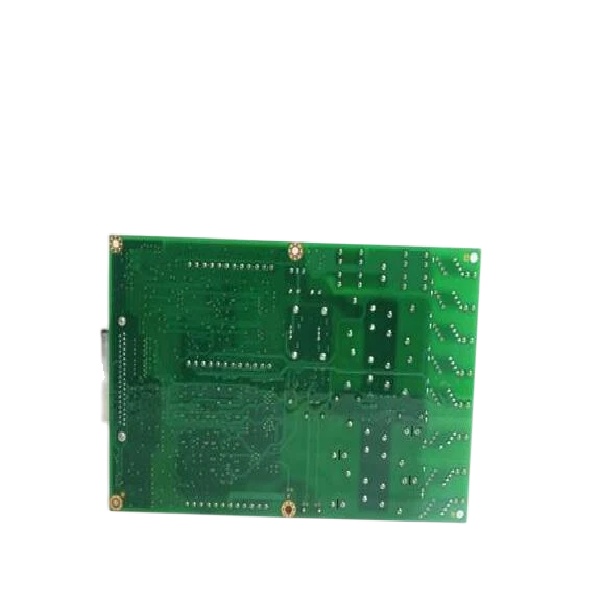
Description
Hard-Numbers: Technical Specifications
- Processor: High-speed Digital Signal Processor (DSP) (Handles deterministic control algorithms and high-speed communication protocol conversion) .
- Communication Interface: GE Serial Peripheral Interface (SPI) / IONet for internal rack communication, plus external bridging interfaces (likely Ethernet or serial-based protocols like Modbus) .
- Functional Revision: A (Standard base revision, potentially indicating a specific hardware baseline prior to later B/C revisions) .
- Configuration Suffix: ADC (Denotes a unique factory hardware baseline, specific firmware image, or regional/customer-specific configurations, potentially including conformal coating) .
- Operating Voltage: 24V DC to 48V DC (Nominal, via backplane or dedicated terminals) .
- Operating Temperature: -40°C to +70°C (Designed for harsh outdoor and industrial environments) .
- Signal Isolation: 1500V AC Channel-to-Channel, 2500V AC Channel-to-Ground (Protects against severe industrial electrical noise) .
- Mounting: VME Rack Mount or DIN Rail (Dependent on the specific panel assembly) .
IS210AEAAH1B
The Real-World Problem It Solves
You are the lead controls engineer for an independent power producer (IPP) managing a fleet of gas turbines. The corporate headquarters demands real-time integration of all plant-floor data into a centralized Asset Performance Management (APM) system to predict turbine failures before they occur. However, the existing Mark VIe controllers are isolated from the corporate network due to legacy security protocols.
To bridge this gap without compromising the turbine’s safety integrity, you install the IS210AEBIADC. This module acts as a secure, hardware-level gateway. Its “ADC” firmware configuration is pre-loaded with the specific protocol stacks required to communicate with both the Mark VIe IONet and the plant’s external fiber-optic DCS network. It successfully routes critical parameters—such as exhaust temperature spreads, rotor vibration, and fuel valve positions—to the APM system in real-time. This allows the operations team to visualize turbine health remotely and schedule maintenance during off-peak hours, saving the company millions in potential downtime.
Where you’ll typically find it:
- Combined-Cycle Power Plants: Facilitating data exchange between the Mark VIe turbine controller and plant-level Distributed Control Systems (DCS) .
- Renewable Energy & Microgrids: Acting as a bridge interface to aggregate turbine data for grid stability analysis .
- Oil & Gas Facilities: Connecting compressor control systems to SCADA systems for remote wellhead monitoring .
It acts as a highly specialized, trusted protocol bridge, ensuring that external enterprise networks can securely access vital turbine data without introducing latency or security vulnerabilities to the core control loops.
Hardware Architecture & Under-the-Hood Logic
The “ADC” suffix indicates a specific manufacturing variant of the base IS210AEBIA module, tailored for energy bridge applications . While it shares the same core architecture as other AE series modules, the “ADC” designation is critical for system integrity in specific networking applications.
- Unique Hardware Identification (HW_ID) & Firmware Binding: The Mark VIe controller uses a strict handshake protocol to verify the identity of connected hardware. The “ADC” suffix corresponds to a unique HW_ID stored in the module’s memory . The controller will only execute the control program if the HW_ID and firmware checksums match the expectations of the downloaded application code, preventing unauthorized or incompatible hardware from compromising plant safety .
- Protocol Translation & Data Bridging: Unlike standard I/O modules that merely condition signals, the AEBI series is designed to handle complex communication tasks . The “ADC” variant likely contains a specialized firmware image (
.fwifile) that enables it to act as a protocol gateway—translating Mark VIe’s native IONet/SPI data packets into standard industrial protocols (e.g., Modbus TCP/IP, EGD, or SRTP) for consumption by external systems . - Network Segmentation & Security: By designating a specific module like the IS210AEBIADC for external communications, engineers can physically and logically isolate the critical turbine control network from the corporate or plant-wide network. This adheres to the Purdue Model for Industrial Cybersecurity, ensuring that a cyberattack on the corporate network cannot propagate to the turbine controller.
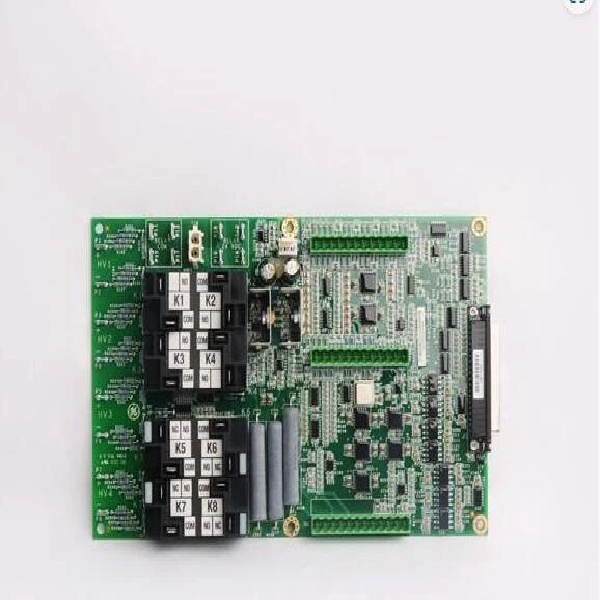
IS210AEAAH1B
Field Service Pitfalls: What Rookies Get Wrong
Treating a Bridge Module Like a Standard I/O Card
A maintenance technician is rushed to restore a turbine that has tripped offline. The fault log points to a communication loss with the DCS. The technician notices the “AEBI” module (IS210AEBIADC) has a flashing error light. Assuming it’s a standard I/O card, the technician swaps it with a spare IS210AEBIAH3B found in the warehouse. Upon rebooting, the Mark VIe controller throws a “Hardware Configuration Mismatch” fault, and worse, the DCS still cannot read any turbine data.
- The Mistake: Ignoring that the “ADC” suffix contains a unique hardware fingerprint AND a specific network configuration (IP addresses, subnet masks, protocol settings) mandated by the plant’s network architecture. A standard “H3B” module, while electrically compatible, lacks the specific firmware and HW_ID required by the ToolboxST project file . Furthermore, simply swapping the hardware does not migrate the network-specific parameters stored in the original module’s non-volatile memory.
- Field Rule: Bridge and communication modules are not interchangeable like-for-like unless the full part number matches exactly. If a direct replacement isn’t available, a formal Management of Change (MOC) must be filed. The new hardware must be re-configured using the ToolboxST wizard to match the plant’s network topology, and the physical ID binding must be updated in the controller’s hardware configuration file .


