
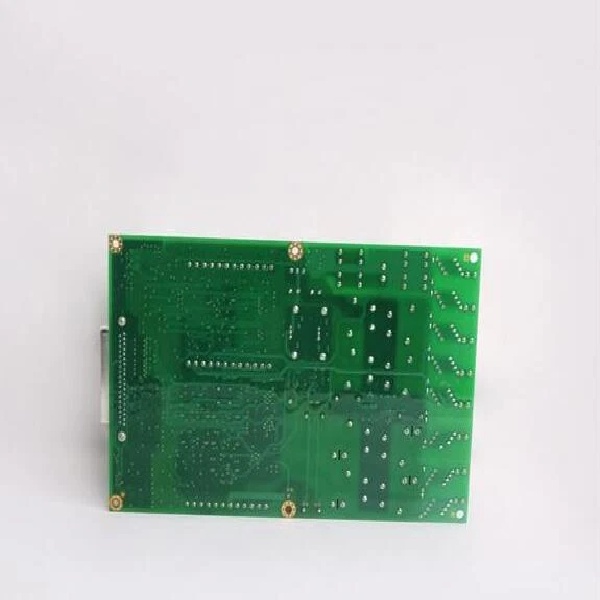
Description
Hard-Numbers: Technical Specifications
- Processor: High-speed Digital Signal Processor (DSP) (Executes deterministic control algorithms).
- Communication Interface: GE Serial Peripheral Interface (SPI) / IONet (Ensures low-latency data exchange with the main controller).
- Functional Revision: B (Includes enhanced hardware robustness and ESD protection).
- Configuration Suffix: BPR1 (Denotes a unique factory hardware baseline, jumper setting, or firmware image, often tied to specific project documentation).
- Operating Voltage: 24V DC (Nominal, via backplane or dedicated terminals).
- Operating Temperature: 0°C to +60°C (Standard control room/enclosure environment).
- Signal Isolation: 1500V AC Channel-to-Channel, 2500V AC Channel-to-Ground (Protects against industrial electrical noise).
- Mounting: VME Rack Mount or DIN Rail (Dependent on the specific panel assembly).
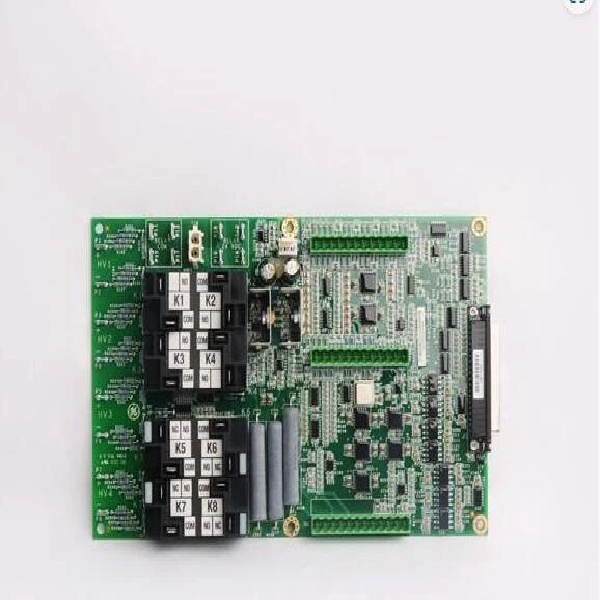
IS210AEAAH1B
The Real-World Problem It Solves
You are the lead controls engineer for a fleet of aeroderivative gas turbines used in mobile power generation units. Your team is conducting a routine hot-restart capability test when the Mark VIe control system suddenly throws a “Hardware Configuration Mismatch” fault, halting the startup sequence. The diagnostic logs point to a failure in the auxiliary I/O module—an IS210AEAAH1BPR1. This specific module manages the fire suppression system and the emergency stop push-button logic. You try to replace it with a standard IS210AEAAH1B from your mobile maintenance truck, but the controller immediately recognizes the different Hardware Key (HW_ID) and locks out the turbine for safety reasons. You realize that the original equipment manufacturer (OEM) configured these specific units with the “BPR1” suffix to comply with stringent mobile machinery safety standards (e.g., ISO 13849). The IS210AEAAH1BPR1 solves this by providing the exact, pre-certified hardware fingerprint the controller expects, ensuring that the emergency shutdown logic remains valid and preventing a multi-day delay in deploying the power unit to the grid.
Where you’ll typically find it:
- Aeroderivative & Mobile Gas Turbines: In compact, transportable power units where space is at a premium and the I/O must meet specific vibration and safety certifications.
- Water Treatment & Desalination Plants: Controlling high-speed pumps and chemical dosing skids where the control logic was developed around a specific, unchangeable hardware baseline to satisfy water quality regulatory audits.
- District Heating Systems: Managing the complex valve sequencing and pressure regulation for large-scale heat exchangers, where the “BPR1” suffix ensures the module communicates correctly with third-party heat meters and SCADA systems.
It acts as a highly specialized, trusted interface node, ensuring that the Mark VIe controller receives perfectly scaled and conditioned data from the field, maintaining the integrity of the plant’s safety and control loops.
Hardware Architecture & Under-the-Hood Logic
The “BPR1” suffix indicates a specific manufacturing variant of the base IS210AEAAH1B module. While it shares the same core architecture, the “BPR1” designation is critical for system integrity in specific applications.
- Unique Hardware Identification (HW_ID) & Firmware Binding: The Mark VIe controller uses a strict handshake protocol to verify the identity of connected hardware. The “BPR1” suffix corresponds to a unique HW_ID stored in the module’s memory. Furthermore, this variant ships with a specific, locked firmware version (
.fwifile) tailored for the OEM’s application code. The controller will only execute the control program if the HW_ID and firmware checksums match the expectations of the downloaded application code, preventing unauthorized or incompatible hardware from compromising plant safety. - Application-Specific Calibration Constants: Different industrial processes require different signal conditioning. The “” variant is factory-calibrated with specific gain, offset, and linearization constants tailored for particular sensor types (e.g., specific 4-20mA loops for oxygen analyzers or vibration proximity probes). These constants are stored in the module’s non-volatile memory and are inaccessible to the average field technician, ensuring the integrity of the original engineering design.
- Custom I/O Filtering & Timing: The DSP on the “” module may be programmed with custom digital filtering algorithms (e.g., moving averages, median filters) to handle exceptionally noisy signals common in heavy industrial environments. Additionally, the internal timing loops for Pulse Rate inputs (used for speed pickup signals) might be precisely calibrated to ignore electrical noise from Variable Frequency Drives (VFDs) operating nearby.
IS210AEAAH1B
Field Service Pitfalls: What Rookies Get Wrong
Overwriting Firmware During a Forced Download
A field service rookie is tasked with replacing a faulty I/O module in a critical gas compressor station. He identifies the failed card as an IS210AEAAH1BPR1 and installs a new one from the OEM packaging. When he attempts to bring the turbine online, the Mark VIe controller throws a “Firmware Version Mismatch” error. Panicking, the rookie uses the ToolboxST software to perform a “Force Download” of the application firmware onto the new module, thinking he has resolved the issue. The turbine starts, but within an hour, it trips on a “Process Overspeed” fault because the forced firmware did not contain the specific speed signal debouncing algorithm required for that compressor.
- The Mistake: Using the “Force Download” feature in ToolboxST without verifying the compatibility of the target firmware with the specific hardware suffix. The “” module required a specific firmware build that matched its hardware calibration data.
- Field Rule: Never use “Force Download” on a live control system unless explicitly instructed by GE technical support or a senior controls engineer. If a firmware mismatch occurs, the correct procedure is to locate the exact
.fwifile originally used to commission the turbine (stored in the project archive) and download that specific file to the module. This preserves the integrity of the control logic and the hardware-specific calibration constants.

