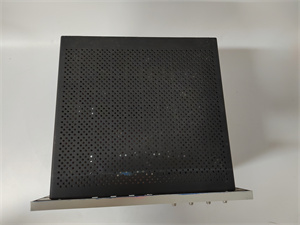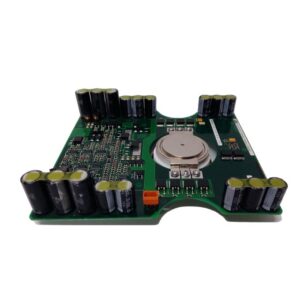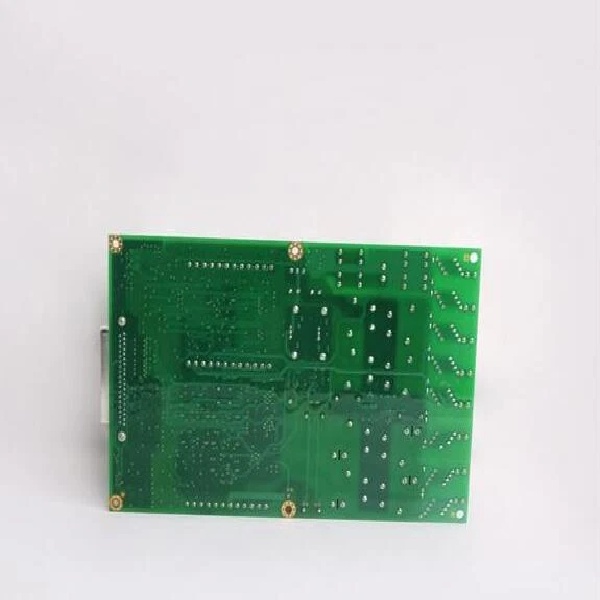
Description
Hard-Numbers: Technical Specifications
- Processor: High-speed Digital Signal Processor (DSP) (Executes deterministic control algorithms)
- Communication Interface: GE Serial Peripheral Interface (SPI) / IONet (Ensures low-latency data exchange with the main controller)
- Functional Revision: B (Includes enhanced hardware robustness and ESD protection)
- Configuration Suffix: BJD (Denotes a unique factory hardware baseline, jumper setting, or firmware image, often indicating a specific OEM package like GE Wind)
- Operating Voltage: 24V DC (Nominal, via backplane or dedicated terminals)
- Output Capability: 0–10V DC output with up to 2A current
- Operating Temperature: -40°C to +70°C (Designed for harsh outdoor and industrial environments)
- Protection: Conformal Coated (Provides enhanced resistance to moisture, dust, and corrosive elements)
- Signal Isolation: 1500V AC Channel-to-Channel, 2500V AC Channel-to-Ground (Protects against industrial electrical noise)
- Mounting: VME Rack Mount or DIN Rail (Dependent on the specific panel assembly)
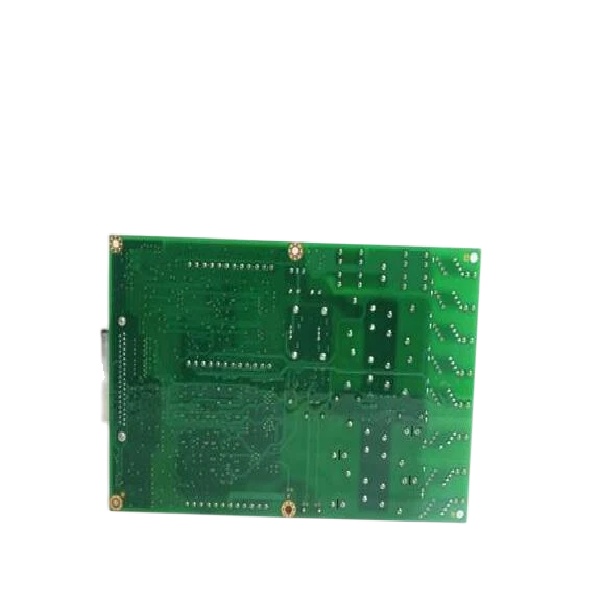
IS210AEAAH1B
The Real-World Problem It Solves
You are the lead technician for a wind farm located in a coastal region. The salt spray and high humidity have caused premature corrosion on several standard PLC modules in your nacelle control cabinets, leading to frequent false trips and analog signal drift. During a major storm, one of your GE 1.5MW turbines trips offline due to a communication fault with its primary I/O module. Upon inspection, you find the IS210AEAAH1BJD module has failed. Because this specific turbine is calibrated to expect the “BJD” hardware identifier and utilizes specific I/O scaling for its pitch and yaw systems, you cannot simply swap it with a standard IS210AEAAH1B. The IS210AEAAH1BJD solves this by providing the exact, pre-calibrated hardware fingerprint the controller expects, while its conformal coating ensures long-term reliability against the harsh marine environment, preventing future corrosion-related failures and avoiding costly downtime .
Where you’ll typically find it:
- Coastal & Offshore Wind Farms: Deployed in harsh, salty, and highly humid environments where the conformal coating provides essential protection against corrosion and condensation .
- GE 1.5MW Wind Turbines: Acts as a critical control and I/O interface node within the nacelle’s Mark VIe turbine control system .
- Desert or High-Particle Environments: Utilized in wind farms or industrial sites prone to heavy dust storms, where the conformal coating prevents conductive dust particles from causing short circuits on the PCB .
It acts as a highly specialized, environmentally hardened interface node, ensuring that the Mark VIe controller receives perfectly scaled and conditioned data from the field, maintaining the integrity of the turbine’s safety and control loops even in the most unforgiving atmospheric conditions.
Hardware Architecture & Under-the-Hood Logic
The “BJD” suffix indicates a specific manufacturing variant of the base IS210AEAAH1B module. While it shares the same core architecture, the “BJD” designation is critical for system integrity in specific applications.
- Unique Hardware Identification (HW_ID) & Firmware Binding: The Mark VIe controller uses a strict handshake protocol to verify the identity of connected hardware. The “BJD” suffix corresponds to a unique HW_ID stored in the module’s memory. Furthermore, this variant often ships with a specific, locked firmware version (
.fwifile) tailored for specific turbine models like the GE 1.5MW. The controller will only execute the control program if the HW_ID and firmware checksums match the expectations of the downloaded application code, preventing unauthorized or incompatible hardware from compromising turbine safety . - Application-Specific Calibration Constants: Different industrial processes require different signal conditioning. The “BJD” variant may be factory-calibrated with specific gain, offset, and linearization constants tailored for particular sensor types (e.g., specific 4-20mA loops for anemometers or proximity probes). These constants are stored in the module’s non-volatile memory and are inaccessible to the average field technician, ensuring the integrity of the original engineering design .
- Environmental Hardening (Conformal Coating): Unlike standard industrial coatings, the conformal coating applied to the “BJD” variant is a specialized polymer film that conforms to the contours of the PCB. This coating provides excellent dielectric insulation, protects against thermal shock, and acts as a barrier against moisture, fungus, and corrosive vapors. This is vital for electronics operating in the turbulent, sometimes violent, environment of a wind turbine nacelle .
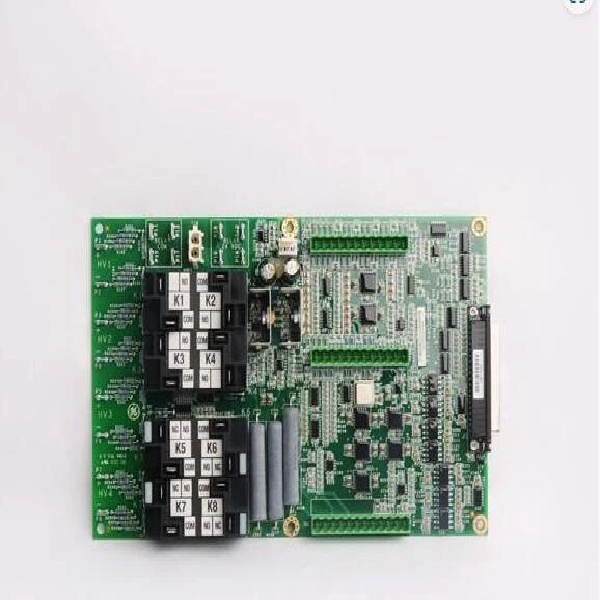
IS210AEAAH1B
Field Service Pitfalls: What Rookies Get Wrong
Ignoring the Suffix and Environmental Specifications
An overconfident rookie technician is dispatched to replace a faulty I/O module in a coastal wind turbine. He grabs a standard IS210AEAAH1B from the central warehouse, ignoring the “BJD” part number listed on the turbine’s bill of materials. He installs the standard module, and the turbine powers up without immediate issues. However, six months later, during the rainy season, the unprotected standard module shorts out due to moisture ingress, causing a catastrophic communication loss and a forced turbine shutdown during peak wind speeds.
- The Mistake: Using a non-conformal coated, incorrect suffix replacement part in a harsh environment. The standard module lacked the specific HW_ID required by the turbine’s safety certification and was vulnerable to the high humidity of the coastal climate.
- Field Rule: Always match the full part number, including the suffix, when replacing components in critical infrastructure. Understand that suffixes like “BJD” often indicate crucial environmental protections (like conformal coating) or specific OEM calibrations that are non-negotiable for the safe and reliable operation of the asset. Never assume a base-model part is a suitable substitute.