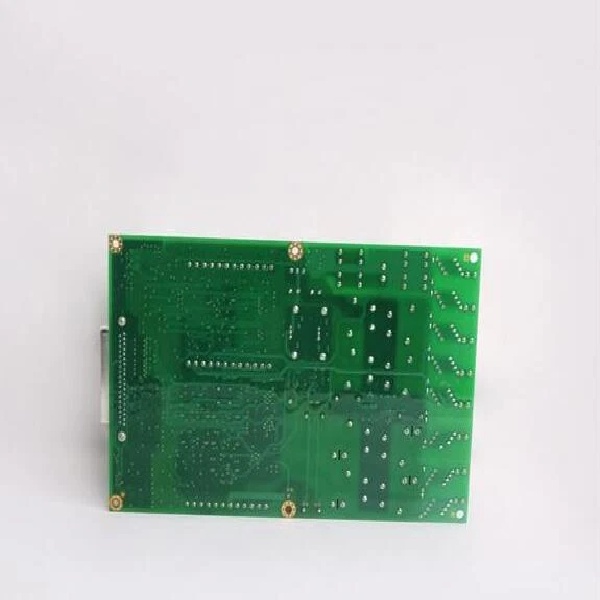
Description
Hard-Numbers: Technical Specifications
- Processor: High-speed Digital Signal Processor (DSP) (Executes deterministic control algorithms)
- Communication Interface: GE Serial Peripheral Interface (SPI) / IONet (Ensures low-latency data exchange with the main controller)
- Functional Revision: B (Includes enhanced hardware robustness and ESD protection)
- Configuration Suffix: BGA (Denotes a unique factory hardware baseline, jumper setting, or firmware image)
- Operating Voltage: 24V DC (Nominal, via backplane or dedicated terminals)
- Operating Temperature: 0°C to +60°C (Standard control room/enclosure environment)
- Signal Isolation: 1500V AC Channel-to-Channel, 2500V AC Channel-to-Ground (Protects against industrial electrical noise)
- Mounting: VME Rack Mount or DIN Rail (Dependent on the specific panel assembly)
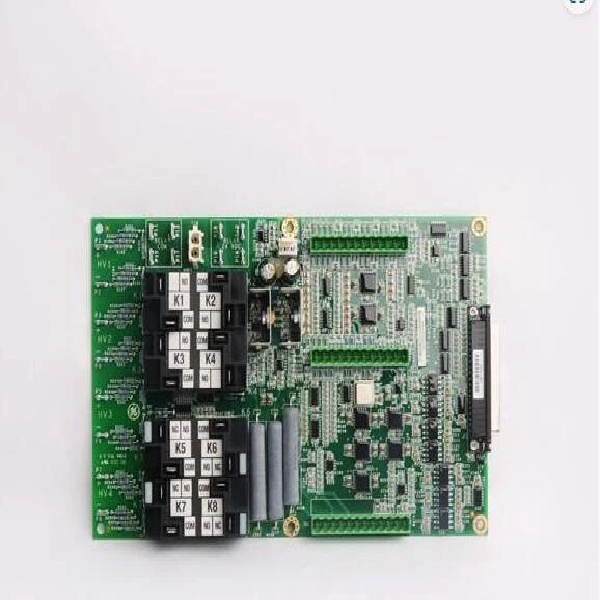
IS210AEAAH1B
The Real-World Problem It Solves
You are overseeing the annual maintenance outage for a combined-cycle power plant. During a routine backup power test, the plant’s Mark VIe controller throws a critical fault related to the auxiliary control module, forcing a manual shutdown of the secondary systems. You identify the failed card as an IS210AEAAH1BGA. Because this specific module handles the interfacing for your lube oil console and emergency shutdown (ESD) valves, the turbine cannot restart without it. You attempt to use a standard IS210AEAAH1B from your spare parts inventory, but the Mark VIe controller immediately flags a “Hardware Key Mismatch” and inhibits the start sequence. You realize that the original system integrator used a highly specific “BGA” configuration to match the precise analog scaling of your legacy field transmitters. The IS210AEAAH1BGA solves this by providing the exact, pre-calibrated hardware fingerprint the controller expects, preventing costly downtime and avoiding the need for a full system re-commissioning .
Where you’ll typically find it:
- Brownfield Retrofit Projects: In plants upgrading from older control systems (like Mark IV or Mark V) to Mark VIe, where the “BGA” configuration acts as a translation layer to match existing field wiring and sensor calibrations .
- Balance-of-Plant (BOP) Systems: Controlling critical auxiliary equipment such as boiler feed pumps, heat exchangers, or fuel gas conditioning skids where the control logic was developed around a specific hardware baseline .
- Pharmaceutical or Petrochemical Batch Processes: In facilities with strict validation protocols, the “BGA” suffix ensures that the installed hardware perfectly matches the validated engineering drawings and safety case analyses .
It acts as a highly specialized, trusted interface node, ensuring that the Mark VIe controller receives perfectly scaled and conditioned data from the field, maintaining the integrity of the plant’s safety and control loops.
Hardware Architecture & Under-the-Hood Logic
The “BGA” suffix indicates a specific manufacturing variant of the base IS210AEAAH1B module. While it shares the same core architecture, the “BGA” designation is critical for system integrity in specific applications.
- Unique Hardware Identification (HW_ID) & Firmware Binding: The Mark VIe controller uses a strict handshake protocol to verify the identity of connected hardware. The “BGA” suffix corresponds to a unique HW_ID stored in the module’s memory. Furthermore, this variant often ships with a specific, locked firmware version (
.fwifile). The controller will only execute the control program if the HW_ID and firmware checksums match the expectations of the downloaded application code, preventing unauthorized or incompatible hardware from compromising plant safety . - Application-Specific Calibration Constants: Different industrial processes require different signal conditioning. The “BGA” variant may be factory-calibrated with specific gain, offset, and linearization constants tailored for particular sensor types (e.g., a specific 4-20mA loop for a gas composition analyzer or a thermocouple input for a high-pressure steam line). These constants are stored in the module’s non-volatile memory and are inaccessible to the average field technician, ensuring the integrity of the original engineering design .
- Legacy I/O Emulation: In many retrofit scenarios, the “BGA” configuration is used to emulate the behavior of obsolete third-party I/O cards. By programming the DSP with specific lookup tables and timing loops, the module can mimic the response characteristics of the old hardware, allowing the plant to upgrade its control system without rewiring the entire field instrumentation network .
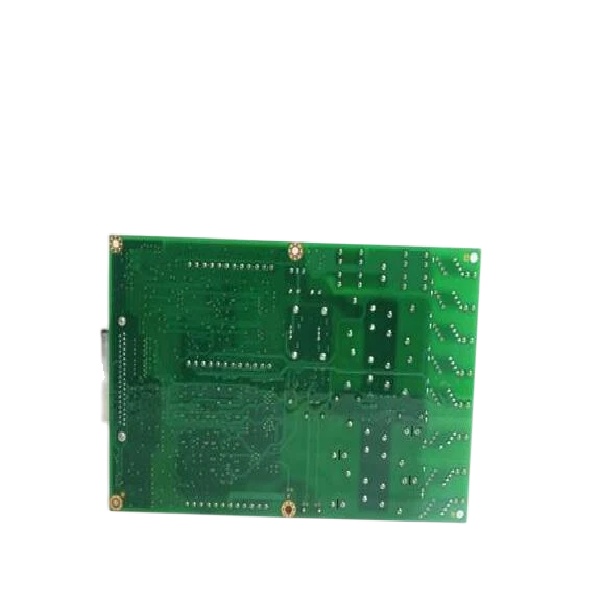
IS210AEAAH1B
Field Service Pitfalls: What Rookies Get Wrong
Violating Change Control Protocols
An experienced electrician is working on a turbine control panel during a planned outage. He notices an IS210AEAAH1BGA module with a faulty LED indicator. Thinking he is being proactive, he swaps it with a standard IS210AEAAH1B from the storeroom. The turbine starts up fine, but two weeks later, during a routine load change, the turbine trips on a “False Overspeed” alarm.
- The Mistake: Bypassing the plant’s change control procedures and ignoring the importance of the hardware suffix. The standard “B” revision had slightly different internal timing characteristics for its pulse accumulation circuitry. Under dynamic load conditions, this slight difference caused the speed signal to drift, triggering the overspeed protection logic.
- Field Rule: In any facility with a documented safety or quality management system (e.g., ISO 9001, SIL-rated), replacing a component with a different revision or suffix requires a formal Management of Change (MOC) review. The MOC process ensures that the potential impacts of the substitution are analyzed, tested, and approved by the responsible engineers before the equipment is returned to service.