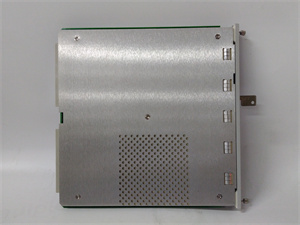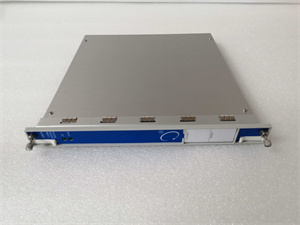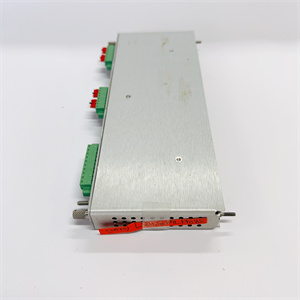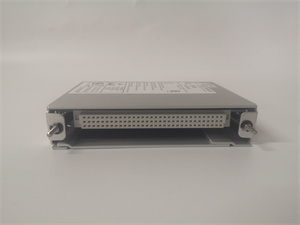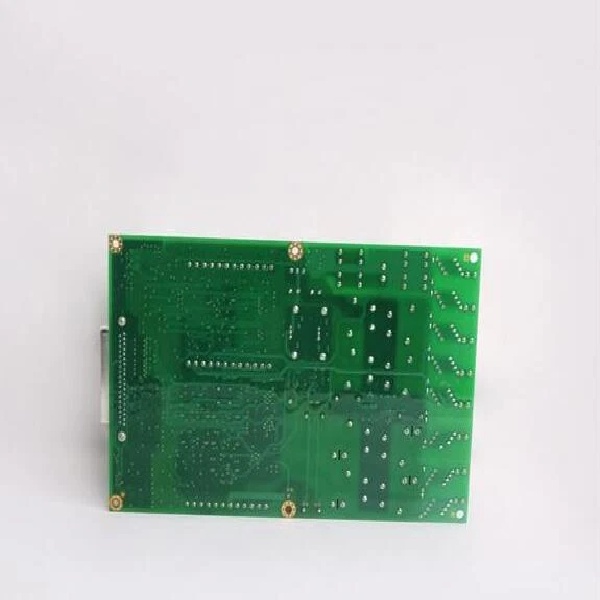
Description
Hard-Numbers: Technical Specifications
- Communication Protocol: IONet / GE Serial Peripheral Interface (SPI)
- Functional Revision: B (Incorporates enhanced reliability and bug fixes from earlier revisions)
- Configuration Suffix: BFB (Denotes a specific factory hardware baseline, jumper configuration, or firmware image)
- Operating Voltage: 24V DC (Nominal, supplied via backplane or terminal block)
- Operating Temperature: -40°C to +85°C (Designed for harsh wind farm environments)
- Isolation Voltage: 1500V AC Channel-to-Channel, 2500V AC Channel-to-Ground
- Mounting: VME Rack Mount or DIN Rail Mount (Depending on the specific nacelle cabinet assembly)
- Connectors: Front-panel ports for IONet/Ethernet, plus backplane connectors for VME communication
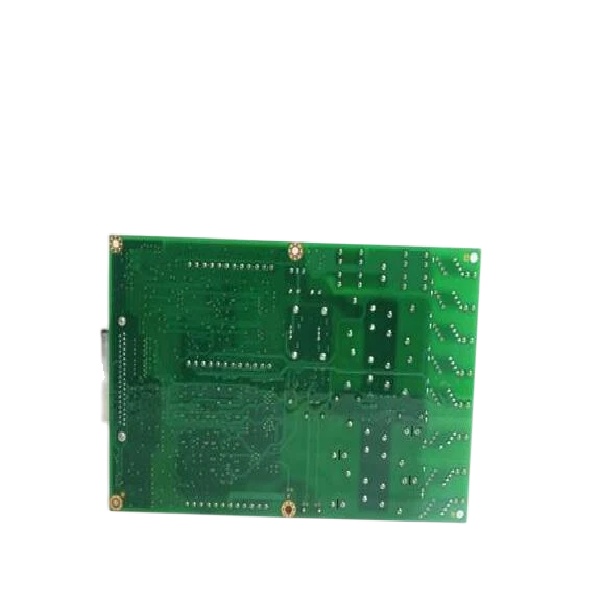
IS210AEAAH1B
The Real-World Problem It Solves
You are troubleshooting a GE 1.5MW wind turbine that has tripped offline during a severe storm. The SCADA system reports a “Loss of Communication” error with the nacelle’s primary control module. You drive to the remote wind farm, brave the icy conditions, and climb the tower. Inside the nacelle control cabinet, you find an IS210AEAAH1BFA module with a solid red fault light. You happen to have a spare IS210AEAAH1B in your toolkit. You perform a hot-swap, but the turbine still won’t communicate, and now the controller reports a “Hardware Key Mismatch.” You realize too late that this specific turbine’s ToolboxST project file strictly requires the “BFB” hardware identifier. Because the “BFB” configuration contains specific calibration data and a hardcoded hardware ID essential for this turbine’s yaw and pitch control loops, substituting a standard “B” revision causes a safety lockout. The IS210AEAAH1BFB solves this by being the exact, pre-configured replacement that matches the turbine’s safety certification and hardware definition file, getting the turbine back online without a costly re-engineering visit from the OEM .
Where you’ll typically find it:
- Wind Turbine Nacelle Control Cabinets: Acting as a central I/O processor or communication bridge between the Mark VIe controller and the blade pitch/servo systems .
- Offshore Wind Farms: Deployed in harsh, salty environments where the “Revision B” hardware enhancements provide superior corrosion resistance and ESD protection compared to older revisions .
- Distributed Wind Farm SCADA Networks: Serving as a critical node that aggregates sensor data (anemometers, temperature probes, vibration sensors) and transmits it back to the centralized farm SCADA via IONet .
It acts as the specialized communication and control “brain” for the nacelle, ensuring that the Mark VIe controller receives accurate, noise-free data from the field to make split-second decisions on blade pitching during turbulent winds.
Hardware Architecture & Under-the-Hood Logic
The “BFB” suffix is not just a random assortment of letters; it dictates the specific genetic code of this AE module. While it shares the same physical footprint as other IS210AEAAH1B variants, its internal configuration is highly specialized.
- Unique Hardware Identification (HW_ID) & Firmware Locking: Just like the “BFA” variant, the “BFB” has a specific HW_ID programmed into its memory. What makes the BFB unique is its association with a specific firmware baseline (often denoted by the “.fwi” file in the ToolboxST project). The Mark VIe controller performs a strict checksum and ID verification at boot-up. If the HW_ID or firmware CRC (Cyclic Redundancy Check) doesn’t match the project’s security certificate, the controller will refuse to initialize the module to prevent potentially unsafe control actions .
- Optimized Signal Processing for Aerodynamics: The “BFB” configuration is often tailored for applications requiring higher-speed analog-to-digital conversion and deterministic output updates. In wind turbines, controlling the blade pitch requires extremely fast processing of anemometer data and generator RPM. The BFB variant ensures that the DSP (Digital Signal Processor) inside the module prioritizes these aerodynamic control loops to prevent overspeed conditions during gusting winds .
- Enhanced EMI/RFI Filtering: Wind turbines are essentially giant antennas sitting on top of towers. They are bombarded with electromagnetic interference (EMI) from lightning strikes and radio frequency interference (RFI) from nearby communication towers. The “BFB” hardware revision incorporates enhanced input filtering and transient voltage suppression diodes on its communication and I/O lines, ensuring that a lightning strike miles away doesn’t corrupt the data packets traveling across the IONet .
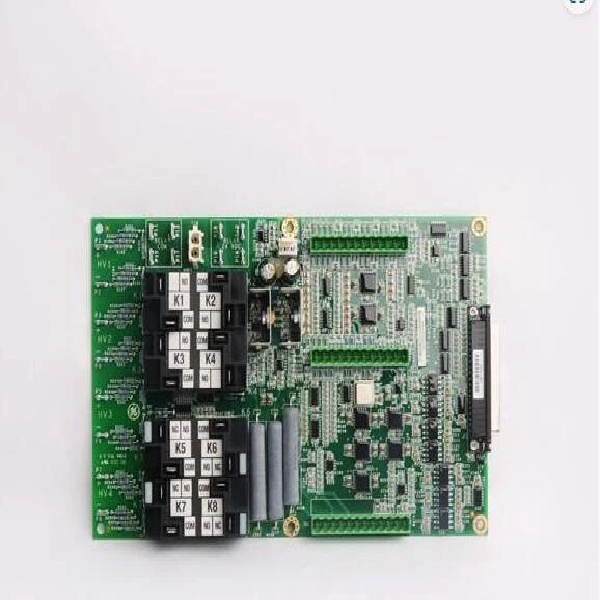
IS210AEAAH1B
Field Service Pitfalls: What Rookies Get Wrong
The “Universal Spare” Assumption
A site technician has a generic IS210AEAAH1B module in his truck. He arrives at a turbine that has tripped with a suspected AE module failure. He swaps out the faulty IS210AEAAH1BFB with his generic spare. The turbine now displays a “Hardware Mismatch” alarm on the HMI, and the turbine is locked out of starting. The technician spends the next 6 hours trying to figure out why the “identical” board won’t work.
- The Mistake: Assuming that because the first 13 characters of the part number are the same, the boards are functionally identical. In the Mark VIe Wind series, the suffix (BFB vs. B) dictates the specific hardware configuration, calibration constants, and firmware compatibility. The controller is programmed to reject any hardware that doesn’t exactly match the configured suffix to maintain safety integrity .
- Field Rule: Never assume a base-part-number match is good enough for a swap in a Mark VIe Wind turbine. Always check the turbine’s specific Bill of Materials (BOM) or the ToolboxST Hardware Definition File (
.hwd). If you must use a different suffix to get the turbine online, you will need the OEM engineering password to modify the.hwdfile, recompile the code, and download it to the controller—a process that can take hours and requires specialized training.