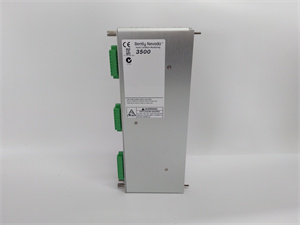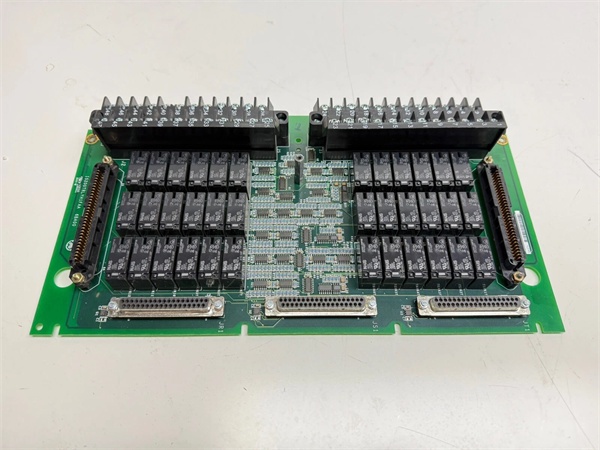
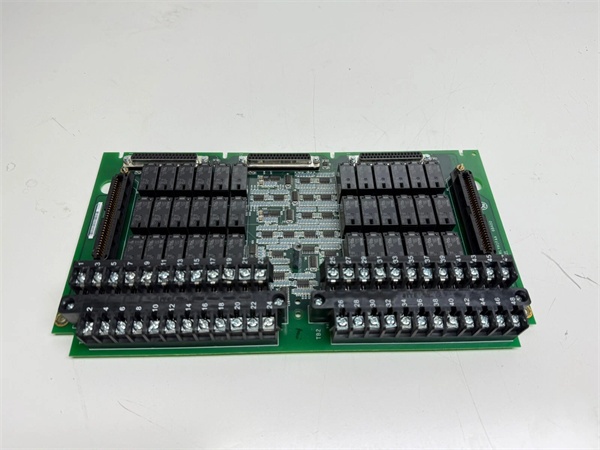
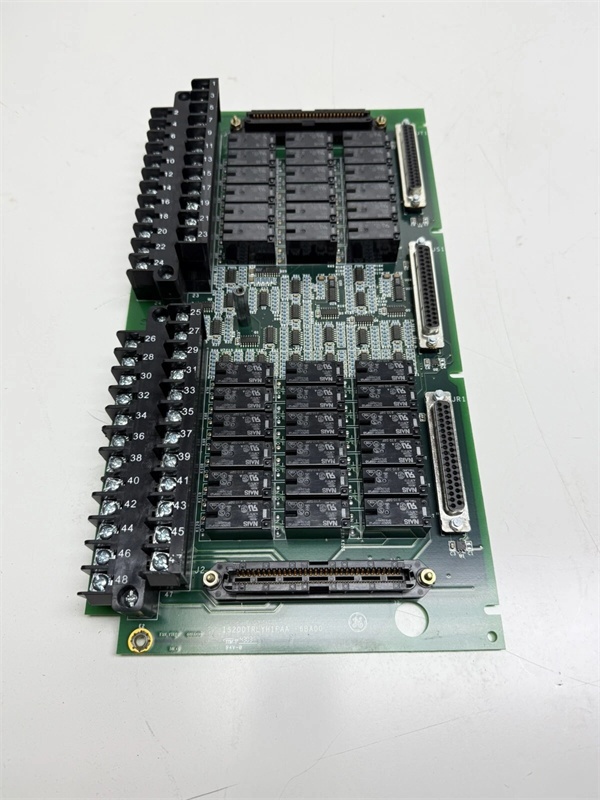
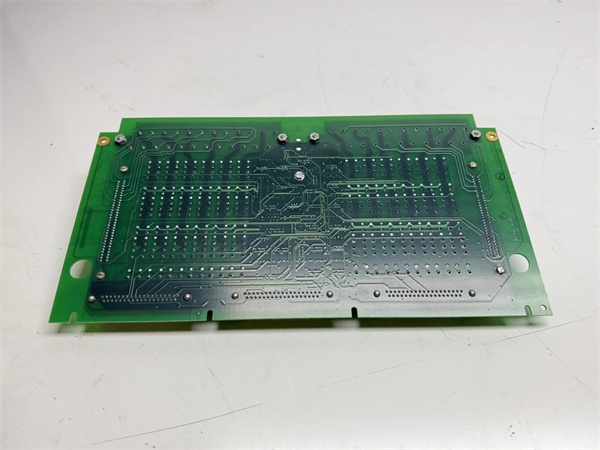
Description
Hard-Numbers: Technical Specifications
- Operating Voltage: 24V DC (Nominal, typical for Mark VIe I/O packs)
- Compatible Systems: Mark VI, Mark VIe, and EX2100 Control Platforms
- Communication Interface: IONet / Ethernet (High-speed communication with the central controller)
- Physical Dimensions: Approx. 26 cm x 15 cm x 3 cm (Standard AE pack form factor)
- Weight: Approx. 0.3 – 0.5 kg
- Operating Temperature: -30°C to +65°C (Designed for harsh industrial and outdoor environments)
- Protection: Conformal Coated PCB (Moisture, dust, and chemical resistance)
- Mounting: DIN-Rail or Rack-Mounted (Depending on the specific panel configuration)
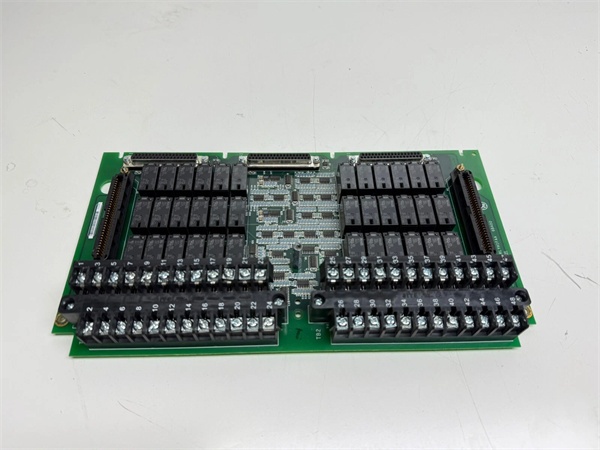
The Real-World Problem It Solves
You are servicing a wind turbine nacelle equipped with a GE Mark VIe control system. The turbine is experiencing intermittent communication dropouts with the main controller, leading to unnecessary fault shutdowns during high-wind conditions. The existing generic I/O module lacks the processing speed and environmental hardening required for the vibration and temperature monitoring systems. You need a direct replacement or upgrade that offers robust signal handling, enhanced electromagnetic interference (EMI) protection, and guaranteed compatibility with the Mark VIe architecture to restore the turbine’s grid availability.
Where you’ll typically find it:
- Wind Turbine Nacelles: Mounted within the control cabinets of GE wind turbines, interfacing directly with sensors for pitch control, yaw systems, and generator monitoring .
- Excitation Control Panels (EX2100): Deployed in power generation facilities to manage the real-time feedback and control loops necessary for voltage regulation and reactive power output .
- Balance of Plant (BOP) Systems: Handling specialized analog and digital I/O for auxiliary systems where high-speed, deterministic communication with the main Mark VIe processor is critical .
It acts as a dedicated, high-speed interface between the raw field instrumentation and the main turbine controller, filtering out noise and executing control algorithms to maintain operational stability.
Hardware Architecture & Under-the-Hood Logic
The “H1AAA” suffix denotes a specific hardware configuration or revision within the AE (Acquisition & Excitation) series of Mark VIe I/O packs. It is designed to operate as a standalone controller or as a distributed I/O node communicating over the IONet.
- High-Speed Signal Processing: Unlike standard discrete I/O, the AE series boards are built to handle time-critical data. They utilize high-precision analog-to-digital converters (ADCs) and digital signal processors (DSPs) to process vibration, temperature, and voltage signals locally before transmitting the data to the main controller via IONet .
- Deterministic IONet Communication: The module acts as an active node on the IONet (Industrial Ethernet) network. It employs GE’s proprietary communication stack to ensure data packets are delivered with deterministic timing, meaning control commands and sensor updates are synchronized across the entire turbine system, preventing race conditions or outdated data from affecting turbine safety .
- Environmental Hardening & Isolation: The PCB is conformally coated to withstand the high humidity, salt spray, and temperature fluctuations common in wind turbine nacelles or power plant environments. Robust galvanic isolation protects the sensitive 24VDC logic from ground loops and voltage transients generated by nearby variable frequency drives (VFDs) or lightning strikes .
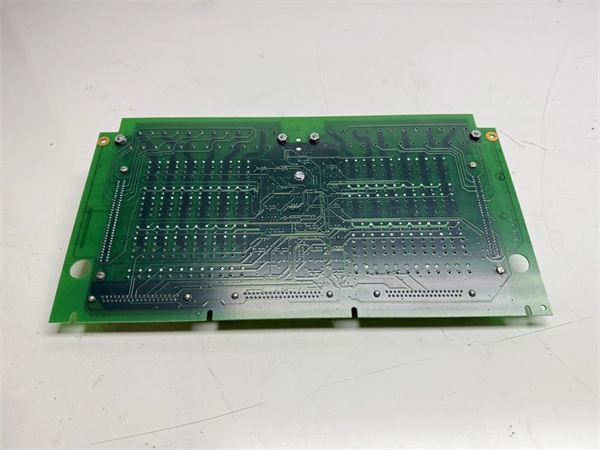
Field Service Pitfalls: What Rookies Get Wrong
Mismatching Firmware Versions During Replacement
A technician swaps a faulty AE board with a brand-new IS210AEAAH1AAA. After powering up, the Mark VIe controller throws a “Firmware Mismatch” error, and the turbine remains in a locked-out state.
- The Mistake: The physical hardware is compatible, but the firmware loaded onto the new AE pack is different from what the main Mark VIe processor expects. The controller rejects the device to prevent unpredictable behavior.
- Field Rule: Never assume a new module has the correct firmware. Always check the turbine’s maintenance logs for the currently running firmware version. Use the GE ToolboxST software to flash the new AE board with the exact firmware version matching the rest of the Mark VIe rack before installing it in the live system.
Overlooking the Onboard Configuration DIP Switches/Jumpers
An engineer is integrating an IS210AEAAH1AAA into an existing EX2100 excitation rack. The wiring is identical to the old board, but the HMI reports “Loss of IONet Node.”
- The Mistake: Modern AE packs often have onboard DIP switches or software-configurable node IDs. The engineer forgot to set the node address on the new module to match the address of the replaced unit. The Mark VIe controller is looking for a device at the old address, but the new module is broadcasting at a default or incorrect address.
- Quick Fix: Before installing the module, check the DIP switch settings on the old hardware (or consult the system drawings) and replicate them on the new unit. If it’s software-configured, use a USB cable and ToolboxST to read the “Personality Module” (if equipped) or manually assign the correct Node ID.
Improper Grounding in High-Noise Environments
A wind farm technician replaces an AE board in a nacelle. Two weeks later, the new board fails due to suspected ESD or electrical surge.
- The Mistake: Working in the confined, electrically noisy environment of a turbine nacelle without proper grounding. The technician did not use a static wrist strap, or the control cabinet’s DIN rail grounding screw was loose. Static discharge from the technician or induced voltage from unshielded cables damaged the sensitive input buffers of the AE pack.
- Field Rule: Always verify the control cabinet’s grounding integrity before touching sensitive electronics. Use an anti-static wrist strap when handling the module. Ensure that all field instrument cables connected to the AE pack are properly shielded and grounded at the designated single-point ground within the cabinet.