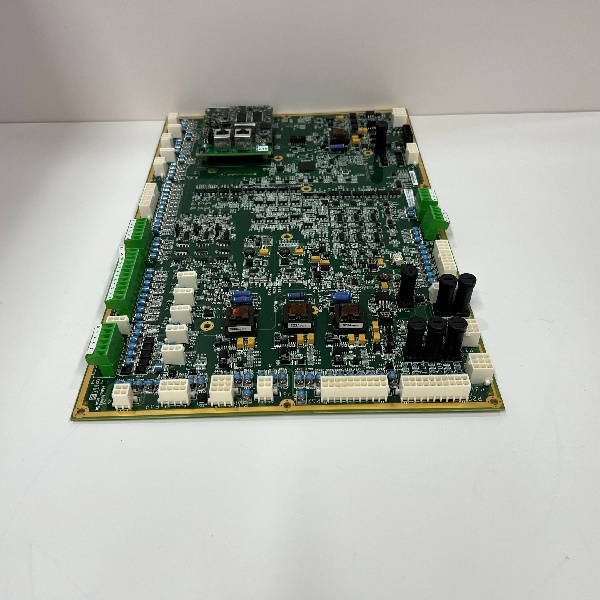
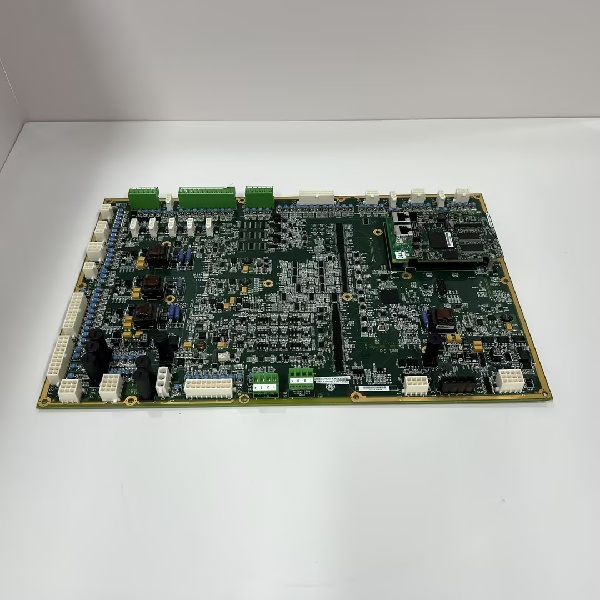
Description
Hard-Numbers: Technical Specifications
- Operating Voltage: 24 VDC (Nominal, 18-32VDC input range)
- Communication Protocols: Modbus TCP/IP, EGD (Ethernet Global Data), RNET
- Network Speed: 10/100 Mbps (Auto-negotiating Ethernet ports)
- Operating Temperature: -40°C to +70°C (Tough enough for offshore salt spray and desert heat)
- Isolation Rating: 1500 VDC (Galvanic isolation between field I/O and backplane logic)
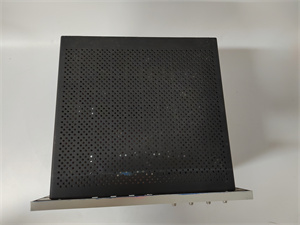
- Physical Dimensions: 178 x 51 x 305 mm (L x W x H)
- Mounting Style: DIN Rail or Mark VIe Rack Mount
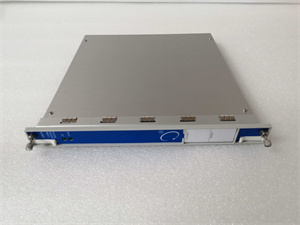
- Diagnostics: Front-panel LED array (Power, Link/Activity, Status, Fault)
- Humidity Tolerance: 5% to 95%, non-condensing
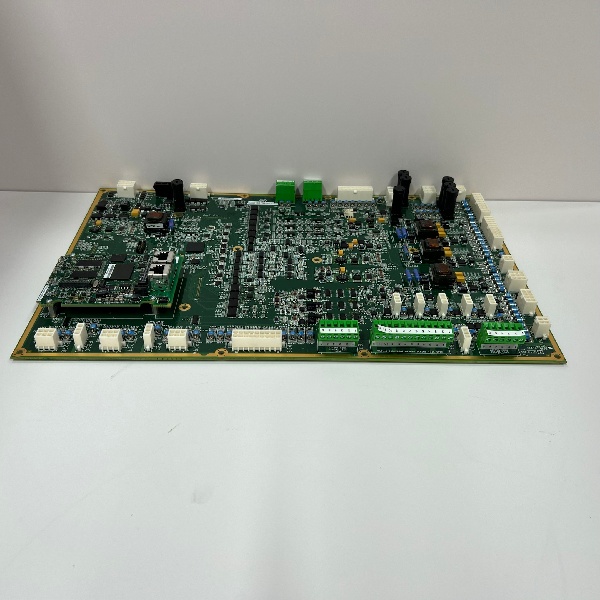
GE IS200WETAH1AHC
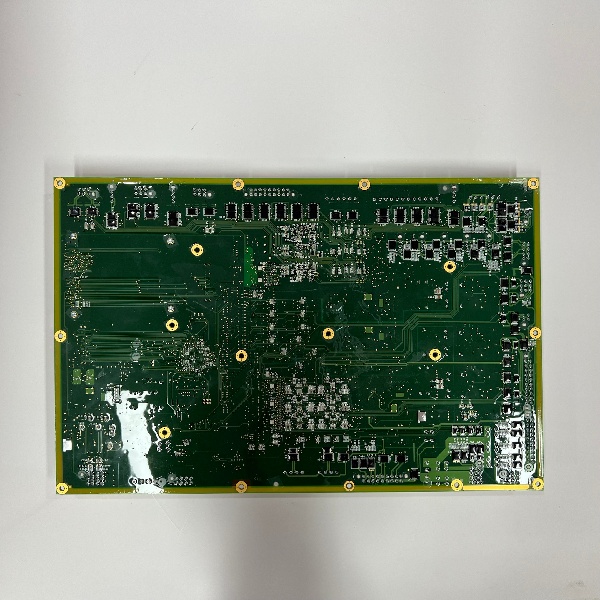
GE IS200WETAH1AHC
The Real-World Problem It Solves
You are troubleshooting a Mark VIe wind turbine during a brutal hailstorm. The nacelle is getting hammered, and the HMI is flooding with “Pitch Position Lost” and “Network Storm” alarms because the standard I/O daisy-chains can’t handle the electrical transients from nearby lightning strikes. You need a hardened, localized I/O block that can aggregate nacelle temperature, pressure, and proximity sensors, filter the signal noise, and feed deterministic data to the main controller over a redundant Ethernet link.
Where you’ll typically find it:
- Wind Turbine Nacelle Control Cabinets: DIN rail mounted near pitch motors, yaw drives, and vibration sensors.
- Offshore Wind Farms: Battling constant salt mist and extreme temperature swings where commercial network gear dies in months.
- Turbine Control Retrofits: Replacing noisy, slow serial-linked I/O with high-speed deterministic Ethernet architectures.
It eliminates signal degradation and single-point-of-failure network drops by acting as a rugged, deterministic I/O and networking pit stop in the most hostile parts of the turbine.
Hardware Architecture & Under-the-Hood Logic
This board is a dual-threat workhorse. It doesn’t just pass data; it conditions and protects it. Located on the DIN rail in the nacelle, it bridges the chaotic physical environment and the pristine Mark VIe backplane. The “AHC” suffix denotes a project-specific build with enhanced component grading and optimized trace routing for maximum MTBF in mission-critical deployments.
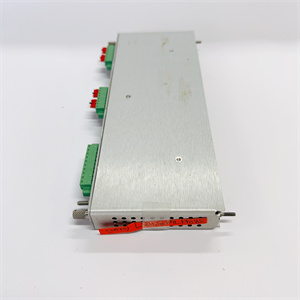
- Signal Acquisition & Conditioning: Raw analog (4-20mA) and digital signals from local nacelle devices land on the terminal blocks. The board immediately clamps transient voltages and applies hardware filtering to remove electrical noise from the generator’s excitation system and vibration-induced contact chatter.
- Local Processing & Buffering: It processes the cleaned signals locally, applying scaling and alarming logic. This buffers the data and prevents the main controller from being overwhelmed by high-frequency interrupt storms.
- Network Injection & Redundancy: The processed data is encapsulated into Ethernet frames. The onboard managed switch then routes this traffic to the RNET (Redundant Network), ensuring that even if one Ethernet cable is severed by falling ice, the data stream remains intact.
Field Service Pitfalls: What Rookies Get Wrong
Neglecting Ethernet Cable Shielding in High-EMI Zones
A junior tech runs standard CAT5e patch cables from the ETA module to the nacelle’s primary network switch because “it was cheaper.” During a lightning storm, the unshielded cables act as antennas, picking up massive EMI. The induced voltage spikes cause CRC errors, triggering a “Network Storm” fault and an emergency full-feather trip.
- Field Rule: Never cheap out on network cabling in a turbine. Use industrial-grade, double-shielded CAT6a (or better) with metal-housed RJ45 connectors. Ensure the shield is grounded to the cabinet at both ends to divert transient energy away from the sensitive electronics.
Blindly Swapping Boards Without Verifying DIP Switch Settings
An electrician swaps a fried AHC module with a spare from the truck. He downloads the configuration, but the turbine immediately throws a “Hardware Mismatch” alarm and refuses to sync. He didn’t realize the DIP switches on the replacement board (setting the node address and redundancy mode) didn’t match the physical slot configuration of the original.
- Quick Fix: Before pulling the bad board, photograph the DIP switch settings. Verify the new board’s switches match exactly. A mismatched node address will bring down the entire RNET segment. Always verify the physical hardware ID matches the ToolboxST configuration.
Undersizing the 24VDC Power Supply Feed
A mechanic installs a new ETA module but taps into an existing 24VDC power distribution block already feeding a dozen other devices. When the turbine’s hydraulic pump starts, the inrush current causes a momentary voltage sag. The ETA module resets, dropping all local I/O and causing the turbine to trip on “Safety Chain Break.”
- Field Rule: Check the power budget. The ETA module draws significant current during network negotiation and relay actuation. Use a dedicated 24VDC fused circuit for the module. Measure the voltage at the terminal block under full load; if it dips below 21VDC, you need a heavier gauge supply wire or a larger power supply.
Commercial Availability & Pricing Note
Please note: The listed price is for reference only and is not binding. Final pricing and terms are subject to negotiation based on current market conditions and availability.