Description
Hard-Numbers: Technical Specifications
- Operating Voltage: 24 VDC (Nominal, 18-32VDC range)
- ADC Resolution: 24-Bit (Delivers micro-degree measurement precision)
- Channel Isolation: 500 Vrms (Fully isolates each sensor input from adjacent channels)
- Input Channels: 8 Independent Channels (Supports mixed sensor types)
- Sensor Compatibility: J, K, T, E, R, S, B, N Thermocouples & Pt100/Pt1000 RTDs
- Operating Temperature: -40°C to +70°C (Survives freezing turbine halls and scorching exhaust bays)
- Communication Protocols: EGD, Modbus TCP/IP, RNET (Seamless Mark VIe backplane integration)
- Diagnostics: Per-channel Open/Short detection with ToolboxST software reporting.
- Physical Dimensions: 178 x 51 x 305 mm (Standard Mark VIe DIN rail or rack mount)
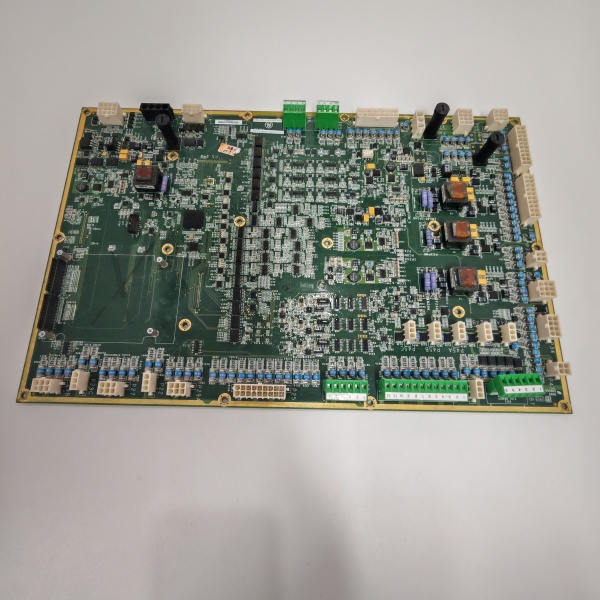
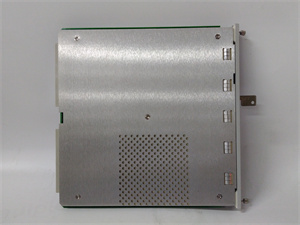
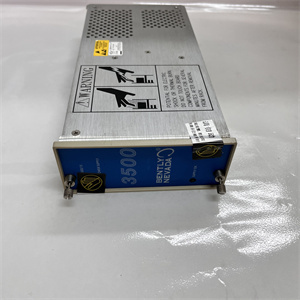
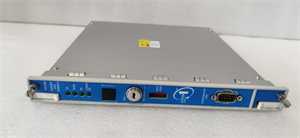
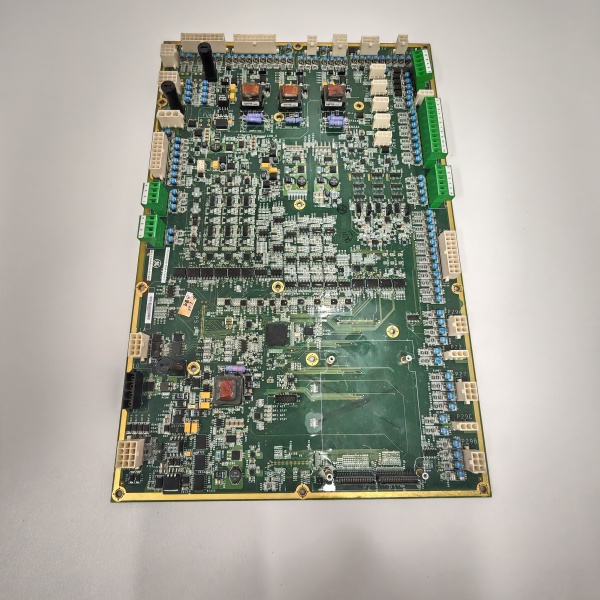
GE IS200WETAH1AEC
The Real-World Problem It Solves
You are calibrating a steam turbine in a combined-cycle plant. The HMI is showing erratic exhaust temperatures, jumping ±15 degrees every time the main feedwater pump kicks on. Your standard 16-bit I/O cards can’t filter out the electrical hash from the VFDs, leading to false overtemperature trips and wasted downtime. You need a rugged, high-resolution temperature aggregator mounted locally to scrub the noise, isolate the sensors from each other, and feed clean, deterministic data to the Mark VIe controller.
Where you’ll typically find it:
- Gas & Steam Turbine Skids: Directly interfacing with bearing RTDs and exhaust thermocouples.
- Power Generation Halls: Monitoring critical thermal gradients in generators and exciters.
- Heavy Industrial Process Plants: Providing precise temperature data in environments with massive inductive loads and electrical noise.
It eliminates false trips caused by sensor electrical noise and ground loops by acting as a heavily shielded, high-precision analog-to-digital converter that refuses to blink when the big motors start spinning.
Hardware Architecture & Under-the-Hood Logic
This board is a precision instrument wrapped in a rugged industrial frame. It doesn’t guess; it measures. Located in the heart of the turbine control cabinet, it bridges delicate analog sensors and the digital Mark VIe backplane. The “AEC” suffix denotes a premium hardware build with enhanced isolation and component grading for maximum Mean Time Between Failures (MTBF).
- Cold Junction Compensation & Signal Conditioning: As thermocouple/RTD signals land on the terminal blocks, the board applies per-channel cold junction compensation. It immediately clamps transient voltages and uses hardware filtering to strip out noise from nearby generator exciters.
- 24-Bit Analog-to-Digital Conversion: Unlike standard 12 or 16-bit cards, this module uses a 24-bit ADC. It processes the cleaned analog signal locally into a highly granular digital value, ensuring the controller receives pinpoint-accurate temperature data without quantization errors.
- Deterministic Network Injection: The processed data is encapsulated into Ethernet frames and prioritized onto the RNET backbone. Because the heavy lifting happens on the card, it prevents the main controller from being bogged down by high-frequency analog polling.
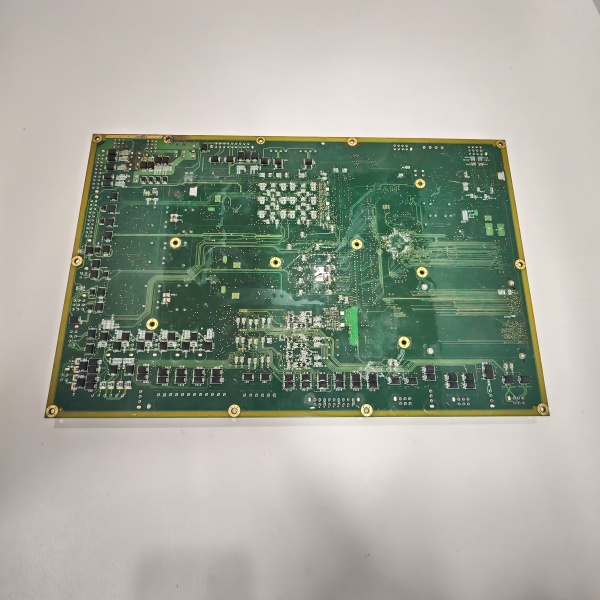
GE IS200WETAH1AEC
Field Service Pitfalls: What Rookies Get Wrong
Ignoring 500V Isolation and Creating Ground Loops
A technician wires three different types of thermocouples into the module but ties all their shield drains to the cabinet ground. Because the sensors are located on different parts of the turbine, they have slight voltage potential differences. This creates a ground loop. The isolation barrier creates a floating input, leading to wildly oscillating temperature readings and eventual module latch-up.
- Field Rule: Respect the 500V isolation. Use the “three-wire” compensation method for RTDs to cancel out lead resistance. Never connect the sensor shield drain to the module’s ground terminal; tie it to the cabinet ground point at least 3 inches away from the module.
Mixing Sensor Types Without Software Reconfiguration
An electrician replaces a faulty standard temperature card with the high-precision AEC variant. He wires a mix of Type K thermocouples and Pt100 RTDs into the same bank and expects the module to auto-detect them. The Mark VIe controller throws a “Configuration Mismatch” error, disabling the turbine’s overtemperature protection logic.
- Quick Fix: This isn’t a dumb multiplexer; it’s an intelligent I/O block. You must use ToolboxST to explicitly define the sensor type (TC vs. RTD) and compensation method for each individual channelbefore downloading the configuration. Verify the scaling logic matches the physical wiring.
Using Undersized Wire Gauge for Analog Loops
A rookie pulls new thermocouple wire for a bearing temperature monitor using cheap 22 AWG solid core wire because it was left over from a telephone job. The wire acts as an antenna, picking up massive EMI from the adjacent 480VAC bus. The resulting signal jitter causes the turbine to trip on a phantom “Bearing Overtemp” fault during a thunderstorm.
- Field Rule: Never use small-gauge wire for analog sensor runs in a turbine hall. Use shielded twisted pair (Belden 8761 or equivalent) with an adequate AWG (18-20). Ensure the shield is continuous and grounded at the source, not the module.
Commercial Availability & Pricing Note
Please note: The listed price is for reference only and is not binding. Final pricing and terms are subject to negotiation based on current market conditions and availability.