
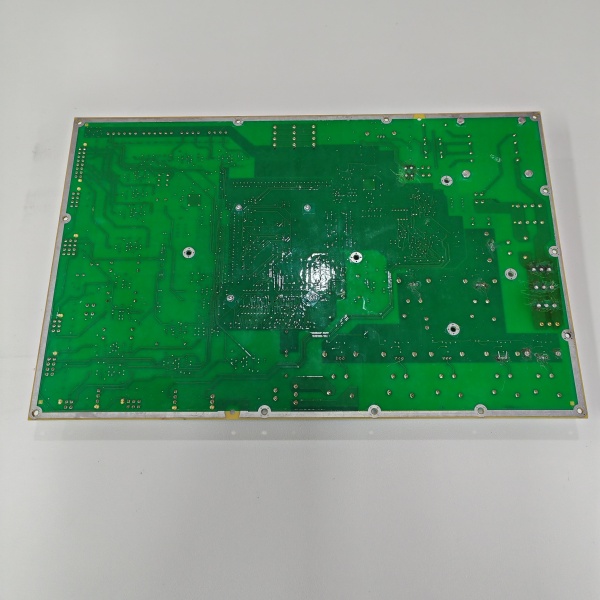
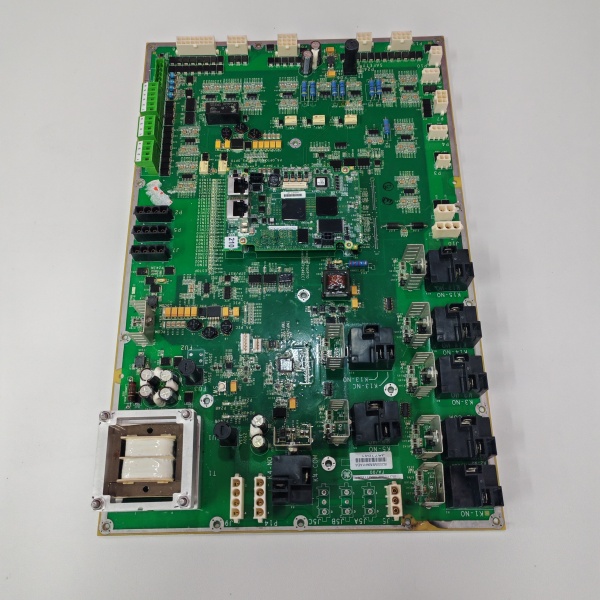
Description
Hard-Numbers: Technical Specifications
- Operating Voltage: 24 VDC (Nominal, typical industrial range)
- Communication Protocols: Modbus RTU/TCP, CANopen, Profibus DP (Via onboard transceivers)
- Operating Temperature: -40°C to +70°C
- Protection Rating: IP20 (Designed for sealed control cabinet installation)
- Power Consumption: Typically < 15 Watts (Dependent on active communication loads)
- Isolation Rating: 1500 VDC (I/O channels isolated from backplane/logic)
- Environmental Resistance: Conformal Coated (MIL-I-46058C compliant for humidity/salt mist)
- MTBF: > 100,000 hours (Calculated per MIL-HDBK-217F standards)
The Real-World Problem It Solves
You’re troubleshooting a Mark VIe rack in a nacelle that’s vibrating like a paint shaker during a 25 mph gust. The main controller is throwing intermittent “Pitch Position Mismatch” faults, and the yaw drive is hunting uncontrollably. You need a hardened I/O distribution board that can withstand the constant mechanical shock, digest noisy 24VDC sensor signals, and execute deterministic control loops without frying its traces in salty, humid air.
Where you’ll typically find it:
- Wind Turbine Nacelle Control Cabinets: Mounted on the DIN rail, interfacing directly with pitch motors, yaw drives, and emergency braking solenoids.
- Offshore Wind Farms: Surviving constant salt mist and vibration where standard commercial-grade I/O boards fail within months.
- Turbine Retrofit Projects: Upgrading legacy wind farm controls to modern Mark VIe architecture while reusing existing field wiring.
It turns a noisy, vibration-prone nacelle environment into a deterministic, fault-tolerant control zone.
Hardware Architecture & Under-the-Hood Logic
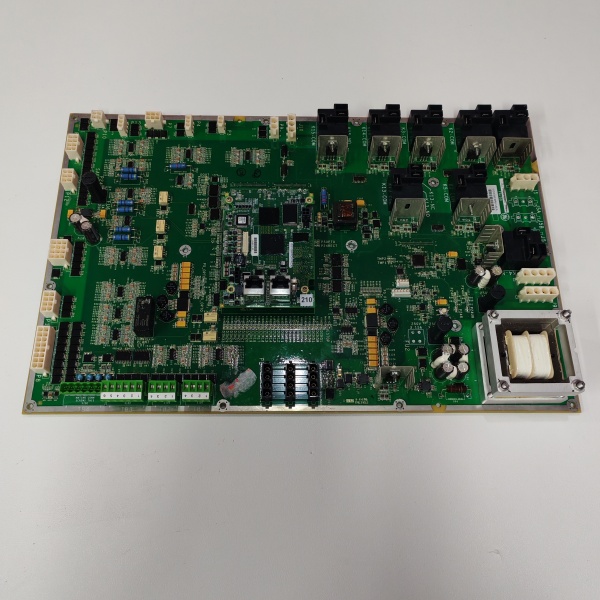
This board doesn’t run the turbine’s primary aerodynamic logic—that lives in the main processor. Instead, think of the WEMA as the pit boss for all auxiliary turbine functions. It sits on the DIN rail, acting as the high-density I/O aggregation point between the delicate Mark VIe backplane and the brutal reality of the nacelle. The “H1ACA” suffix denotes a specific revision with optimized trace routing for improved signal integrity and enhanced EMI filtering.
- Signal Aggregation & Conditioning: Raw 24VDC discrete signals (limit switches, parking brakes) and analog signals (temperature, pressure) land on the terminal blocks. The board conditions these signals, scrubbing electrical noise from the nacelle’s vibration and generator harmonics.
- Processor Handshake: The conditioned data is packetized and fed to the main Mark VIe processor via the backplane or high-speed serial links (Ethernet/Modbus). It offloads the real-time grunt work so the main CPU doesn’t choke on I/O scanning.
- Actuator Command Distribution: When the controller demands a blade pitch adjustment or yaw correction, the WEMA receives the digital command and drives the appropriate 24VDC outputs to engage contactors or interface with the pitch/yaw servo drivers.
- TMR Voting & Fail-Safe Logic: In triple-redundant configurations, the WEMA processes voting logic for critical shutdown commands (like emergency braking). If one control path glitches, the other two overrule it, preventing spurious turbine trips.
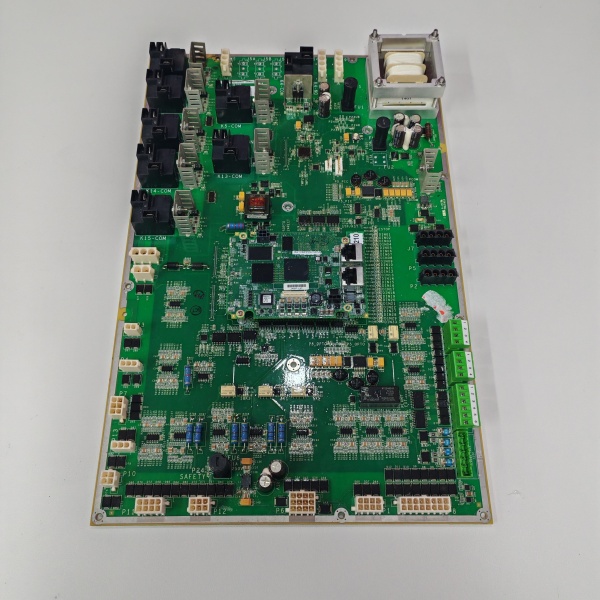
GE IS200WEMAH1ACA
Field Service Pitfalls: What Rookies Get Wrong
Using Unshielded Twisted Pair (UTP) for Digital Communication Links
A junior tech replaces a faulty WEMA board and uses standard thermostat wire to reconnect the Modbus RTU link to the pitch servo drives because it was the only spool left in the van. The next time the turbine yaws, the induced EMF from the 480VAC motor cables buried in the same conduit swamps the unshielded wires. The communication drops, and the turbine trips on “Pitch Bus Timeout.”
- Field Rule: Always use double-shielded, foil-braided twisted pair (Belden 3106A or equivalent) for any serial communication or analog signal wiring in the nacelle. Ground the drain wire at the WEMA terminal end only to prevent ground loops.
Ignoring the Conformal Coating During Annual Inspections
A mechanic notices a faint white residue building up around the relays on a five-year-old WEMA board in an offshore turbine. He wipes it off with a rag, unknowingly removing the compromised conformal coating. Three months later, a salt mist intrusion event causes a microscopic short across two traces, triggering an uncontrolled full-feathering of the blades and a $12,000 main bearing replacement.
- Quick Fix: During annual borescope or cabinet inspections, inspect the conformal coating under UV light. If you see cracking, chipping, or carbon tracking, the board needs immediate replacement. Once that protective layer is breached in a salt environment, the board is living on borrowed time.
Mixing Up 24VDC Feed Polarities on the Barrier Strips
An electrician is landing new 24VDC power feeds to the WEMA board after a cabinet cleanup. He accidentally reverses the positive and negative leads on the TB1 power block. While the board doesn’t fail immediately, the reversed polarity puts constant reverse bias on the input protection diodes. Two weeks later, a minor voltage spike from a lightning strike hits the nacelle, and the reversed diodes explode, taking the entire local I/O segment offline.
- Field Rule: Before tightening the first lug, verify your 24VDC feed polarity with a calibrated multimeter. Mark your wrenches with red and black tape if you have to. In low-voltage DC controls, reversed polarity is a silent killer that only manifests when you have a transient voltage event.
Commercial Availability & Pricing Note
Please note: The listed price is for reference only and is not binding. Final pricing and terms are subject to negotiation based on current market conditions and availability.


