Description
Product Introduction
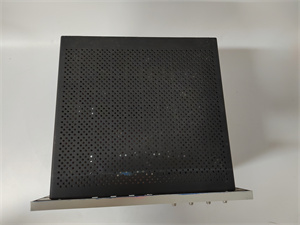
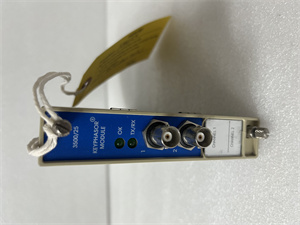
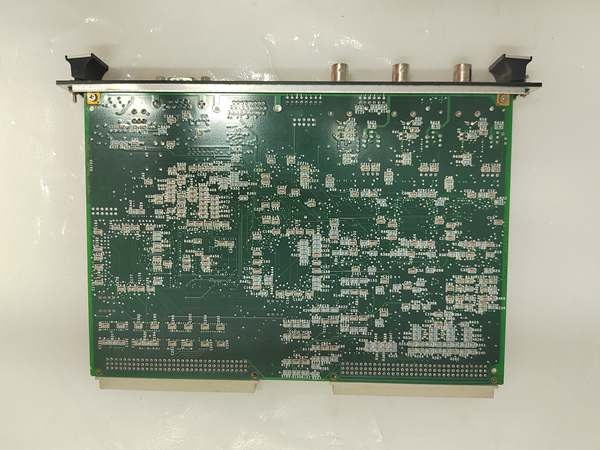
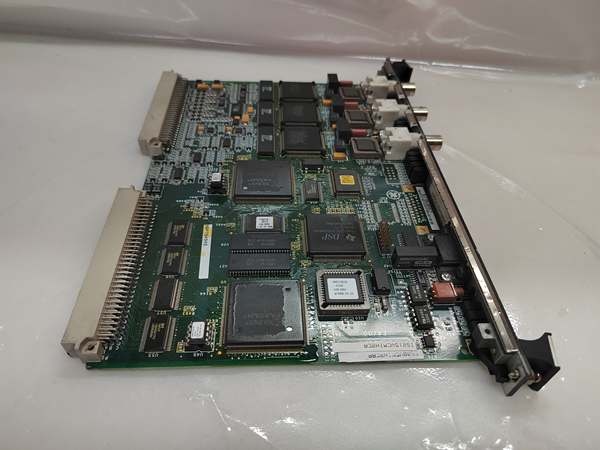
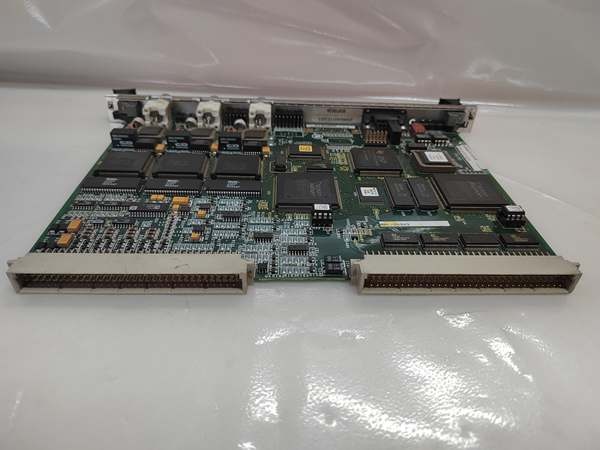
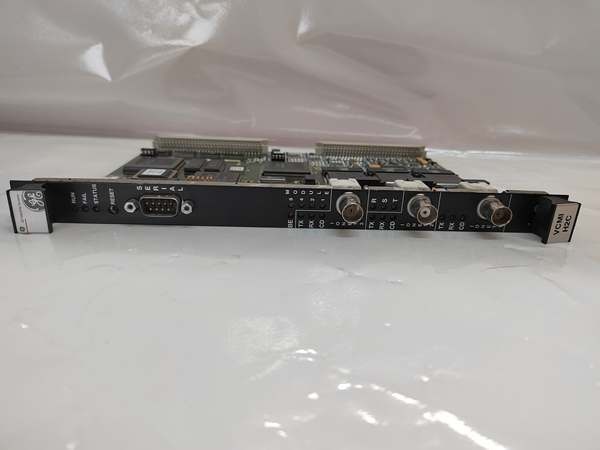
The GE is the VME Communication Interface (VCMI) board, serving as the traffic cop for Mark VI turbine control racks. It occupies Slot 1 of the VME chassis, arbitrating data between the controller processor, I/O boards, and the external IONet network via three front-panel ports.
This “H2CAA” revision utilizes a 32-bit TMS320C32 DSP and 32 KB of dual-port RAM for high-speed handshakes. It handles the deterministic timing required for turbine protection. Bus mastering latency typically stays under 10 µs during peak I/O scans—well, technically it depends on the backplane loading, but the DSP throughput is significant for a legacy VME arch .
Key Technical Specifications
| Parameter | Value |
|---|---|
| Processor | TMS320C32 (32-bit Floating-Point DSP) |
| Memory | 32 KB Dual-Port RAM (Inter-processor comms) |
| Power Req. | +5 Vdc @ 6 A (30 W), +28 Vdc (Logic, 18-32 V range) |
| IONet Ports | 3 x 10Base2 (BNC or Screw-Terminal style) |
| Serial Port | 1 x RS-232 (Screw-terminal, Front Panel) |
| VME Interface | Master/System Controller (Slot 1 Function) |
| Coating | Conformal Coated (H2 Revision) |
| Temp Range | -40 °C to +70 °C (Operational) |
| Form Factor | 6U VME (160 mm x 233 mm typical) |
| Indicators | 4 Groups (Status, Run, Fail, Link/Act) |
IS200VCMIH2CAA
Quality Control Process (Engineer’s Perspective)
- Incoming Verification: Match the GE serial to the manifest. Inspect the 96-pin DIN backplane fingers for carbon scoring—arcing leaves permanent marks. Check the front-panel BNC/terminal blocks for tightness.
- Live Functional Test: Seat in a VME test rack with +5 V / +28 V. Initiate the VCMI handshake; we monitor the “RUN” LED and IONet link status. Scope the DTACK line; bus grant cycles must complete in <10 µs under load.
- Electrical Parameter Test: Back-probe the +5 V rail with a Fluke 115 under DSP load. Ripple shouldn’t exceed 50 mV p-p. Megger the IONet shields to chassis at 500 V; leakage >10 µA spells trouble in turbine bays.
- Firmware Verification: Read the hardware ID via ToolboxST. Photograph the FPGA revision stickers—though your mileage may vary on units using mask-programmed PROMs vs flash.
- Final QC & Packaging: Clean DIN fingers with isopropanol. Bag in rigid ESD foam (VME cards are heavy). Label “QC Passed – Bus Master Test” with the date.
Replacement Pitfall Guide
❗ Slot 1 Requirement: The GE must go in Slot 1 (far left). Placing it in Slot 2 or 3 confuses the VME arbiter, causing “SYSFAIL” and halting the entire rack’s I/O scan.
❗ Power Sag: This board pulls 6 A on the +5 Vdc rail. If your rack’s PSU (e.g., VSPA) is aging, the voltage dip during VCMI initialization causes a watchdog reset loop. Check PSU load before swapping.
❗ IONet Termination: The three IONet ports (R, S, T) often require external terminators (e.g., TB817) on the last device in the chain. Forgetting these causes reflection noise, breaking sync with the UCSB controller.
❗ H2 Coating: This is an H2 (Coated) unit. Replacing it with a bare “A” revision in a steam-turbine bypass cabinet leads to creepage faults on the DSP within a year due to humidity.
❗ ESD to Backplane: The 96-pin DIN is a forest of pins. Discharge to the VME chassis frame before insertion—critical in dry control rooms (common in northern China winters).
Keep these in mind and you’ll cut 90% of rework time.
IS200VCMIH2CAA
Compatibility Matrix & Benchmarks
- GE → GE IS200VCMIH1A : Needs Adaptation — H1A is older; verify DSP speed matches project timing constraints.
- GE → GE IS215VCMIH2CA : Direct — IS215 is the “Assembly” (w/ faceplate); IS200 is the “PCB”; electrically identical.
- GE → GE IS420UCSBH4A (Mark VIe) : Incompatible — Different backplane (VME vs Custom); requires system migration.
- Bus Arbitration: < 10 µs (Grant to Data Valid)
- Data Throughput: 20 MB/s (VME64 theoretical max)
- IONet Sync: 100 Mbps (Deterministic, verify with OEM datasheet)