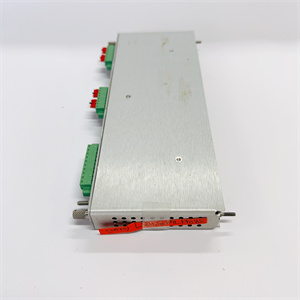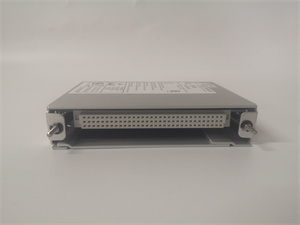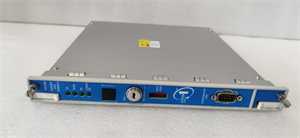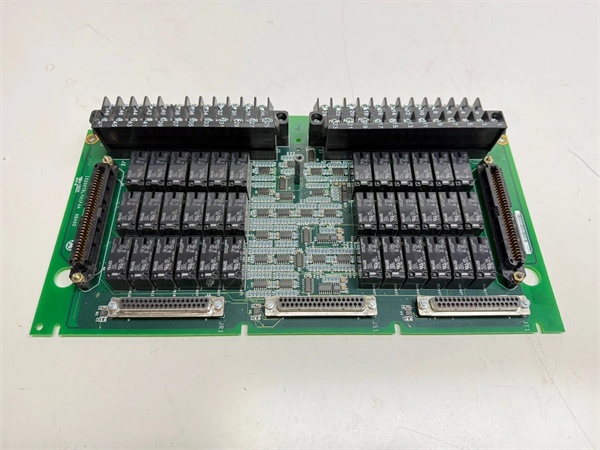
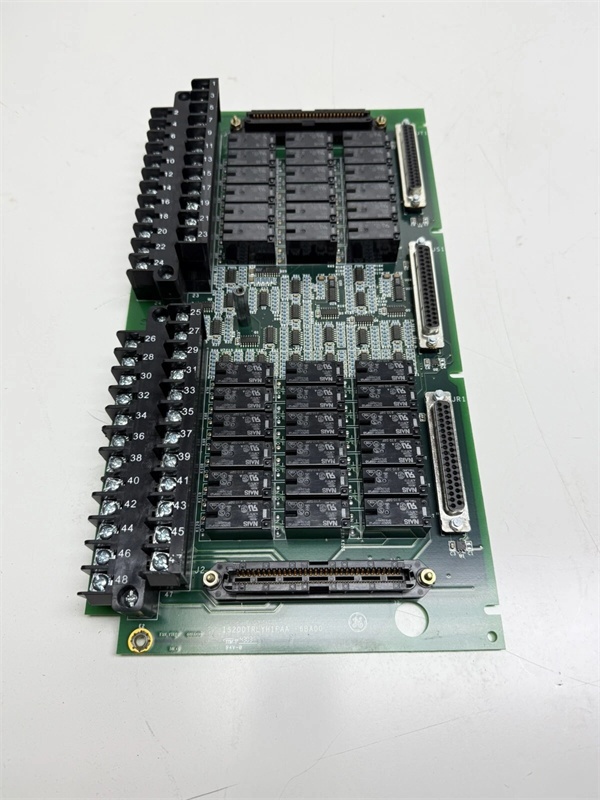
Description
Hard-Numbers: Technical Specificiations
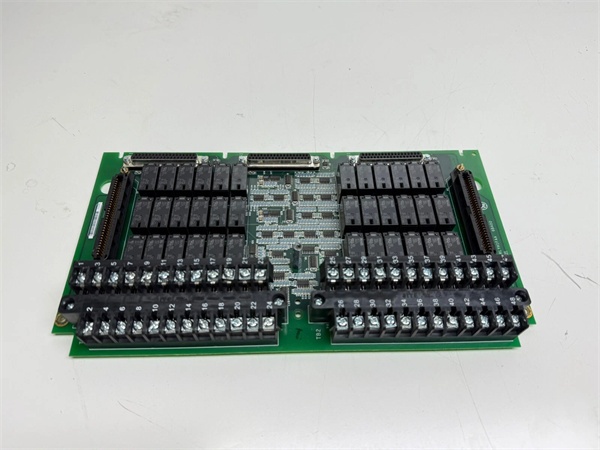
- Relay Output Channels: 12 Form-C Relays (Socketed, industrial grade)
- Maximum Terminal Capacity: #12 AWG (Stranded or solid wire)
- Solenoid Power Input: 125 VDC (Primary) or 115/230 VAC (Optional via jumpers)
- Coil Drive Voltage: 24 VDC to 48 VDC (Configurable via jumper blocks)
- Terminal Block Count: 2 x 24-position barrier terminal strips
- Suppression Type: Individual MOV (Metal Oxide Varistor) & Diode Networks
- Operating Temperature: -30°C to +65°C
- Protection Features: Individual jumper-selectable fuses per channel
- Mounting Type: DIN Rail Mounted Terminal Board
- Feedback Capability: Direct coil drive feedback (Simplex configuration)
The Real-World Problem It Solves
You’re troubleshooting a single-controller Mark VIe system in a cost-conscious biomass plant. The old terminal board’s relays are chattering under the constant vibration from the nearby wood chipper, causing the fuel gas valve to hunt and the turbine to trip on “Valve Position Instability.” You need a hardened simplex relay board that can digest dirty 125VDC coil power, crush inductive voltage spikes, and provide deterministic feedback without the complexity of redundant voting logic. This TRLYS1B board eliminates that headache. It delivers brute-force reliability for your single-controller applications, ensuring your valves move exactly when commanded.
Where you’ll typically find it:
- Cost-Optimized Mark VIe Installations: Simplex turbine control systems where full TMR redundancy was deemed unnecessary or budget-prohibitive.
- Biomass & Small Cogeneration Plants: Smaller synchronous generators (10-50MW) with straightforward control schemes.
- Retrofit Projects: Replacing legacy relay panels in older turbines transitioning to Mark VIe simplex architecture.
It transforms a vibration-prone, spike-susceptible relay cabinet into a rock-solid, deterministic actuator driver for single-controller systems.
Hardware Architecture & Under-the-Hood Logic
This board doesn’t run software; it’s a brutalist power interface built to survive the mechanical abuse of a turbine hall. It lives on the DIN rail next to your I/O packs, acting as the final gatekeeper between your 24VDC logic and the 125VDC brutality of industrial solenoids. The “S1B” suffix indicates a simplex architecture variant with optimized trace routing and enhanced component selection for single-controller deployments.
- Coil Power Acquisition & Jumper Configuration: Raw 125VDC lands on the barrier strips. Before reaching the relays, it passes through individual fuses and jumper-selected MOV/diode suppression networks. This crushes the massive inductive kickback generated when a solenoid de-energizes.
- Plug-In Relay Activation: When the Mark VIe I/O pack sends a 24VDC or 48VDC coil drive signal, the corresponding magnetic relay slams shut. These are industrial-grade plug-in relays, not delicate surface-mount components, built to handle high in-rush currents.
- Load Switching & Physical Isolation: The relay’s Form-C contacts physically isolate the 125VDC coil circuit from the sensitive 24VDC control circuit. It delivers clean, high-amperage power directly to field devices.
- Deterministic Simplex Feedback: Integrated feedback circuits monitor the actual state of each relay coil. In simplex configurations, this feedback goes directly to the single controller, confirming successful valve or damper operation without redundant voting overhead.
Field Service Pitfalls: What Rookies Get Wrong
Forcing Redundant Logic Onto a Simplex Board
A rookie upgrades a plant from simplex to dual-redundant control and keeps the S1B board installed. He tries to land feedback signals from both controllers onto its terminals. The S1B’s simplex architecture can’t handle dual feedback paths. It enters a feedback conflict, causing the controller to declare “Valve Position Ambiguous” and trip the turbine.
- Field Rule: The S1B variant is strictly for simplex (single-controller) applications. If you need dual redundancy, upgrade to the H-series (e.g., IS200TRLYH1B). Never attempt to force redundant signals onto a simplex board—you’ll create a feedback nightmare.
Using Undersized Wire for High-Inrush Valve Loads
A junior engineer lands 125VDC power to a massive 480VAC motor-operated valve (MOV) using #18 AWG wire from a leftover spool. During a start-up, the MOV draws 18 amps of in-rush current. The undersized wire drops 4 volts, starving the MOV’s control circuit and causing it to stall halfway open. The turbine trips on “Valve Stroke Timeout,” costing $75,000 in lost generation.
- Quick Fix: Always verify the full-load amperage (FLA) of your driven devices. Use minimum #14 AWG (2mm²) stranded copper wire for any load over 5 amps. Crimp on heavy-duty compression lugs and torque to 15 lb-in. A voltage drop on a solenoid circuit is a guaranteed recipe for a failed stroke and an expensive trip.
Neglecting the Individual Fuse Holders During Annual Maintenance
A mechanic notices slight discoloration on a fuse holder next to Relay 7. He dismisses it as cosmetic aging. Eight months later, a minor short in field wiring causes the fuse to blow. The holder’s spring tension has weakened from heat cycles, failing to make proper contact even with a new fuse. The entire zone goes dark, triggering a spurious turbine trip during peak demand.
- Field Rule: During every annual outage, visually inspect and tug-test every individual fuse holder on the TRLYS1B board. Replace any holder showing heat discoloration or loose spring tension immediately. A bad fuse holder is a silent killer of deterministic control—don’t let it cost you a forced outage.
Commercial Availability & Pricing Note
Please note: The listed price is for reference only and is not binding. Final pricing and terms are subject to negotiation based on current market conditions and availability.