Description
Hard-Numbers: Technical Specificiations
- Supply Voltage: 125 VDC (sourced from station battery bus)
- Relay Output Channels: 2 Form-C Relays (ARC Detected, Brush Failure)
- Contact Rating: 5 Amps @ 250VAC / 30VDC
- Detection Sensitivity: Adjustable via onboard potentiometers (typical 1-10 Amp threshold)
- Arc Detection Time: < 10 ms (response to fault current)
- Operating Temperature: -20°C to +60°C
- Isolation Rating: 1500V AC (field wiring to backplane logic)
- Mounting Location: Exciter Power Backplane Rack (EPBP)
- Connectors: Barrier Terminal Strips (125VDC in, Relay out, Brush sense leads)
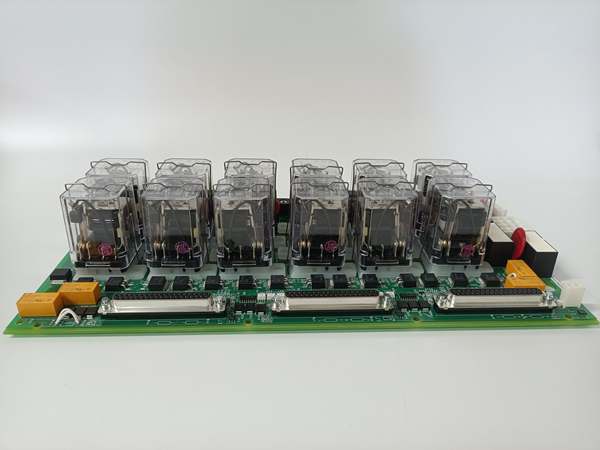
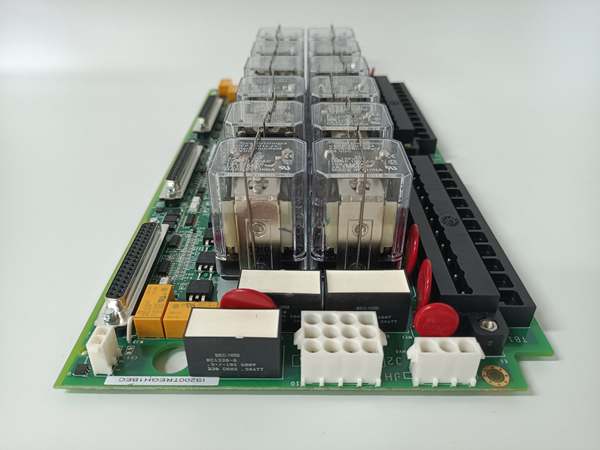
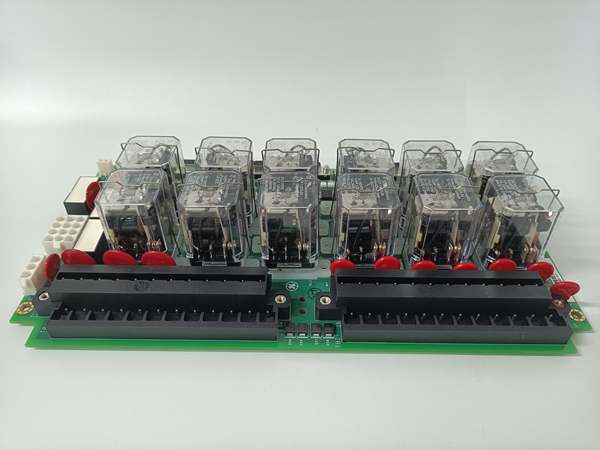
IS200TREGH1BEC
The Real-World Problem It Solves
You’re troubleshooting a small biomass cogeneration unit where the plant management refused to pay for full dual-controller architecture, opting for a cost-effective simplex setup. The old grounding brush monitor has a nasty habit of missing low-level shaft currents, allowing the carbon brush to slowly etch a groove into the $500,000 generator shaft journal. You need a hardened sentinel that can catch these arcs in milliseconds using a streamlined, single-channel detection logic. This S2B variant eliminates that headache. It acts as the vigilant guardian for your shaft in a simplex system, driving hardwired trip relays to save your rotor before the metal turns to liquid.
Where you’ll typically find it:
- Cost-Optimized EX2100/EX2100e Installations: Simplex setups where full dual-controller redundancy was deemed unnecessary or budget-prohibitive.
- Biomass & Small Cogeneration Plants: Smaller synchronous generators (10-50MW) running simplex excitation without the complexity of multi-controller voting.
- Retrofit Projects: Converting legacy single-controller static exciters to modern, deterministic shaft grounding protection with a minimal footprint increase.
It turns a potentially catastrophic, undetected shaft arc into an immediate, deterministic trip signal in a cost-effective, single-channel architecture.
Hardware Architecture & Under-the-Hood Logic
This board isn’t a complex multi-channel voter; it’s a streamlined, high-speed current comparator and relay driver. It lives on the EPBP backplane, acting as the decisive judge for your simplex excitation system’s shaft protection. The “S2B” suffix indicates a simplex architecture with optimized trace routing and enhanced component selection for single-channel deployments.
- Shaft Current Acquisition & Filtering: Tiny 18-20 AWG sense leads land on the barrier terminals, connected directly across the generator shaft grounding brush. A bank of RC filters and differential amplifiers scrubs the 60Hz hum and switchyard transients before the signal ever reaches the core logic.
- Simplex Threshold Comparison: The filtered signal hits a precision high-speed comparator. The onboard potentiometer sets the trip threshold (e.g., 5 Amps). The S2B architecture uses a simplified, deterministic logic path that doesn’t worry about controller voting conflicts, ensuring the fastest possible response to a genuine arc.
- Instantaneous Relay Actuation: Once the threshold is breached, the logic doesn’t wait for software polling or redundant controller handshakes. It instantly energizes the “ARC Detected” Form-C relay. This relay is hardwired to the turbine protection system, forcing an immediate unit trip.
- Simplified Brush Health Monitoring: If the sense leads break or the brush wears down to nothing (open circuit), the board detects the loss of current flow. It immediately energizes the “Brush Failure” relay, alerting operators to replace the consumable before a catastrophic arc occurs.
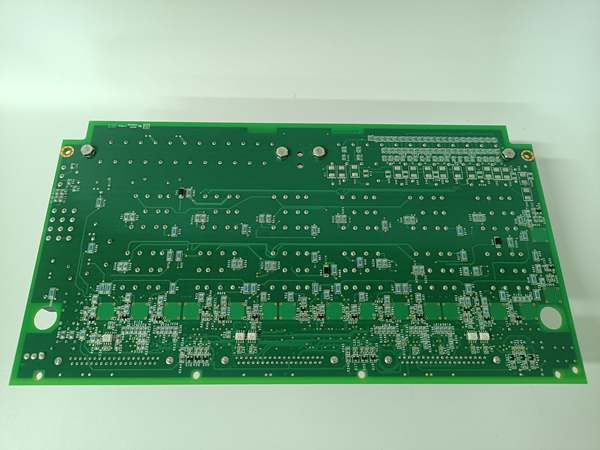
IS200TREGH1BEC
Field Service Pitfalls: What Rookies Get Wrong
Attempting to Run Dual Controllers on an S2 Simplex Board
A rookie upgrades a plant from simplex to dual-controller redundancy and keeps the S2B board installed, trying to land both M1 and M2 sync links onto its terminals. The S2B’s single-channel logic cannot handle a second controller input. It enters an infinite arbitration loop, constantly switching between masters and causing the AVR to oscillate wildly until it trips the turbine.
- Field Rule: The S2B variant supports exactly one controller (simplex architecture). If you need dual redundancy (M1 and M2), you must upgrade to the H2 variant (IS200TREGH2B). Never try to force two controllers onto a single-channel board—you’ll create a control oscillation nightmare.
Blindly Adjusting the Arc Detection Potentiometer
A junior engineer decides to “tighten up” the sensitivity on a TREG-S2B during a planned outage. He spins the potentiometer all the way down to the minimum setting without simulating an arc or consulting the plant’s specific shaft study. The next time the generator synchronizes, normal capacitive coupling currents (3-4 Amps) cross his new, overly sensitive threshold. The TREG fires the trip relay, costing the plant $50,000 in lost generation during a peak demand day.
- Quick Fix: Never adjust the arc detection threshold blindly. Use a calibrated current injection test set to simulate an arc. Set the potentiometer 10-15% above your generator’s known steady-state shaft current. If you don’t have a test set, leave the factory or previous setting alone.
Running Sense Leads Parallel to High-Voltage Bus Ducts
A mechanic routes the small-gauge brush sense leads from the generator to the TREG-S2B. To save time, he zip-ties them directly to the 4160V generator bus duct for 50 feet. The sheer electromagnetic field radiating from the bus duct induces phantom currents into the sense leads. The TREG-S2B interprets this induced noise as a massive shaft arc and instantly trips the turbine.
- Field Rule: Route the sense leads using twisted pair or individually shielded wire. Maintain a minimum separation of 12 inches from any high-voltage bus work. Ground the shield drain wire at the TREG terminal end only. A floating shield on a sensitive sensing circuit is a guaranteed ticket to a wild-goose chase.
Commercial Availability & Pricing Note
Please note: The listed price is for reference only and is not binding. Final pricing and terms are subject to negotiation based on current market conditions and availability.