Description
Hard-Numbers: Technical Specificiations
- Supply Voltage: 125 VDC (sourced from station battery bus)
- Relay Output Channels: 2 Form-C Relays (ARC Detected, Brush Failure)
- Contact Rating: 5 Amps @ 250VAC / 30VDC
- Detection Sensitivity: Adjustable via onboard potentiometers (typical 1-10 Amp threshold)
- Arc Detection Time: < 10 ms (response to fault current)
- Operating Temperature: -20°C to +60°C
- Isolation Rating: 1500V AC (field wiring to backplane logic)
- Mounting Location: Exciter Power Backplane Rack (EPBP)
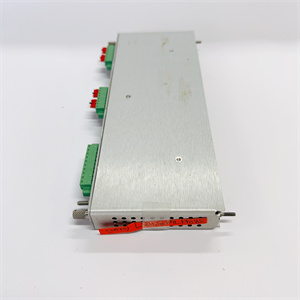
- Connectors: Barrier Terminal Strips (125VDC in, Relay out, Brush sense leads)
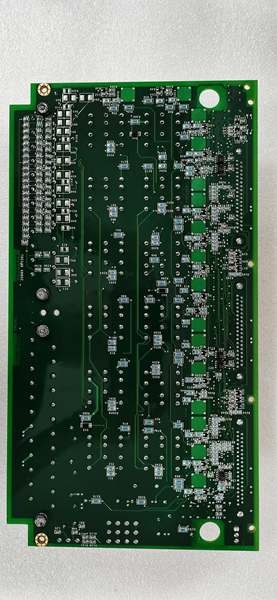
IS200TREGH1BDC
The Real-World Problem It Solves
You’re troubleshooting a mission-critical 9FA gas turbine that keeps suffering catastrophic rotor shaft damage. The old grounding brush monitor is consistently missing subtle but deadly shaft current arcs, allowing the carbon brush to cook and etch deep grooves into the multi-million dollar generator shaft journal. You need a hardened sentinel that can sniff out these arcs in milliseconds, even amidst the deafening electrical hash of a 4160V switchyard. This TREG “DC” variant eliminates that nightmare. It acts as the ultimate paranoid guardian for your shaft, catching arc events in milliseconds and driving hardwired trip relays to save your rotor before the metal turns to liquid.
Where you’ll typically find it:
- EX2100/EX2100e Exciter Cabinets: Mounted on the EPBP backplane, interfacing directly with the generator shaft grounding brush assembly in high-EMI environments.
- Nuclear & Large Fossil Plants: Providing zero-tolerance shaft protection in environments where a single arc event could cost millions.
- Retrofit Projects: Upgrading legacy passive brush monitoring systems to active, deterministic, noise-immune arc detection and protection.
It turns a silent, shaft-destroying electrical arc into an immediate, actionable trip signal to protect your most valuable assets.
Hardware Architecture & Under-the-Hood Logic
This isn’t a passive terminal block; it’s a high-speed current comparator and aggressive relay driver. It lives on the EPBP backplane, acting as the paranoid guardian of your generator shaft. The “DC” suffix indicates a specific firmware build with enhanced noise rejection algorithms and optimized trace routing for mission-critical deployments.
- Shaft Current Acquisition & Filtering: Tiny sense leads (often 18-20 AWG) land on the barrier terminals, connected directly across the generator shaft grounding brush. A bank of aggressive RC filters and differential amplifiers scrubs the 60Hz hum and switchyard transients before the signal ever reaches the core logic.
- Arc Signature Discrimination: The filtered signal hits a precision high-speed comparator. The onboard potentiometer sets the trip threshold (e.g., 5 Amps). The “DC” firmware adds a proprietary signature analysis that distinguishes a genuine arc’s chaotic high-frequency signature from normal capacitive coupling.
- Instantaneous Relay Actuation: Once the threshold and signature are confirmed, the logic doesn’t wait for software polling. It instantly energizes the “ARC Detected” Form-C relay. This relay is hardwired to the turbine protection system, forcing an immediate unit trip.
- Brush Health Monitoring & Reporting: If the sense leads break or the brush wears down to nothing (open circuit), the board detects the loss of current flow. It immediately energizes the “Brush Failure” relay, alerting operators to replace the consumable before a catastrophic arc can even occur.
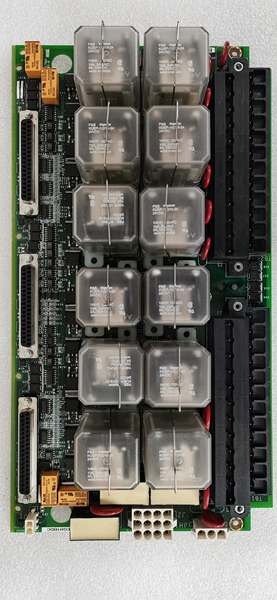
IS200TREGH1BDC
Field Service Pitfalls: What Rookies Get Wrong
Adjusting the Arc Detection Potentiometer Blindly Without Simulation
A rookie decides to “tighten up” the sensitivity on a TREG-DC board during a planned outage. He spins the potentiometer all the way down to the minimum setting without simulating an arc or consulting the plant’s specific shaft study. The next time the generator synchronizes, normal capacitive coupling currents (3-4 Amps) cross his new, overly sensitive threshold. The TREG-DC fires the trip relay, costing the plant $150,000 in lost generation during a peak demand day.
- Field Rule: Never adjust the arc detection threshold blindly. Use a calibrated current injection test set to simulate an arc. Set the potentiometer 10-15% above your generator’s known steady-state shaft current. If you don’t have a test set, leave the factory or previous setting alone.
Running Sense Leads Parallel to High-Voltage Bus Ducts
A junior engineer routes the small-gauge brush sense leads from the generator to the TREG-DC. To save time, he zip-ties them directly to the 4160V generator bus duct for 50 feet. The sheer electromagnetic field radiating from the bus duct induces phantom currents into the sense leads. The TREG-DC interprets this induced noise as a massive shaft arc and instantly trips the turbine.
- Quick Fix: Route the sense leads using twisted pair or individually shielded wire. Maintain a minimum separation of 12 inches from any high-voltage bus work. Ground the shield drain wire at the TREG-DC terminal end only. A floating shield on a sensitive sensing circuit is a guaranteed ticket to a wild-goose chase.
Using Undersized Wire for 125VDC Relay Outputs
A mechanic lands the 125VDC trip relay outputs from the TREG-DC to the turbine protection rack. He reuses some leftover #18 AWG wire because “it’s just a signal.” During a massive shaft arc event, the TREG-DC’s Form-C relay closes and tries to drive 5 amps through the coil of the trip solenoid. The #18 AWG wire acts like a fuse, heating up and vaporizing before the protection system even knows there was a fault.
- Field Rule: Always use minimum #14 AWG (2mm²) stranded copper wire for the Form-C relay outputs. These relays are designed to drive real loads (solenoids, annunciator panels). Crimp on heavy-duty compression lugs and torque them down to 15 lb-in. A blown sense wire during a real arc is a career-ender.
Commercial Availability & Pricing Note
Please note: The listed price is for reference only and is not binding. Final pricing and terms are subject to negotiation based on current market conditions and availability.