Description
Key Technical Specifications
-
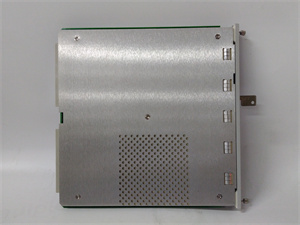
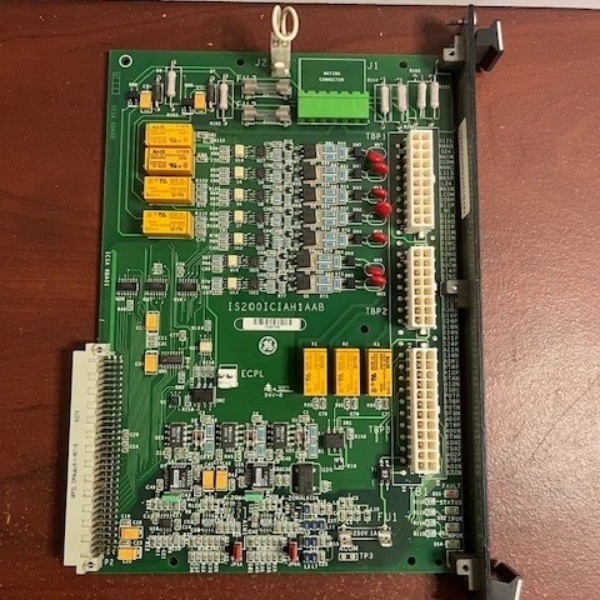
Model Number: IS200ICIAH1AAB
-
Manufacturer: General Electric (Salem, VA)
-
Logic Voltage: +5 V @ 1 A from VME back-plane
-
Field Voltage: 24 VDC opto-isolated inputs, 2 ms debounce
-
Input Channels: 32 DI, arranged in 8 groups of 4; group-to-group 500 V isolation
-
Isolation: 1500 Vrms field-to-logic, 500 V channel-to-channel
-
Connectors: 96-pin DIN VME, two 20-position pluggable for field cables
-
On-Board: Multilayer FR-4 PCB, industrial-grade components, conformal coat
-
Diagnostics: Green “BOARD OK,” red “FAULT” LEDs visible through bezel
-
Operating Temperature: –20 °C to +70 °C (conformal-coated)
-
Dimensions / Weight: 22 × 16 × 9 cm, 2.3 kg

IS200ICIAH1AAB
Field Application & Problem Solved
In a 2000-era frame-7 combined-cycle block the Mark VI doesn’t read field contacts directly—it wants clean, debounced 24 V signals that are isolated from the 5 V logic. The IS200ICIAH1AAB is the card that does the buffering. It sits in the VME rack, reads 24 VDC inputs from breaker status, limit switches, and solenoid feedback, and presents them as 5 V CMOS to the CPU every 10 ms. When the card fails you lose discrete inputs, the controller thinks every contact is open, and you trip on “INPUT FAULT”; swap the board, snap the 20-pin plugs back in, and the status bits come back—no re-cal, no firmware flash. You’ll find this PCB in any Mark VI that still uses the original Innovation I/O rack: paper-mill back-pressure sets, refineries, and every frame-7 that never upgraded to Mark VIe. Its value is isolation: the 24 V field side can short to ground and the 5 V logic keeps running, keeping the insurance company happy.
In a 2000-era frame-7 combined-cycle block the Mark VI doesn’t read field contacts directly—it wants clean, debounced 24 V signals that are isolated from the 5 V logic. The IS200ICIAH1AAB is the card that does the buffering. It sits in the VME rack, reads 24 VDC inputs from breaker status, limit switches, and solenoid feedback, and presents them as 5 V CMOS to the CPU every 10 ms. When the card fails you lose discrete inputs, the controller thinks every contact is open, and you trip on “INPUT FAULT”; swap the board, snap the 20-pin plugs back in, and the status bits come back—no re-cal, no firmware flash. You’ll find this PCB in any Mark VI that still uses the original Innovation I/O rack: paper-mill back-pressure sets, refineries, and every frame-7 that never upgraded to Mark VIe. Its value is isolation: the 24 V field side can short to ground and the 5 V logic keeps running, keeping the insurance company happy.
Installation & Maintenance Pitfalls (Expert Tips)
24 V on 5 V pin—opto blows, card smells like fish
The two field headers are keyed alike but pin-outs differ. Land a 125 VDC contact on the logic side and you blow the opto-coupler. Meter pin-to-pin before you torque; the silk-screen “IN1-IN32” legend is your friend.
The two field headers are keyed alike but pin-outs differ. Land a 125 VDC contact on the logic side and you blow the opto-coupler. Meter pin-to-pin before you torque; the silk-screen “IN1-IN32” legend is your friend.
Group fuse fatigue—opens under vibration
Each input group has a 100 mA PTC fuse. After ten years of nacelle shake the PTC opens under cold-start inrush. If you see “INPUT FAULT” but the contact is good, cut the PTC out and drop in a panel-mount holder—five-cent part, five-minute fix.
Each input group has a 100 mA PTC fuse. After ten years of nacelle shake the PTC opens under cold-start inrush. If you see “INPUT FAULT” but the contact is good, cut the PTC out and drop in a panel-mount holder—five-cent part, five-minute fix.
Conformal coat cracked—salt fog kills the pull-up
The board is coated, but the 20-pin edge is masked. If the coat cracks, salt bridges the 5 V pull-up and you get false “contact closed.” Scrape the salt, hit the edge with 2100-FTG, and re-coat—problem gone for another decade.
The board is coated, but the 20-pin edge is masked. If the coat cracks, salt bridges the 5 V pull-up and you get false “contact closed.” Scrape the salt, hit the edge with 2100-FTG, and re-coat—problem gone for another decade.
Missing shoulder washers—card arcs to rack
The four corner holes are through-plated. Forget the fiber washers and the card edge sits 0.5 mm proud; 24 V battery finds the rack paint, arcs, and blows a hole in the ground plane. Use the original GE shoulder washers—torque to 8 in-lb, no more.
The four corner holes are through-plated. Forget the fiber washers and the card edge sits 0.5 mm proud; 24 V battery finds the rack paint, arcs, and blows a hole in the ground plane. Use the original GE shoulder washers—torque to 8 in-lb, no more.
Technical Deep Dive & Overview
IS200ICIAH1AAB is a 32-channel opto-isolated input card frozen in 1999 silicon. A quad opto-coupler array debounces the 24 V field signals; a 74LS374 latch presents the data to the VME bus every 10 ms; a conformal coat keeps coal dust out of the traces. Because everything is hardware-debounced, you can swap the card hot and the controller never knows—just kill the 24 VDC field power first or you’ll arc-weld the 20-pin plugs. Treat the field inputs like instrumentation loops and the board will keep the discrete status flowing for another thirty years
IS200ICIAH1AAB is a 32-channel opto-isolated input card frozen in 1999 silicon. A quad opto-coupler array debounces the 24 V field signals; a 74LS374 latch presents the data to the VME bus every 10 ms; a conformal coat keeps coal dust out of the traces. Because everything is hardware-debounced, you can swap the card hot and the controller never knows—just kill the 24 VDC field power first or you’ll arc-weld the 20-pin plugs. Treat the field inputs like instrumentation loops and the board will keep the discrete status flowing for another thirty years
.