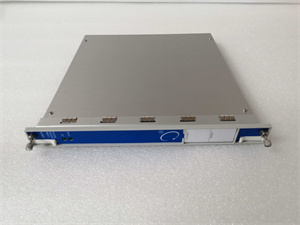
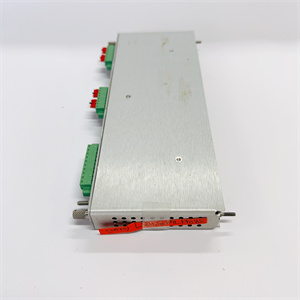
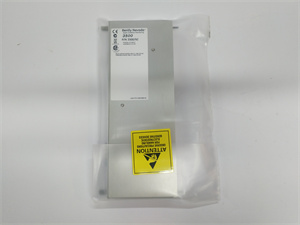
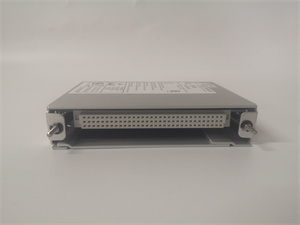
Description
Hard-Numbers: Technical Specifications
- Contact Input Channels: 12 channels (125 VDC or 24 VDC selectable per group)
- Contact Wetting Current: 5 mA @ 125VDC (minimizes oxidation on dry contacts)
- Serial Ports: 2 independent ports (RS-232 & RS-485/422 compatible)
- Supported Protocols: Modbus RTU, Modbus ASCII, GE SRTP
- Baud Rates: 9600, 19200, 38400, 57600, 115200
- Operating Temperature: -20°C to +60°C
- Isolation Rating: 1500V AC (field I/O to backplane logic)
- Power Consumption: < 10 Watts (24VDC input)
- Debounce Time: 0 ms to 255 ms (software configurable)
- Mounting Location: Exciter Power Backplane Rack (EPBP)
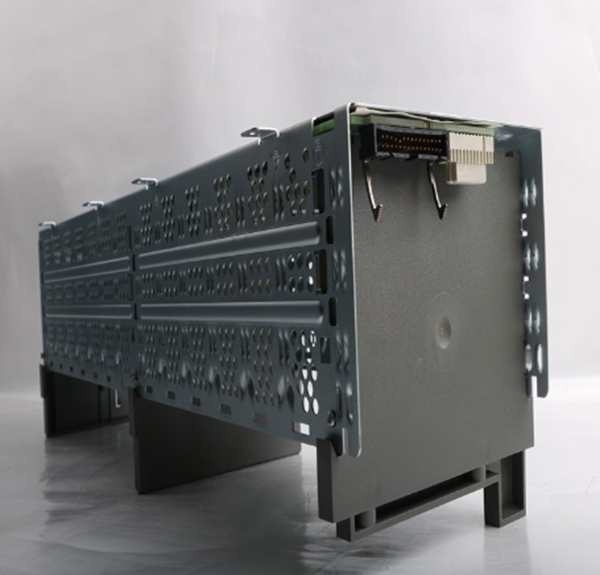
GE IS200EXCSG1A
The Real-World Problem It Solves
You’re troubleshooting a 9FA gas turbine that randomly trips on “Generator Breaker Status Mismatch.” The old contact input card can’t handle the dirty 125VDC auxiliary supply, letting electrical noise bleed through the dry contacts and fooling the DSPX into thinking the breaker is chattering. You need a board that can chew through oxidized contacts, scrub the electrical hash, and talk deterministic Modbus to your third-party governor. This EXCS board eliminates that headache. It acts as the hardened gatekeeper for all your discrete and serial field signals, ensuring the DSPX only hears the truth.
Where you’ll typically find it:
- EX2100/EX2100e Exciter Cabinets: Mounted on the ERBP backplane, collecting generator breaker status, field ground relays, and customer permissives.
- Integration Projects: Bridging the gap between the EX2100 rack and third-party turbine protection systems (Woodward governors, etc.) via its RS-485 port.
- Retrofit Projects: Replacing legacy relay logic panels to consolidate scattered I/O into a single deterministic backplane slot.
It turns a noisy, chattering mess of dry contacts into a pristine, debounced logic stream for your excitation control.
Hardware Architecture & Under-the-Hood Logic
This board isn’t just a passive terminal block; it’s a ruggedized signal processor with a dedicated serial engine. It lives on the ERBP backplane, acting as the primary interface between the brutal electrical environment of the plant and the sensitive DSPX processor. The “ABA” suffix indicates a specific firmware build with enhanced contact wetting current and optimized Modbus parsing for high-noise environments.
- Contact Input Conditioning & Wetting: Raw 125VDC signals from breaker aux contacts hit the input terminals. They pass through optocouplers that provide 1500V isolation. The board sources a small “wetting” current (5mA) to burn through any oxidation on the mechanical contacts, ensuring a clean make/break.
- Discrete Logic Processing & Debouncing: The cleaned-up contact states are mapped to internal registers. An onboard timer applies a software-configurable debounce delay (0-255ms) to prevent a bouncy mechanical relay from registering as fifty separate events.
- Dual-Port Serial Engine: The two serial ports operate independently. Port 1 might be talking Modbus RTU to a third-party load commutated inverter, while Port 2 is sending status updates to a local HMI via ASCII. The onboard UART handles parity, stop bits, and CRC calculations in hardware.
- Transient Suppression & Protection: Integrated TVS (Transient Voltage Suppression) diodes guard the serial ports against ESD and lightning-induced surges on long cable runs, preventing a single lightning strike from taking down the entire I/O rack.
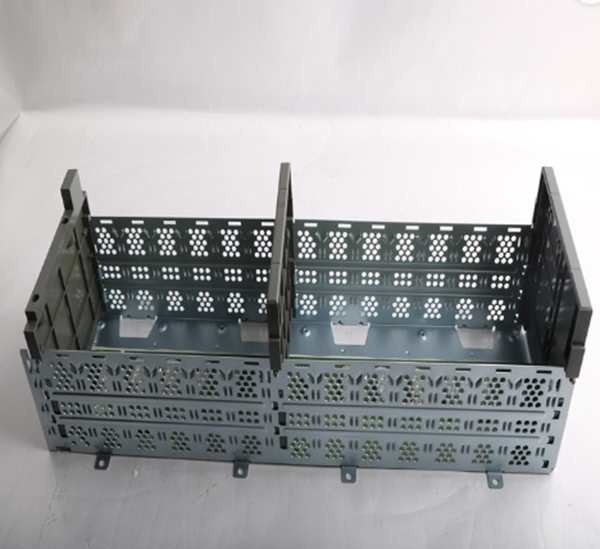
GE IS200EXCSG1A
Field Service Pitfalls: What Rookies Get Wrong
Forgetting to Set the Software Debounce Timer for Old Relays
A rookie lands the 125VDC auxiliary contact from a 30-year-old generator breaker onto the EXCS. He powers up and the DSPX immediately trips on “Breaker Chatter.” The old mechanical relay contacts are bouncing for 75 milliseconds every time they close, and the EXCS default 0ms debounce is catching every single bounce as a new event.
- Field Rule: Never leave the debounce timer at default for mechanical contacts. Set it to 50-100ms in ToolboxST. Watch the trend to ensure the “closed” state stays solid. Too little debounce makes your system hypersensitive; too much hides real switching events.
Using Unshielded Cable for Long RS-485 Runs
A junior engineer connects the EXCS’s RS-485 port to a distant local operator panel using cheap, unshielded thermostat wire. The cable runs parallel to a 4160V motor control center bus duct for 200 feet. The induced EMI creates bit errors, causing the HMI to display “Comms Lost” every time a large motor starts.
- Quick Fix: Always use Belden 9842 (or equivalent) double-shielded twisted pair for RS-485 runs longer than 50 feet. Ground the shield drain wire at the EXCS terminal strip end only. A floating shield on a serial cable is a guaranteed recipe for dropped packets.
Mixing Up 24VDC and 125VDC Common Wiring on Input Groups
A mechanic is wiring the contact inputs. He groups four 125VDC signals together and lands their commons to the 24VDC common terminal on the EXCS. He energizes the system, and the optocouplers on the 125VDC channels explode in a shower of sparks, taking the backplane’s 24VDC supply down with them. He just blew a $10,000 board because he used the wrong common.
- Field Rule: Verify the voltage class of every contact input wire before landing a single screw. The EXCS groups inputs in pairs (e.g., 1-6 = 125VDC, 7-12 = 24VDC). Connect the commons to the correctvoltage source terminal. Cross-wiring voltage classes is an instant board killer.
Commercial Availability & Pricing Note
Please note: The listed price is for reference only and is not binding. Final pricing and terms are subject to negotiation based on current market conditions and availability.