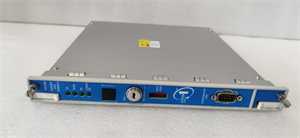
Description
Hard-Numbers: Technical Specificiations
- Supply Voltage: 24 VDC (sourced from EPSM module)
- Analog Input Channels: 16 channels (configurable 4-20mA / 0-10VDC / RTD)
- Input Resolution: 16-bit (65,536 discrete levels)
- Accuracy: ±0.1% of full scale
- Input Impedance: > 250 Ohms (for current loops)
- Operating Temperature: -40°C to +85°C
- Isolation Rating: 1500V AC (channel-to-channel and channel-to-backplane)
- Data Update Rate: < 10 ms (to DSPX controller)
- Mounting Location: Exciter Power Backplane Rack (EPBP)
- Diagnostic LEDs: Power, Comm Active, Channel Fault (Per Channel)
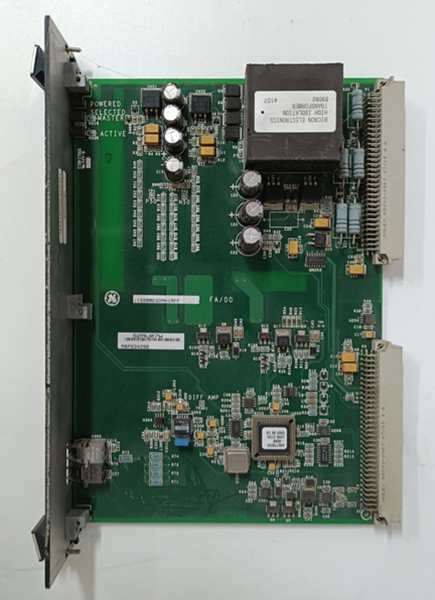
GE IS200EXAMG1A
The Real-World Problem It Solves
You’re troubleshooting a 9FA gas turbine that keeps tripping on “Generator Overexcitation” because the old analog signal conditioning card is adding a 2% drift to the PT feedback. The 60Hz hum from the plant’s auxiliary bus is bleeding into the unshielded RTD cables, causing the DSPX to see phantom temperature spikes and throttle the excitation. You need a hardened module that can scrub the electrical hash, scale the raw signals, and push clean data to the controller without adding latency. This EXAM board eliminates that nightmare. It consolidates up to 16 field signals into a single deterministic packet, cutting cabinet wiring volume and eliminating noise-induced false trips.
Where you’ll typically find it:
- EX2100/EX2100e Exciter Cabinets: Mounted on the ERBP backplane, collecting generator PT/CT, bearing RTDs, and customer analog inputs for the DSPX.
- Retrofit Projects: Replacing legacy relay panels and discrete signal conditioners in aging turbine control systems to reduce cabinet footprint and improve signal integrity.
- Heavy-Duty Fossil & Nuclear Plants: Providing high-accuracy, isolated analog acquisition for multi-hundred megawatt generator monitoring.
It turns a tangled, noise-prone analog wiring system into a deterministic, high-fidelity data acquisition hub.
Hardware Architecture & Under-the-Hood Logic
This isn’t a passive terminal block; it’s a precision measurement instrument with built-in signal conditioning. It lives on the ERBP backplane, acting as the frontline filter between the harsh electrical environment of the plant and the sensitive DSPX processor. The “G1A” suffix indicates optimized trace routing and enhanced component selection for high-accuracy deployments.
- Field Signal Conditioning & Isolation: Raw 4-20mA, 0-10VDC, or RTD signals enter the EXAM through heavy-duty terminal blocks. Before touching the logic, every single signal passes through a high-voltage isolation barrier (1500V AC) and an RC filter network. This scrubs the electrical hash picked up from the plant’s dirty ground loops.
- High-Resolution A/D Conversion: An onboard 16-bit Analog-to-Digital Converter digitizes the conditioned analog signal. This provides 65,536 discrete steps of resolution, ensuring that a 0.01% change in field current is accurately captured by the DSPX.
- Backplane Data Packet Assembly: The digitized data is scaled to engineering units (e.g., Amps, Degrees Celsius) according to the DIP switch or software configuration. It is then bundled into a high-speed packet and transmitted over the ERIB (Exciter Regulator Internal Bus) to the DSPX processor with less than 10ms latency.
- Channel-Level Diagnostics: Integrated comparators watch the voltage/current on every input channel. If a wire breaks (open circuit), a CT saturates, or a sensor goes out of range, the corresponding channel’s Fault LED illuminates, and the board reports the anomaly to the DSPX via the backplane.
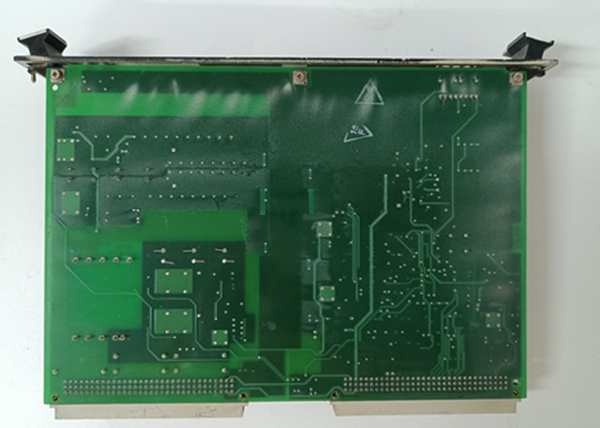
GE IS200EXAMG1A
Field Service Pitfalls: What Rookies Get Wrong
Using Unshielded Cable for Long RTD Runs
A rookie runs the 3-wire RTD cable from a distant bearing pedestal to the EXAM using cheap, unshielded thermostat wire. The cable runs parallel to a 4160V generator bus duct for 100 feet. The induced EMI creates wild swings in the analog reading, causing the turbine to trip on “Bearing Overtemp” during a load ramp.
- Field Rule: Always use shielded twisted pair (STP) cable for any analog input longer than 15 feet. Ground the shield at the EXAM terminal strip end only (single-point ground). A floating shield is an invitation for phantom trips.
Forgetting to Configure the DIP Switches Before Power-Up
A junior engineer swaps a dead EXAM with a fresh one from the warehouse. He lands the wires, flips the breaker, and the HMI screams “Analog Input Out of Range.” He forgot that the new board’s DIP switches default to 4-20mA, but the field transmitter is a 0-10VDC potentiometer. The AVR thinks the rotor temperature is hitting 400°C when it’s actually 25°C.
- Quick Fix: Before landing a single wire, photograph the DIP switch settings on the back of the failed board. Replicate them exactly on the replacement. If you’re commissioning a new device, use a calibrated milliamp/voltage clamp to verify the actual loop signal matches the switch setting.
Bending the ERBP Backplane Pins During Installation
A mechanic is sliding the EXAM into the ERBP slot. He’s rushing because it’s 110°F in the turbine hall. He pushes it in slightly crooked, and the rear-mounted gold pins crash into the side of the connector. He forces it home, bending three pins. The backplane shorts out, killing power to the entire exciter rack and adding three days to a planned 24-hour outage.
- Field Rule: Never force a board into the slot. If it doesn’t glide in with minimal hand pressure, stop immediately. Pull it out, inspect the rear pins, and realign it perfectly vertically. A bent pin on an ERBP connector is a catastrophe you don’t want to explain to the plant manager.
Commercial Availability & Pricing Note
Please note: The listed price is for reference only and is not binding. Final pricing and terms are subject to negotiation based on current market conditions and availability.