Description
Key Technical Specifications
-
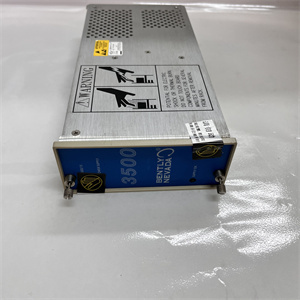
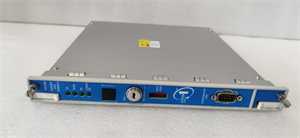
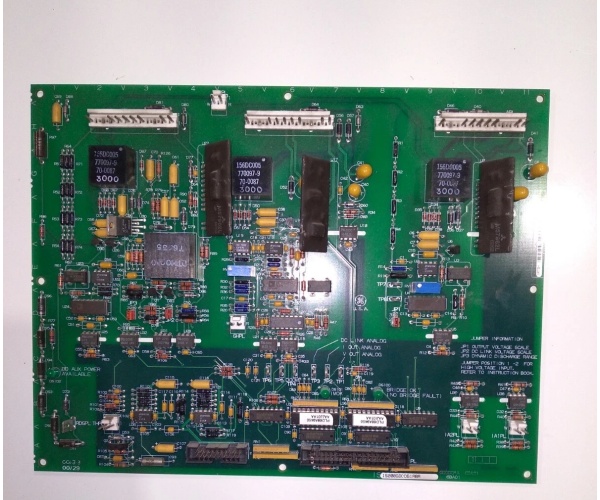
Model Number: IS200ESELH1AAA
-
Manufacturer: General Electric (Salem, VA)
-
Power Supply: 24 VDC ±10 %, 0.3 A typical (derived from VME back-plane)
-
Inputs: 6 TTL/CMOS gate-pulse pairs from EMIO Master I/O board
-
Outputs: 6 × multimode ST, 850 nm, 5 MBd, 15 V differential, 2 A peak into 50 Ω
-
Isolation: 1500 Vrms fiber-to-logic, 500 V channel-to-channel
-
Propagation Delay: < 250 ns, guaranteed < 500 ns over –40 °C…+70 °C
-
Connectors: 96-pin DIN VME, two 20-position pluggable for gate status return
-
Redundancy: Two boards per dual-bridge system (M1 & M2 sections)
-
Diagnostics: Green “BOARD OK,” yellow “GATING” LEDs on bezel
-
Operating Temperature: –40 °C to +70 °C (conformal-coated)
-
Dimensions / Weight: 260 × 20 × 187 mm, 0.63 kg

IS200GDDDG1ABA
Field Application & Problem Solved
In a 200-MW combined-cycle block the EX2100 doesn’t fire SCRs with copper—it fires them with light. The IS200ESELH1AAA is the last copper-to-glass translator. It sits in the 13-slot VME frame, receives six 3.3 V gate-pulse words from the EMIO master board, and spits them out as six 15 V fiber pulses to the EGPA gate-driver cards in the power-conversion cabinet. When the board fails you lose one or more phases, field current gets lumpy, and the VAR meter starts hunting; swap the card, snap the six ST connectors back in, and the bridge comes back smooth—no re-cal, no firmware flash. You’ll find this PCB in every EX2100 cabinet from 50 MW peakers to 400 MW combined-cycle blocks. Its value is isolation: the fiber can’t be bothered by 6.9 kV switch-gear hash, so the gate pulses stay crisp even when the yard looks like a lightning storm.
In a 200-MW combined-cycle block the EX2100 doesn’t fire SCRs with copper—it fires them with light. The IS200ESELH1AAA is the last copper-to-glass translator. It sits in the 13-slot VME frame, receives six 3.3 V gate-pulse words from the EMIO master board, and spits them out as six 15 V fiber pulses to the EGPA gate-driver cards in the power-conversion cabinet. When the board fails you lose one or more phases, field current gets lumpy, and the VAR meter starts hunting; swap the card, snap the six ST connectors back in, and the bridge comes back smooth—no re-cal, no firmware flash. You’ll find this PCB in every EX2100 cabinet from 50 MW peakers to 400 MW combined-cycle blocks. Its value is isolation: the fiber can’t be bothered by 6.9 kV switch-gear hash, so the gate pulses stay crisp even when the yard looks like a lightning storm.
Installation & Maintenance Pitfalls (Expert Tips)
Fiber bend radius—break a strand and gate pulses drop
Multimode ST needs 1.5 in minimum bend. Techs zip-tie it tight to tidy the door and fracture the core; you see 5 % low field volts and blame the bridge. Use stick-on radius clips and leave a 3 in service loop—problem gone for life.
Multimode ST needs 1.5 in minimum bend. Techs zip-tie it tight to tidy the door and fracture the core; you see 5 % low field volts and blame the bridge. Use stick-on radius clips and leave a 3 in service loop—problem gone for life.
Dirty ST ferrule—bit-error rate jumps, bridge trips
Coal dust on the ferrule scatters 850 nm light; BER climbs and the Mark VI flags “BRIDGE FAULT.” Hit every ST with one-shot cleaner before you close the door—30 s of housekeeping saves a 2 hr crane call.
Coal dust on the ferrule scatters 850 nm light; BER climbs and the Mark VI flags “BRIDGE FAULT.” Hit every ST with one-shot cleaner before you close the door—30 s of housekeeping saves a 2 hr crane call.
Missing M1/M2 jumper—redundancy lost, unit trips on switch-over
Dual-bridge systems need one ESEL in M1 and one in M2. If you leave the M2 board out and M1 fails, the unit drops to manual and trips on “EXCOMM LOSS.” Always verify both boards are seated and the rack ID jumpers match the drawing.
Dual-bridge systems need one ESEL in M1 and one in M2. If you leave the M2 board out and M1 fails, the unit drops to manual and trips on “EXCOMM LOSS.” Always verify both boards are seated and the rack ID jumpers match the drawing.
Conformal coat cracked—salt fog kills the LED driver
The board is coated, but the LED bezel is potted after coating. If the potting shrinks, salt bridges the 5 V LED driver and the “GATING” light stays dark even when pulses are good. Peel the old potting, hit the bezel with 2100-FTG, and re-pot—problem gone for another decade.
The board is coated, but the LED bezel is potted after coating. If the potting shrinks, salt bridges the 5 V LED driver and the “GATING” light stays dark even when pulses are good. Peel the old potting, hit the bezel with 2100-FTG, and re-pot—problem gone for another decade.
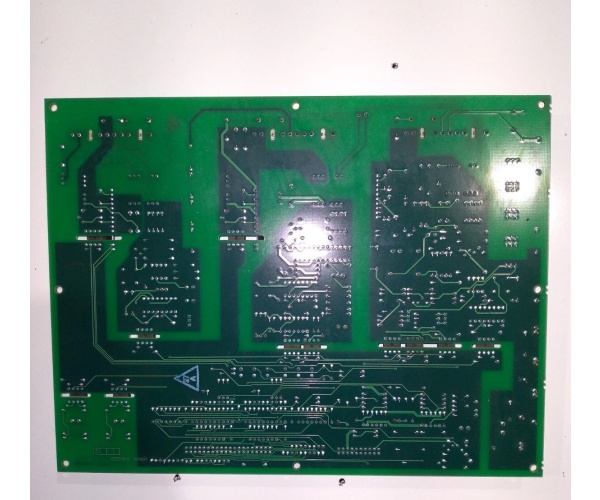
IS200GDDDG1ABA
Technical Deep Dive & Overview
IS200ESELH1AAA is a passive fiber-optic fan-out frozen in 2000 silicon. Six high-speed LED drivers convert 3.3 V CMOS gate words from the EMIO into 850 nm light pulses; six ST ports carry the pulses to the EGPA cards; return fibers bring fault status. Because the card carries no firmware, you can swap it hot and the exciter never knows—just kill the 24 VDC field power first or you’ll arc-weld the 20-pin plugs. Treat the ST ferrules like optical jewels and the board will keep the generator floating at exactly 13.8 kV for another thirty years .
IS200ESELH1AAA is a passive fiber-optic fan-out frozen in 2000 silicon. Six high-speed LED drivers convert 3.3 V CMOS gate words from the EMIO into 850 nm light pulses; six ST ports carry the pulses to the EGPA cards; return fibers bring fault status. Because the card carries no firmware, you can swap it hot and the exciter never knows—just kill the 24 VDC field power first or you’ll arc-weld the 20-pin plugs. Treat the ST ferrules like optical jewels and the board will keep the generator floating at exactly 13.8 kV for another thirty years .