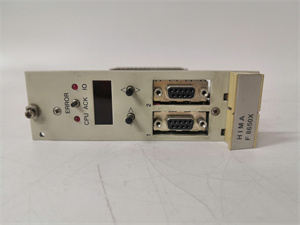
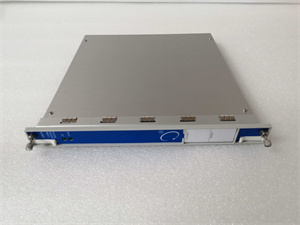
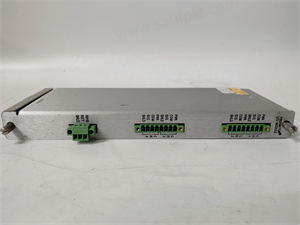
Description
Hard-Numbers: Technical Specifications
- Supply Voltage: 24 VDC (sourced from EPSM module)
- Pulse Input Channels: 3 independent channels (DSPX A, B, C)
- Pulse Output Channels: 6 channels (3-phase bridge firing)
- Arbitration Delay: < 1 µs (master transition time)
- Operating Temperature: -20°C to +60°C
- Isolation Rating: 1500V AC (pulse outputs to backplane logic)
- Mounting Location: Exciter Power Backplane Rack (EPBP)
- Diagnostic LEDs: Master A/B/C Active, Pulse Output, Fault Lock
- Communication Bus: ERIB (Exciter Regulator Internal Bus)
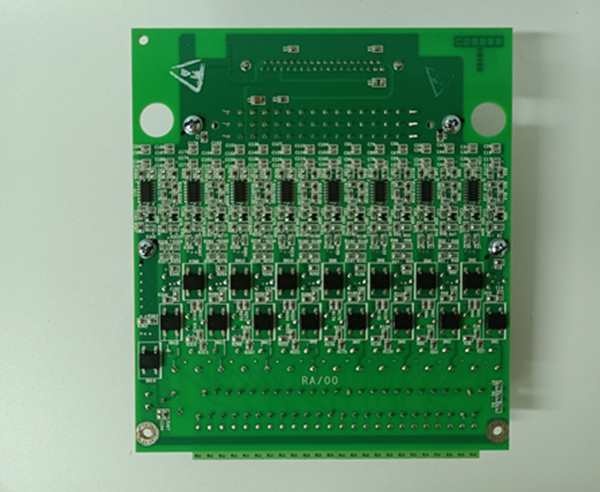
GE IS200ESELH1A
The Real-World Problem It Solves
You’re staring at a 9FA gas turbine that just tripped on “Gate Pulse Loss” during a planned maintenance outage. The old selector panel relied on slow electromechanical relays to switch between DSPX controllers. When the Master DSPX failed, the relay took 50ms to transfer, causing a complete loss of gate pulses and a rotor field collapse. You need a board that can arbitrate between three DSPX controllers in the blink of an eye.
Where you’ll typically find it:
- EX2100/EX2100e Exciter Cabinets: Mounted on the EPBP backplane, acting as the traffic cop between redundant DSPX processors and EGPA/EPCT power boards.
- Nuclear & Large Fossil Plants: Ensuring zero interruption in excitation control during controller failovers or planned maintenance swaps.
- Retrofit Projects: Replacing clunky, failure-prone relay-based selector panels with solid-state, deterministic logic.
It turns a 50ms relay-based gamble into a sub-microsecond, deterministic master handoff.
Hardware Architecture & Under-the-Hood Logic
This board isn’t a processor; it’s a high-speed digital switch with hardware arbitration logic. It lives on the EPBP backplane, acting as the ultimate authority for who gets to fire the thyristor bridge. The “H1A” suffix indicates optimized trace routing and enhanced component selection for high-reliability deployments.
- Master Arbitration Logic: The ESEL constantly monitors the “Master Request” and “Heartbeat” signals from DSPX A, B, and C via the backplane. Onboard logic instantly determines the highest-priority healthy controller based on pre-configured DIP switch settings.
- Pulse Path Gating: Once a Master is elected, the ESEL uses high-speed analog switches to connect that Master’s gate pulse outputs directly to the EGPA/EPCT boards. All other pulse paths are physically disconnected, preventing conflicting signals from reaching the bridge.
- Seamless Transition Execution: If the Master DSPX fails or is taken offline, the ESEL detects the lost heartbeat within one millisecond. It instantly gates the pulse path to the next healthy controller without dropping a single cycle of excitation.
- Hardware Fault Lockout: If it detects a conflict (e.g., two DSPX claiming Master simultaneously) or a pulse output short, it latches a hardware fault. It kills all gate outputs and illuminates the Fault LED, forcing a safe shutdown rather than risking a bridge shoot-through.
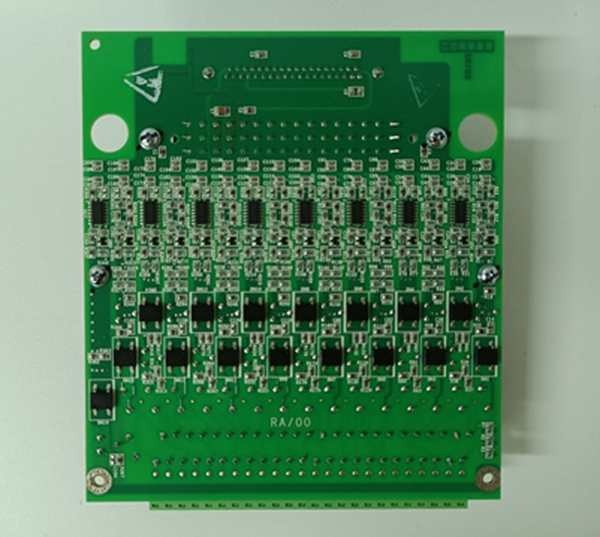
GE IS200ESELH1A
Field Service Pitfalls: What Rookies Get Wrong
Misconfiguring the DIP Switch Master Priority
A rookie replaces a failed ESEL and sets the DIP switches to default. The plant’s procedure dictates DSPX B as the primary Master, but the new board defaults to DSPX A. During startup, the turbine control system tries to sync with DSPX A, but the rest of the plant DCS expects B. The system throws a “Master Mismatch” alarm and refuses to ramp up.
- Field Rule: Before powering up, photograph the DIP switch settings on the old board. Match them exactly. If commissioning a new system, verify the switch positions against the excitation control narrative. A wrong priority setting will brick your startup.
Using Unshielded Ribbon Cable for Pulse Outputs
A junior engineer reuses an old 10-conductor ribbon cable to connect the ESEL to the EGPA boards. The cable runs parallel to the 4160V generator bus duct. The induced EMI causes crosstalk between the pulse lines, firing the top and bottom thyristors simultaneously. This creates a phase-to-phase short and vaporizes the bridge.
- Quick Fix: Always use twisted-pair or coaxial cable for gate pulse runs. Keep the cables short and away from high-voltage bus work. Ground the shield at the ESEL end only. Never use ribbon cable for power electronics.
Ignoring the Backplane Power Sequencing
A mechanic installs the ESEL and powers up the EPBP rack without bringing up the EPSM 24VDC supply first. The ESEL powers up in an indeterminate state, with random pulses firing on its outputs. The unsynchronized pulses hit the thyristor bridge, causing a massive current inrush that trips the main generator breaker.
- Field Rule: Follow the power-up sequence: 1. 125VDC to EPSM. 2. Wait 5 seconds for 24VDC stabilization. 3. Insert the ESEL board. Never hot-swap this board unless the manual explicitly states it’s hot-swappable. Most aren’t.
Commercial Availability & Pricing Note
Please note: The listed price is for reference only and is not binding. Final pricing and terms are subject to negotiation based on current market conditions and availability.