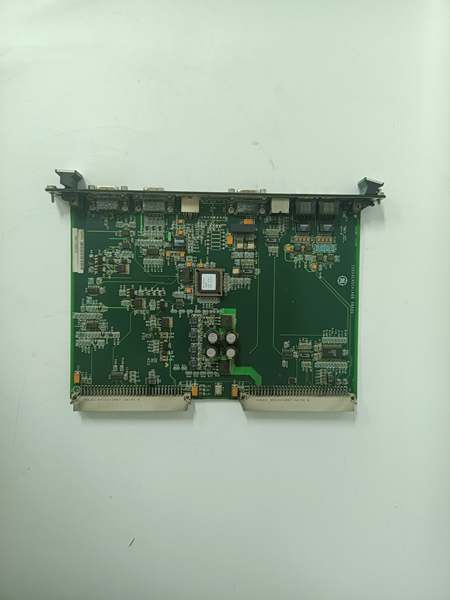
Description
Hard-Numbers: Technical Specificiations
- Supply Voltage: 24 VDC (sourced from ERBP backplane)
- Supported Protocols: Modbus RTU, Profibus DP, HART passthrough
- Digital Inputs (DI): 8 channels (24VDC sinking/sourcing selectable via jumpers)
- Digital Outputs (DO): 4 channels (Form C relay contacts, 250VAC/30VDC max)
- Analog Inputs (AI): 4 channels (4-20mA / 0-20mA selectable)
- Analog Outputs (AO): 2 channels (4-20mA sourcing)
- Operating Temperature: -40°C to +85°C
- Isolation Rating: 1500V AC between field I/O and backplane logic
- Data Update Rate: < 20 ms (to DSPX controller via ERIB)
- Mounting Type: 6U vertical slot, ERBP backplane compatible
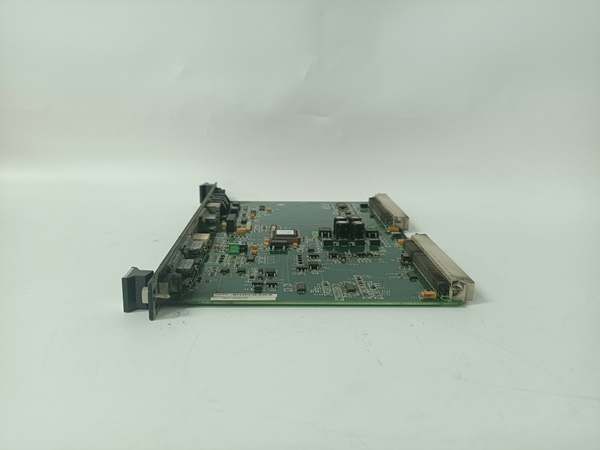
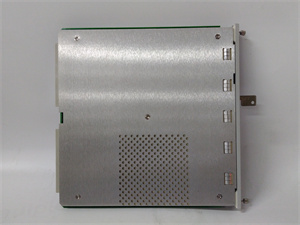
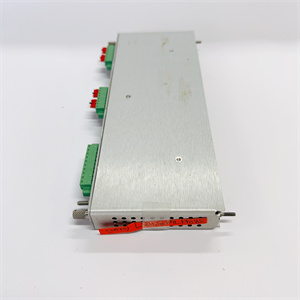
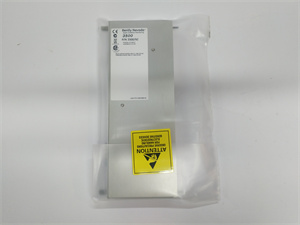
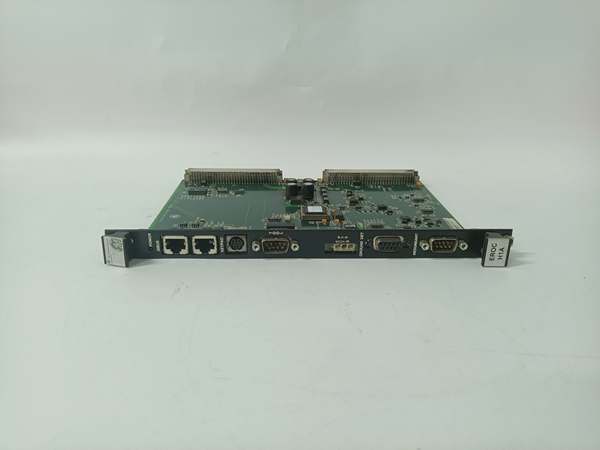
GE IS200EROCH1A
The Real-World Problem It Solves
You’re troubleshooting a 9FA gas turbine that relies on a hyper-accurate third-party Bender ground detector to monitor rotor insulation. The standard ERGT board just can’t handle the specific 4-20mA analog current loop required by this new detector without introducing noise. Plus, your plant’s archaic control scheme demands an extra 4 Form C relay outputs that the standard ERIO module doesn’t have. You need a board that can act as a noise-immune translator between your high-end sensors and the EX2100 backplane. This EROC board eliminates that headache. It provides galvanically isolated channels and configurable logic to bridge almost any external device into your excitation control scheme.
Where you’ll typically find it:
- EX2100/EX2100e Exciter Cabinets: Mounted on the ERBP backplane, expanding I/O capacity for non-standard field devices.
- Retrofit Projects: Integrating high-precision analog transmitters (pressure, temperature) into legacy turbine excitation control loops.
- Specialized Industrial Applications: Connecting specialized third-party safety equipment (like overspeed detectors or custom hydrogen seal monitors) to the turbine protection logic.
It turns a rigid, I/O-starved excitation control system into a flexible, highly expandable automation hub.
Hardware Architecture & Under-the-Hood Logic
This isn’t a primary processing board; it’s a hardened signal translator and I/O multiplexer designed to live in the noisy shadow of a multi-megawatt generator. It slots into the ERBP backplane, acting as the “universal translator” between the outside world and your DSPX controller. The “H1A” suffix indicates optimized trace routing and enhanced EMI filtering.
- External Signal Acquisition & Isolation: Raw 4-20mA analog loops and 24VDC digital signals enter the EROC through heavy-duty terminal blocks. Before touching the logic, every single signal passes through a high-voltage isolation barrier (1500V AC). This scrubs the electrical hash picked up from the plant’s dirty ground loops.
- Configurable Logic & Scaling: A bank of DIP switches and onboard ASICs allows you to define the behavior of the I/O. You can set sinking/sourcing for digital inputs, scale analog ranges, and configure the debounce time for contact inputs directly on the hardware level.
- Data Packet Assembly & Transmission: The processed, cleaned-up data is bundled into a high-speed packet. This packet is pushed across the ERBP backplane via the ERIB (Exciter Regulator Internal Bus) to the DSPX processor at lightning speeds (less than 20ms update rate).
- Protocol Translation & Pass-through: For advanced setups, the EROC can act as a Modbus RTU or Profibus DP slave. It takes data from a third-party device, wraps it in the EX2100’s native protocol, and feeds it straight to the HMI without needing an external gateway box.
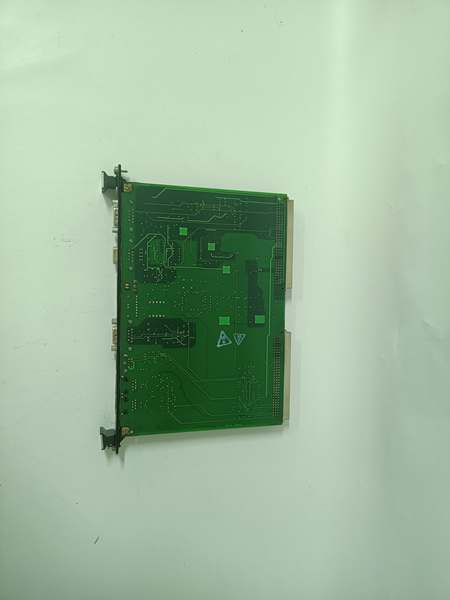
GE IS200EROCH1A
Field Service Pitfalls: What Rookies Get Wrong
Forgetting to Set the DIP Switches Before Power-Up
A rookie swaps a dead EROC with a fresh one from the warehouse. He lands the wires, flips the breaker, and the HMI screams “Analog Input Out of Range.” He forgot that the new board’s DIP switches default to 0-20mA, but the field transmitter is sending a 4-20mA signal. The AVR thinks the rotor temperature is hitting 400°C when it’s actually 25°C.
- Field Rule: Before landing a single wire, photograph the DIP switch settings on the back of the failed board. Replicate them exactly on the replacement. If you’re commissioning a new device, use a calibrated milliamp clamp to verify the actual loop current matches the switch setting.
Using Unshielded Cable for Long Analog Runs
A junior engineer runs the 4-20mA cable from a distant bearing temperature transmitter to the EROC using cheap, unshielded thermostat wire. The cable runs parallel to a 4160V generator bus duct for 50 feet. The induced EMI creates wild swings in the analog reading, causing the turbine to trip on “Bearing Overtemp” during a load ramp.
- Quick Fix: Always use shielded twisted pair (STP) cable for any analog input longer than 15 feet. Ground the shield at the EROC terminal strip end only (single-point ground). A floating shield is an invitation for phantom trips.
Damaging the ERBP Backplane Pins During Installation
A mechanic is sliding the EROC into the ERBP slot. He’s rushing because it’s 110°F in the turbine hall. He pushes it in slightly crooked, and the rear-mounted gold pins crash into the side of the connector. He forces it home, bending three pins. The backplane shorts out, killing power to the entire exciter rack and adding three days to a planned 24-hour outage.
- Field Rule: Never force a board into the slot. If it doesn’t glide in with minimal hand pressure, stop immediately. Pull it out, inspect the rear pins, and realign it perfectly vertically. A bent pin on an ERBP connector is a catastrophe you don’t want to explain to the plant manager.
Commercial Availability & Pricing Note
Please note: The listed price is for reference only and is not binding. Final pricing and terms are subject to negotiation based on current market conditions and availability.