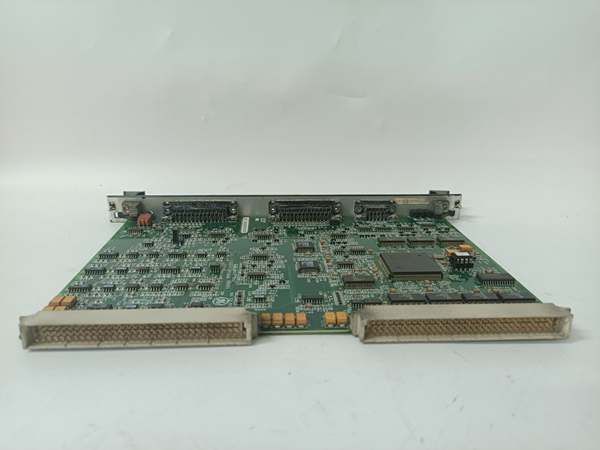
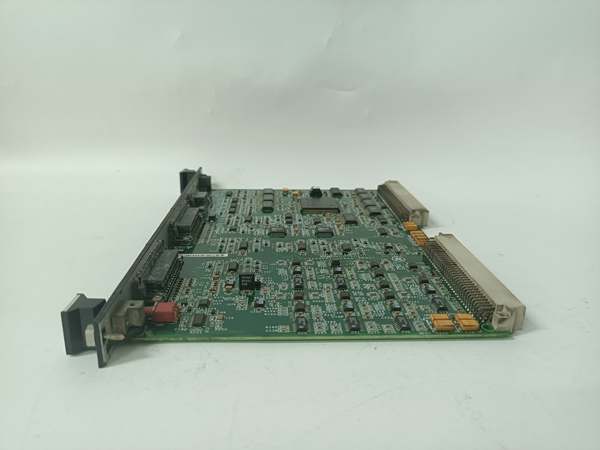
Description
Product Introduction
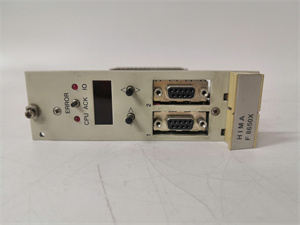
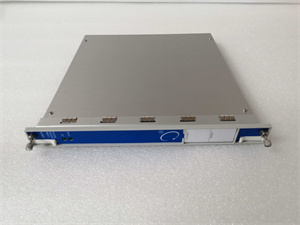
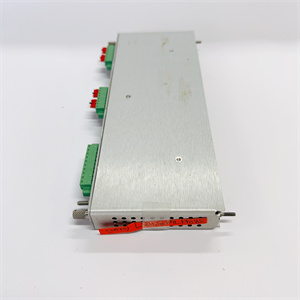
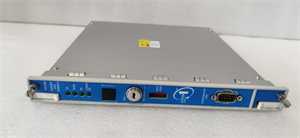
The GE is the primary I/O interface for EX2100 excitation systems, mounting onto the Exciter Regulator Backplane (ERBP) to handle signal conditioning for generator voltage and firing pulses. It uses two 96-pin connectors (P1/P2) to pass high-speed data to the DSP while isolating noisy field signals.
This “AAA” revision features standard conformal coating for corrosion resistance. It talks to terminal boards (ECTB/EPCT) via front 25-pin ports. Scan updates typically hold under 5 ms for real-time AVR loops, ensuring voltage regulation stays within 0.5% during load swings .
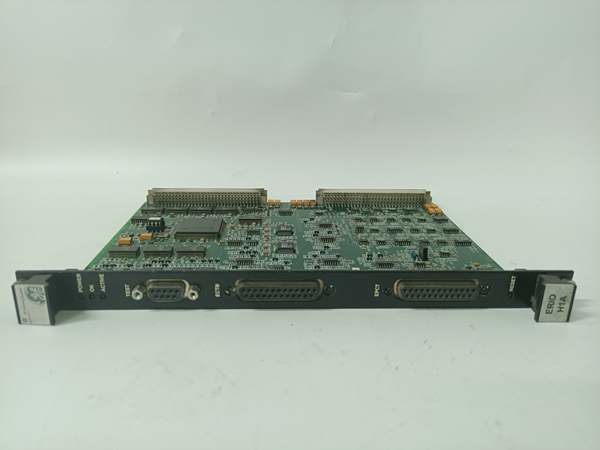
IS200ERIOH1AAA
Key Technical Specifications
- System Role: ERIO (Exciter Regulator I/O)
- Form Factor: 6U VME (Double Height)
- Backplane Connectors: P1 (Comms/Control), P2 (Primary I/O Path)
- Front Ports: 2x 25-Pin D-Sub (To ECTB/EPCT), 9-Pin TEST (Diags)
- Logic Voltage: 24 Vdc / 28 Vdc (From Backplane)
- Isolation: 1500 Vrms (Digital I/O to Logic)
- Temp Range: -30 °C to +70 °C (Operational)
- Noise Immunity: High CMRR (Differential Inputs)
- Power Draw: ~10 W (Typical, verify with OEM datasheet)
- Mounting: ERBP Slot (Exciter Regulator Backplane)
Quality Control Process (Engineer’s Perspective)
- Incoming Verification: Match the GE serial to the manifest. Inspect P1/P2 gold fingers for carbon scoring—arcing leaves permanent marks. Check the conformal coat near the D-Sub shells for flaking.
- Live Functional Test: Seat in an ERBP test rig with 24 Vdc. Initialize the regulator link; we scope the P2 data lines. Timing skew must stay under 2 µs under simulated firing pulse load.
- Electrical Parameter Test: Back-probe the 24 Vdc rail with a Fluke 115. Megger the 25-pin field ports to chassis at 500 V; leakage must hold >10 MΩ to survive thyristor switching.
- Coating Check: Inspect the “AAA” coating thickness near the P1 connector. Thin spots invite creepage faults in humid turbine bays—well, technically it depends on the batch, but visual checks catch the obvious stuff.
- Final QC & Packaging: Clean DIN fingers with isopropanol. Bag in rigid ESD foam (6U is heavy). Label “QC Passed – ERBP Bus Active” with the date.
Replacement Pitfall Guide
❗ Backplane Seating: The GE uses two 96-pin connectors. “Half-seating” P2 while P1 clicks home bends the adjacentboard’s pins. Apply even pressure until both ejector levers lock.
❗ Terminal Mismatch: This board drives ECTB (Contacts) and EPCT (Power/CT) via 25-pin front ports. Plugging an EPCT cable into the ECTB port back-feeds 120 V AC into a 24 Vdc sense line—instant PCB fry.
❗ Coating Grade: “AAA” implies coating. Swapping it for a bare “A” in a coastal gas plant causes tracking faults on the P2 bus within months due to salt spray condensation.
❗ Simplex vs Redundant: In Triple Redundant (TMR) exciters, all three ERIO boards must be “AAA”. Mixing revisions triggers “Hardware Mismatch” and forces Simplex mode (losing redundancy).
❗ ESD to Pins: The 96-pin P1/P2 are dense. Discharge to the ERBP frame before insertion—critical in dry shops (common in northern China winters).
Keep these in mind and you’ll cut 90% of rework time.
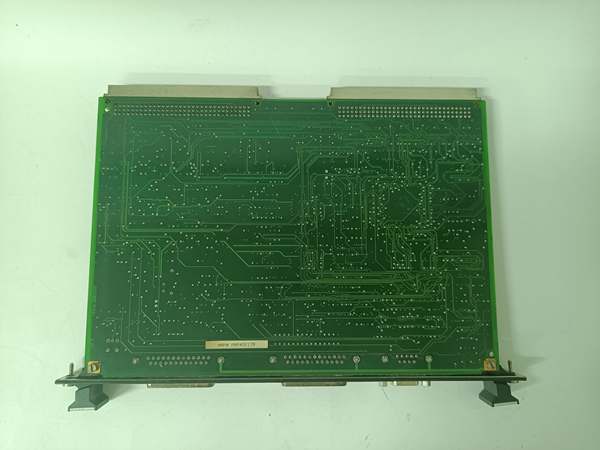
IS200ERIOH1AAA
Compatibility Matrix & Benchmarks
- GE → GE IS200ERIOH1A : Needs Adaptation — AAA is coated; verify ERBP slot acceptance in ToolboxST.
- GE → GE ERBP (Backplane) : Direct — Primary physical mate for Exciter Regulator Rack.
- GE → Standard VME I/O : Incompatible — Custom P2 pinout for Firing Pulse distribution.
- Data Latency: < 5 ms (Field to Regulator CPU)
- Noise Rejection: > 60 dB CMRR (Typical)
- Isolation Test: 1500 Vrms (Field I/O to Logic)