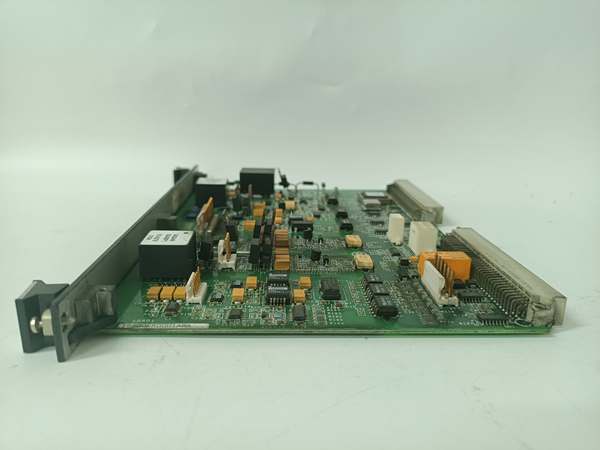
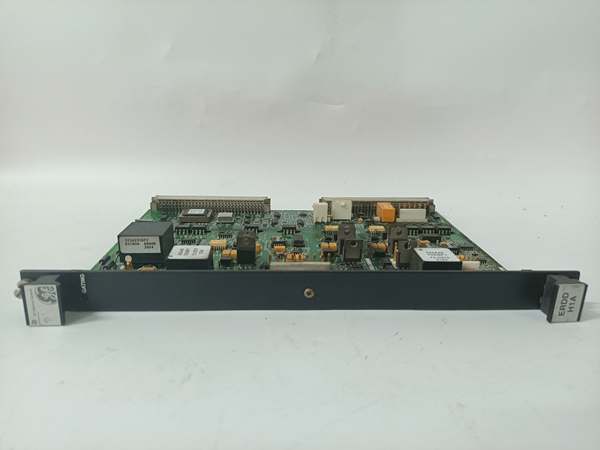
Description
Hard-Numbers: Technical Specificiations
- Operating Voltage: 24 VDC
- Operating Temperature: -40°C to +85°C
- Board Dimensions: 2 cm (H) x 18.6 cm (W) x 26.1 cm (D)
- Weight: ~0.36 kg (0.79 lbs)
- Humidity Range: 5%–95% non-condensing
- Operation Modes: Simplex & Redundant
- Relay Control: K3 (Charging, Simplex) / K41 (Discharge, Redundant)
- Mounting Locations: ERBP backplane (Simplex) & ERRB backplane (Redundant secondary)
- Feedback Signals: Output V/I, DC Link V, Shunt Current, IGBT Gate Drive, Bridge Temp
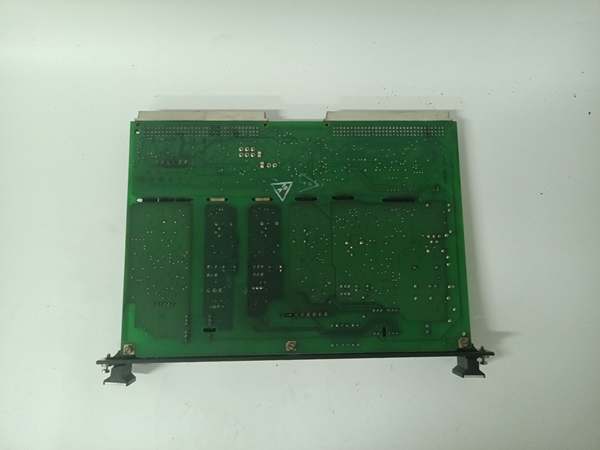
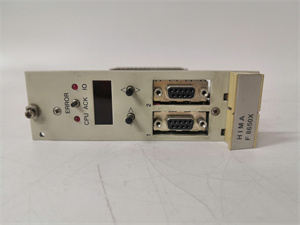
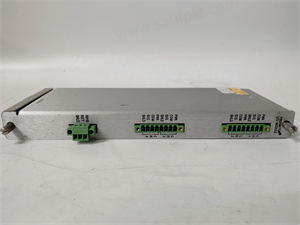
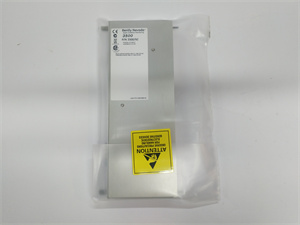
IS200ERDDH1ABB
The Real-World Problem It Solves
You’re standing in a 9FA gas turbine control room, watching the HMI scream “DC Link Overvoltage” after a massive load rejection. The old mechanical discharge contactors were slower than a sleepy sloth, leaving lethal residual voltage on the thyristor bridge. That voltage cooked the IGBTs and nearly turned a $500k rotor into scrap metal. You need a board that can sense a voltage spike and dump that energy into the discharge resistors in milliseconds, not seconds. This ERDD board eliminates that nightmare. It provides a deterministic, hardware-triggered discharge path to save your bacon when the grid turns ugly.
Where you’ll typically find it:
- EX2100 Exciter Cabinets: Split between the ERBP (simplex) and ERRB (redundant) backplanes, managing K3/K41 relays.
- Heavy-Duty Combined-Cycle Plants: Protecting multi-megawatt thyristor bridges during emergency shutdowns.
- Retrofit Projects: Replacing slow-acting thermal relays with fast-acting electronic discharge logic in legacy control rooms.
It turns a sluggish, potentially catastrophic overvoltage event into a controlled, millisecond-response energy dump.
Hardware Architecture & Under-the-Hood Logic
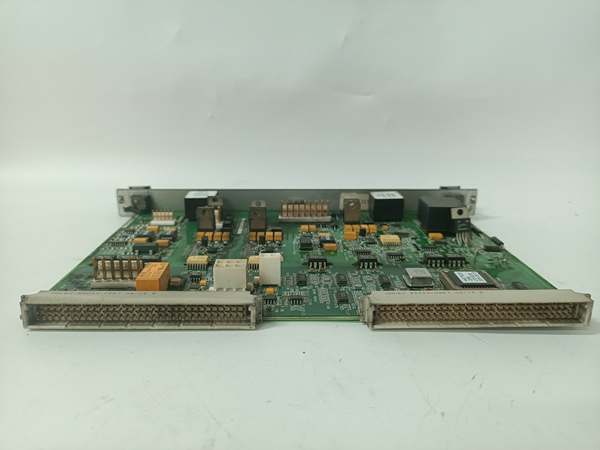
This board isn’t a processor; it’s a hardware-triggered watchdog built to survive the heat and vibration of a turbine deck. It lives on the ERBP or ERRB backplane, acting as the voltage police for your excitation system. The “ABB” suffix indicates RoHS-compliant lead-free soldering and specific trace routing for enhanced durability in harsh environments.
- Bridge Feedback Acquisition: The ERDD continuously monitors the DC link voltage, shunt current, and IGBT gate drive status via the backplane. It builds a real-time snapshot of the bridge’s health without waiting for the DSPX to wake up.
- Analog Comparator Thresholding: Dedicated analog comparators compare the live DC link voltage against a preset danger threshold. If the voltage spikes beyond the safe operating envelope, the comparator flips its output state in microseconds.
- Relay Actuation Logic: Depending on your architecture, the ERDD fires either the K3 charging relay (simplex mode) or the K41 discharge relay (redundant mode). This creates a low-impedance path that bleeds the DC link energy into the resistor bank faster than you can say “trip.”
- Gate Drive Fault Latching: If it detects a stuck-on IGBT gate or a missing drive pulse from the EGPA, it immediately latches a hardware fault. It kills the firing pulses and initiates the discharge sequence to protect the bridge.

IS200ERDDH1ABB
Field Service Pitfalls: What Rookies Get Wrong
Installing Both ERDD Boards on the Same Backplane
A rookie is commissioning a redundant excitation system. He installs both ERDD boards on the main ERBP backplane because the ERRB rack is “too far away.” During a load rejection test, the secondary K41 discharge relay never fires because it’s plugged into the wrong slot. The DC link voltage skyrockets, cooking the thyristors.
- Field Rule: In redundant mode, you mustsplit the boards. Install one ERDD on the ERBP backplane and the second on the ERRB backplane. The ERRB-mounted board specifically handles the K41 discharge relay. Putting them both on the ERBP breaks the redundant safety net.
Skipping DC Link Voltage Calibration Post-Replacement
A mechanic swaps a dead ERDD and assumes “electronics are electronics.” He skips the calibration. The board’s internal voltage divider resistors have a slight tolerance variance. During a minor grid flicker, the ERDD “thinks” the DC link hit 850V when it only peaked at 550V. It triggers a premature discharge, tripping the turbine and costing the plant $150K in lost generation.
- Quick Fix: After installing any ERDD, perform the DC link voltage calibration using ToolboxST or the local HMI. Verify the board’s reading matches a calibrated HV probe within 2%. A board that hallucinates voltages is more dangerous than no board at all.
Letting the K41 Relay Sense Leads Vibrate Loose
A technician reroutes cables near the ERRB backplane and doesn’t secure the small-gauge sense leads going to the K41 discharge relay. The constant low-frequency vibration causes one lead to work loose over three months. The ERDD loses visibility into the relay’s status. When a real overvoltage event hits, the discharge sequence fails to trigger, and the bridge burns to a crisp.
- Field Rule: Strain-relieve all K3/K41 sense leads with nylon tie-wraps or adhesive-backed clips. Apply a dab of hot glue at the termination point. Test continuity with a multimeter after any cable tray work. A blind spot in your discharge protection is a guaranteed rotor-killer.
Commercial Availability & Pricing Note
Please note: The listed price is for reference only and is not binding. Final pricing and terms are subject to negotiation based on current market conditions and availability.