Description
Product Introduction
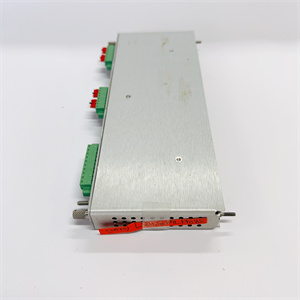
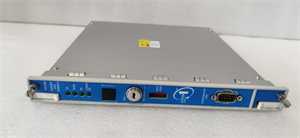
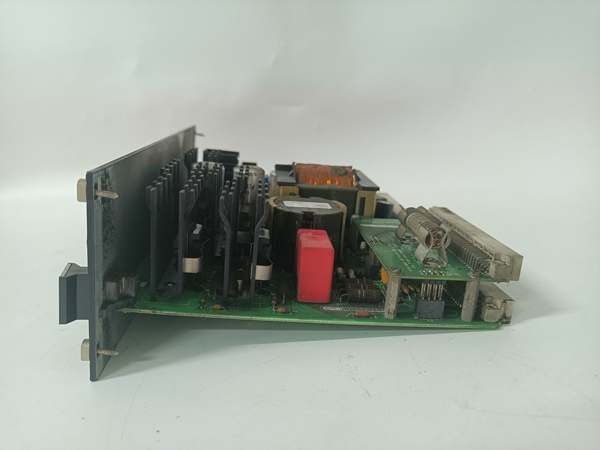
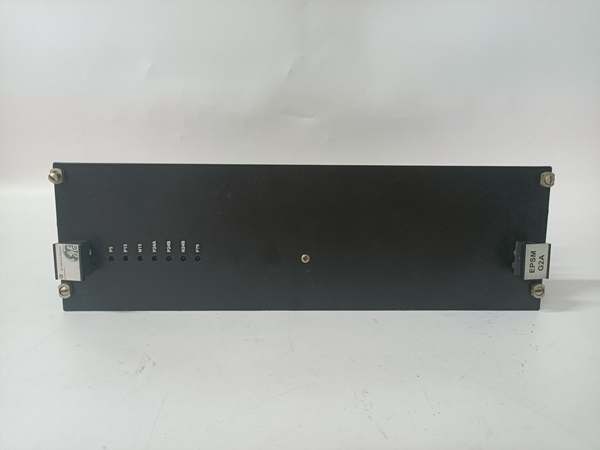
The is a Generation 2 Enhanced Power Supply Module (EPSM) designed for GE’s Mark VI, Mark VIe, and EX2100 excitation control systems. It acts as the primary power source for control racks, converting wide-range AC (90-264V) or DC (90-300V) input into stable, isolated DC outputs (primarily 24V DC @ 10A continuous, plus 5V/±15V depending on configuration).
The “D” suffix denotes a specific hardware revision, typically associated with improved thermal management and noise immunity over earlier “A” revisions (addressing issues like fan circuit noise). These units are designed for N+1 Redundant operation using active current sharing—if one unit fails or is removed, the others seamlessly pick up the load without system interruption. It features a hold-up time of >20ms to survive brief grid dips that would otherwise trip the turbine.
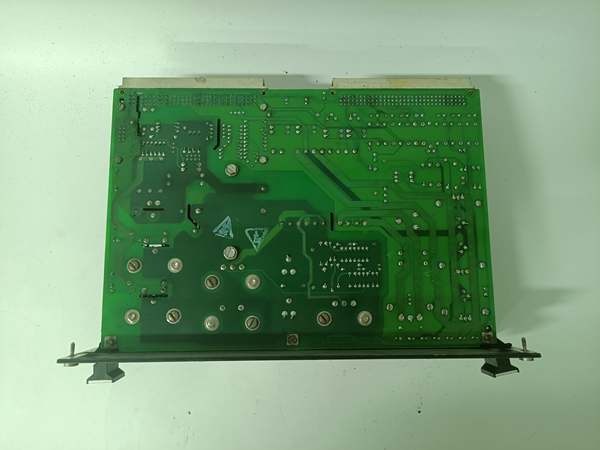
GE IS200EPSMG2ADC
Key Technical Specifications
| Parameter | Value |
|---|---|
| Input Voltage | 90–264 VAC (47–63 Hz) OR 90–300 VDC |
| Main Output | 24 VDC (Adjustable ±10% via trim pot) |
| Max Current | 10.0 A Continuous (per module) |
| Total Power | ~220W – 240W (Typical continuous) |
| Other Rails | Often supplies 5V (Logic) & ±15V (Analog) via backplane |
| Redundancy | Active Current Sharing (Parallel N+1 Config) |
| Hold-up Time | > 20 ms (At full load, prevents brownout trips) |
| Efficiency | > 85% (Typical at 50% load) |
| Protection | OVP, OCP, Short Circuit, OTP (Auto-recovering) |
| Isolation | 3000 VAC (Input-Output), 500 VDC (Output-Ground) |
| Temp Range | -30 °C to +70 °C (Derate above 60°C) |
| Indicators | AC OK, 24V OK, 5V OK, FAULT, REDUNDANCY LED |
| Connectors | Screw Terminals (Input), 37-pin D-Sub (Backplane/Comm) |
Quality Control Process (Engineer’s Perspective)
- Incoming Verification: Match the serial to docs. Inspect screw terminals for heat discoloration (sign of past overloads) and ensure the backplane connector pins are straight and free of carbon tracking.
- Load Bank Stress: Connect to a programmable DC load. Ramp the 24V rail from 0A to 12A (120% overload). Verify OCP (Over-Current Protection) triggers correctly. Scope the output; ripple must stay under 50mV p-p at full load.
- Brownout Ride-Through: Use a Variac to drop input voltage to 85V AC or simulate a 15-20ms power loss. The unit must hold output stable (>20ms) without glitching, ensuring no “VME Bus Error” on adjacent cards.
- Thermal Check: Run at 80% load for 1 hour. Check FET/Rectifier case temps (should be <85°C). The “D” revision usually handles heat better, but aged thermal paste on heatsinks is a failure point.
- Final QC: Verify chassis ground resistance (<1 Ohm). Bag in anti-static foam. Label “QC Passed – Load/Ripple OK”.
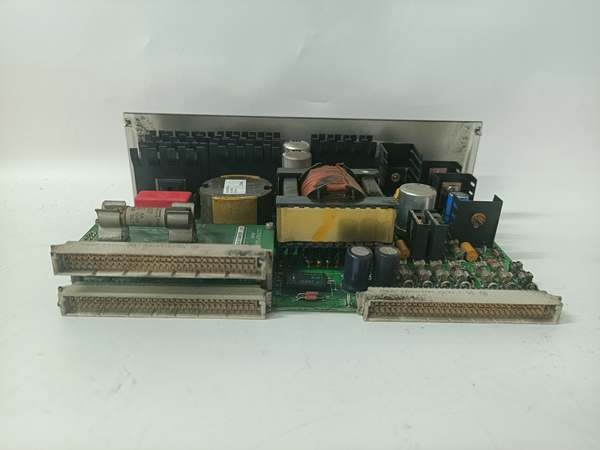
GE IS200EPSMG2ADC
Replacement Pitfall Guide
❗ Redundancy Harness (Critical): When running multiple units (N+1), you must connect the specific current-sharing jumper harness between the 37-pin ports of all units. Forgetting this causes one unit to take 100% of the load, overheat, shut down, and cascade the failure to the backup. Always verify the share links are clipped tight.
❗ Inrush Trip: This unit has high inrush (can spike to 40A for ms at startup). If the main cabinet breaker trips instantly upon install, your breaker is likely “Fast Trip” (Type B/C) and too tightly sized. You may need a Time-Delay (Slow-Blow) characteristic or to ensure the soft-start is functional.
❗ Revision Mixing: While “D” is generally backward compatible with “A” in terms of voltage, mixing (D rev) with older IS200EPSMG2AEC(C rev) in a redundant pair cancause minor nuisance alarms regarding fan speed or diag bit mapping in ToolboxST. Best practice: Keep revisions matched if possible.
❗ DC Polarity Suicide: While universal input, if using DC Input, reversing the polarity on the terminals will instantly blow the input bridge rectifier (no internal reverse-polarity fuse). Measure with a Fluke 115 before tightening.
❗ Seating Force: The rear connector is tight. “Half-seating” causes intermittent 5V/24V sags, leading to “Processor Fail” on VCMI/VPRO cards. Push firmly until the ejector lever locks.
Keep these in mind and you’ll cut 90% of rework time.
Compatibility Matrix & Benchmarks
- → GE IS200EPSMG2AEC: Mostly Compatible— “D” is a later revision (improved cooling/noise). Electrically similar (24V/10A), but “C” (AEC) is often associated with higher power density applications. Mixing in redundancy is possible but monitor diag logs.
- → GE IS200CHAS/G1 (Chassis): Direct— Slides into standard Mark VI/VIe controller or I/O rack power slots.
- → Standard ATX PSU: Incompatible— Proprietary backplane pinout, form factor, and active sharing logic.
- Efficiency: > 88% (Typical at 50% load)
- Switching Freq: ~50 kHz (Digital Control)
- MTBF: > 100,000 hours (Telcordia SR-332)