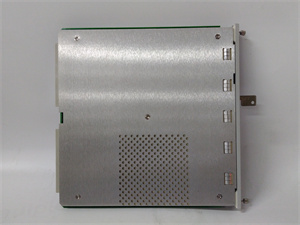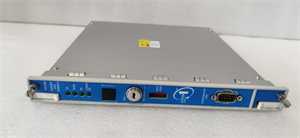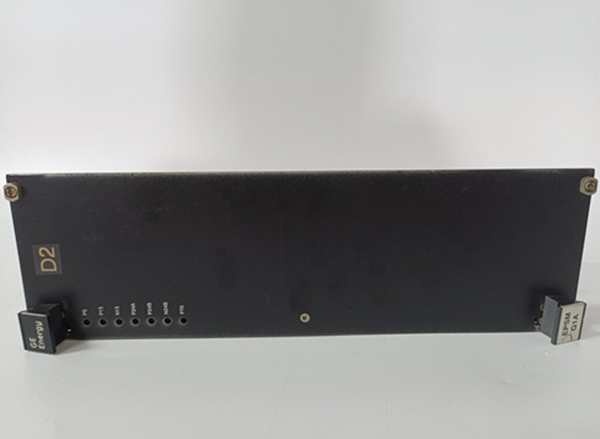
Description
Hard-Numbers: Technical Specificiations
- Input Voltage: 125 VDC (sourced from station battery bus)
- Output Voltage: 24 VDC (regulated, ±1%)
- Output Current: Up to 20 Amps (continuous)
- Redundancy Support: Dual-input auto-switching & load sharing
- Operating Temperature: -20°C to +60°C
- Isolation Rating: 1500V input-to-output
- Mounting Location: Exciter Power Backplane Rack (EPBP)
- Onboard Breakers: Input (125VDC) & Output (24VDC) protection
- Diagnostic LEDs: Input Power, Output Power, Fault, Redundancy Status
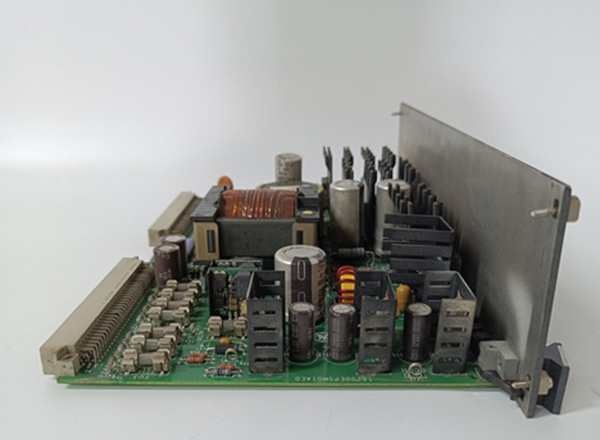
GE IS200EPDMG1B
The Real-World Problem It Solves
You’re staring at a 9FA gas turbine that just tripped on “Exciter 24VDC Power Loss” during a heatwave. The old linear power supply couldn’t handle the ambient temperature, causing the output to sag and resetting the DSPX processor. You need a power module that can take a beating from the 125VDC station battery and spit out rock-solid 24VDC without breaking a sweat.
Where you’ll typically find it:
- EX2100/EX2100e Exciter Cabinets: Sitting in the EPBP rack, powering the DSPX, EDEX, EGDM, and all I/O terminal boards.
- Offshore Platform Turbine Skids: Providing clean, regulated power in high-humidity, salt-spray environments.
- Retrofit Projects: Replacing bulky, heat-generating transformer-based power supplies in legacy control cabinets.
It turns a marginal, heat-sensitive power supply into a deterministic, redundant energy backbone.
Hardware Architecture & Under-the-Hood Logic
This isn’t a passive transformer; it’s a high-efficiency switch-mode power supply with brains. It lives on the EPBP backplane, acting as the heart of the excitation control system. The “G1B” suffix indicates optimized component selection for enhanced thermal performance and Mean Time Between Failures (MTBF).
- Input Conditioning & Surge Suppression: The 125VDC input first hits an EMI filter and surge suppressor. This scrubs the electrical hash from the station battery bus before it can fry the sensitive switching transistors.
- High-Frequency Switching Conversion: An internal PWM controller drives a power MOSFET at high frequency. This chops the 125VDC into a high-frequency AC waveform, which is then stepped down via a compact transformer and rectified to a clean 24VDC.
- Redundancy & Load Sharing Logic: If two EPDMs are installed, they talk over the backplane. They automatically balance the 24VDC load 50/50. If one fails, the other instantly picks up 100% of the load without a hiccup.
- Real-Time Health Monitoring: The onboard microcontroller watches input voltage, output current, and internal temperature. If the output sags or a short occurs, it trips the onboard circuit breaker and lights up the Fault LED.
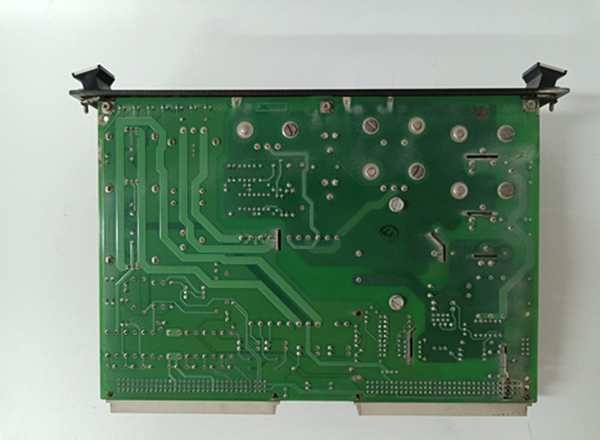
GE IS200EPDMG1B
Field Service Pitfalls: What Rookies Get Wrong
Reversing the 125VDC Input Polarity
A rookie is landing the 125VDC input lugs and mixes up the positive and negative leads. He flips the breaker. The board emits a loud “POP” and a cloud of magic smoke. The input rectifier and primary switching transistor are toast.
- Field Rule: Always use a multimeter to verify polarity before applying power. Touch the probes to the input terminals. Positive must be positive. If you’re colorblind, label the wires with tape before disconnecting the old board.
Mismatching Cable Gauges in Redundant Setups
A junior engineer installs two EPDMs for redundancy. He uses #12 AWG wire for the first unit’s 24VDC output but grabs some leftover #18 AWG for the second. The thinner wire has higher resistance, causing the load sharing algorithm to malfunction. The #18 AWG wire overheats and melts.
- Quick Fix: In a redundant configuration, use identical wire gauges (#12 AWG minimum) for both units’ 24VDC outputs. Ensure the cable lengths are roughly the same. Symmetry is mandatory for proper load sharing.
Ignoring the Onboard Circuit Breaker Rating
A mechanic replaces a failed EPDM. He notices the new board has a 10A output breaker, but the old one had a 15A. He figures “bigger is better” and swaps the breaker from the old board onto the new one. The 15A breaker masks an overcurrent condition, allowing the EPDM’s internal MOSFETs to cook themselves.
- Field Rule: Never change the rating of the onboard circuit breakers. Use the factory-specified amperage. The breaker is sized to protect the internal components, not just the wire. If it trips, you have a short or an overloaded system—fix the root cause.
Commercial Availability & Pricing Note
Please note: The listed price is for reference only and is not binding. Final pricing and terms are subject to negotiation based on current market conditions and availability.