Description
Hard-Numbers: Technical Specifications
- Input Voltage: 125 VDC (Station Battery, ±10%)
- Operating Temperature: -40°C to +70°C
- Switchover Time: < 10 ms (regulator-to-regulator transition)
- Isolation Rating: 1500V AC input-to-output
- Communication Interface: High-Speed Serial Link (HSSL) & Mark VIe Backplane
- System Rating: 120 A Regulator System (with transfer diodes & SCR modules)
- Power Draw: Approx. 18 Watts
- Diagnostic Indicators: Run, Fault, and Regulator Active LEDs
- MTBF: ≥ 400,000 hours
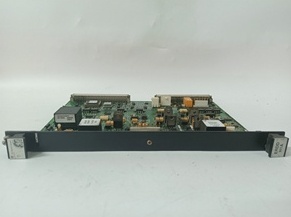
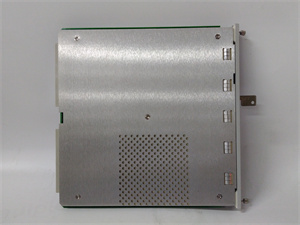
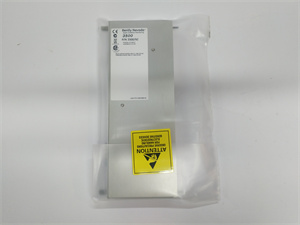
GE IS200ECTBG1A
The Real-World Problem It Solves
You’re standing in a 9FA gas turbine exciter cabinet where the primary regulator just suffered a catastrophic thyristor failure. The old hard-wired transfer scheme took 500ms to switch to the backup regulator, causing the generator terminal voltage to collapse and the unit to trip on “Field Undervoltage.” You need a board that can detect a regulator failure and seamlessly shift the load to the standby unit in milliseconds, not half-seconds. This EDSL board eliminates that nightmare. It actively monitors both regulator health, and when the primary dies, it fires the transfer diodes and SCRs in under 10ms, keeping the excitation voltage rock-solid through the switchover.
Where you’ll typically find it:
- EX2100e Brushless Exciter Systems: Managing dual-redundant regulator switching in 9F/9HA class gas turbines
- Triple Modular Redundant (TMR) Excitation Architectures: Serving as the vote-counting and switch-over arbiter between three independent regulator channels
- Retrofit Projects: Replacing obsolete relay-based transfer schemes in legacy hydro and steam turbine excitation systems
It turns a slow, clunky regulator transfer system into a deterministic, sub-10ms switchover mechanism.
Hardware Architecture & Under-the-Hood Logic
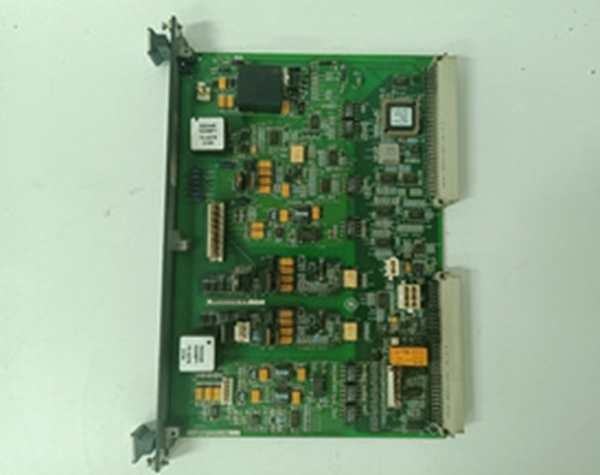
This isn’t a passive terminal block; it’s an active power routing and arbitration hub designed to survive the brutal electrical environment right next to a multi-megawatt thyristor bridge. It sits on the EX2100e backplane, acting as the traffic cop between two competing excitation regulators.
- Dual Regulator Health Polling: The board continuously monitors the status of Regulator A and Regulator B via the HSSL/backplane. It tracks thyristor bridge voltages, gate drive integrity, and DC output currents from both channels in real-time.
- Transfer Diode & SCR Gating: When a regulator failure is detected (e.g., SCR short, driver fault), the EDSL instantly fires the transfer diodes and SCR modules. These semiconductor switches route the 125VDC exciter power from the failed channel to the healthy one, with less than 10ms of voltage sag.
- Snubber Circuit Integration: The board works in tandem with the ERSN (Exciter Regulator Dual Selector Snubber) board. Together, they suppress the inductive voltage spikes generated during the switchover event, protecting the expensive thyristor modules from voltage overstress.
- Fail-Safe Default State: If both regulators report faults, or if the EDSL itself loses communication with the main controller, it defaults to a predetermined safe state—typically latching the last known good regulator online and flashing the red FAULT LED to alert the operators.
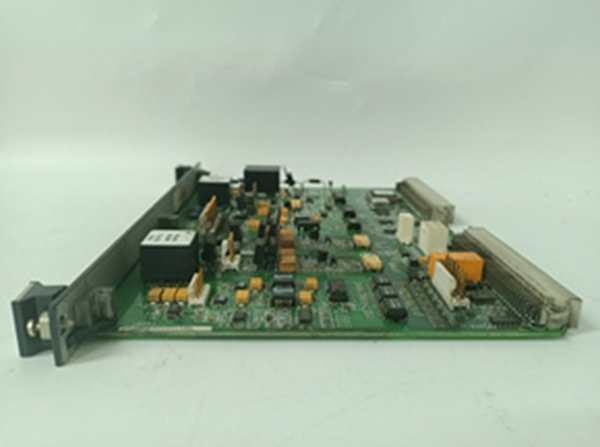
GE IS200ECTBG1A
Field Service Pitfalls: What Rookies Get Wrong
Failing to Verify Transfer Diode Polarity Before Energizing
A rookie replaces a blown transfer diode in the exciter cabinet and hastily lands the replacement without checking polarity. He flips the 125VDC breaker. The reverse-biased diode instantly explodes, taking out the EDSL board’s power MOSFETs and extending the outage by three days.
- Field Rule: Always verify diode polarity with a multimeter before landing the leads. The cathode band must align with the positive (+) terminal as marked on the EDSL silkscreen. Torque the lugs to 15 lb-in and apply a dab of anti-oxidizing paste to prevent corrosion creep.
Mismatching EDSL Firmware Revision Across Redundant Channels
You’re commissioning a TMR excitation system with three EDSL boards (one per regulator channel). Two boards are revision H2ABB, but the third is an older H1A pulled from a decommissioned unit. The three boards cannot agree on the switchover arbitration logic, and the system refuses to arm the transfer relays.
- Quick Fix: Ensure all EDSL boards in a redundant/TMR configuration are on the same firmware baseline. Use ToolboxST to flash the older H1A board to match the H2ABB revision before commissioning. Mixed firmware versions will cause unpredictable arbitration behavior.
Ignoring the Snubber Board (ERSN) When Troubleshooting Switchover Failures
A tech is chasing a recurring “Transfer Diode Overvoltage” alarm. He focuses entirely on the EDSL board, swapping it twice with no success. The real culprit is a degraded RC snubber network on the companion ERSN board, which is letting inductive voltage spikes destroy the transfer diodes during each switchover event.
- Field Rule: Always troubleshoot the EDSL/ERSN pair as a single subsystem. Check the snubber resistor values and capacitor ESR on the ERSN board before condemning the EDSL. A healthy EDSL paired with a failing snubber will produce the same failure symptoms.
Commercial Availability & Pricing Note
Please note: The listed price is for reference only and is not binding. Final pricing and terms are subject to negotiation based on current market conditions and availability.