Description
Hard-Numbers: Technical Specifications
- Wetting Supply Voltage: 70V DC (Range: 63-84V DC)
- Relay Outputs: 4x General-Purpose Form-C Relays (Simplex control)
- Trip Outputs: 2x Dedicated Trip Contact Outputs (drives customer lockout)
- Contact Inputs: 52G & 86G Breaker Inputs, 6x Auxiliary Inputs
- Operating Temperature: -30°C to +65°C
- Board Dimensions: 330mm (H) x 178mm (W)
- Isolation Rating: Resistor-isolated input monitoring
- Architecture Mode: Simplex (Single-Channel Control)
- Backplane Distribution: Fanned to M1, M2, and C controllers
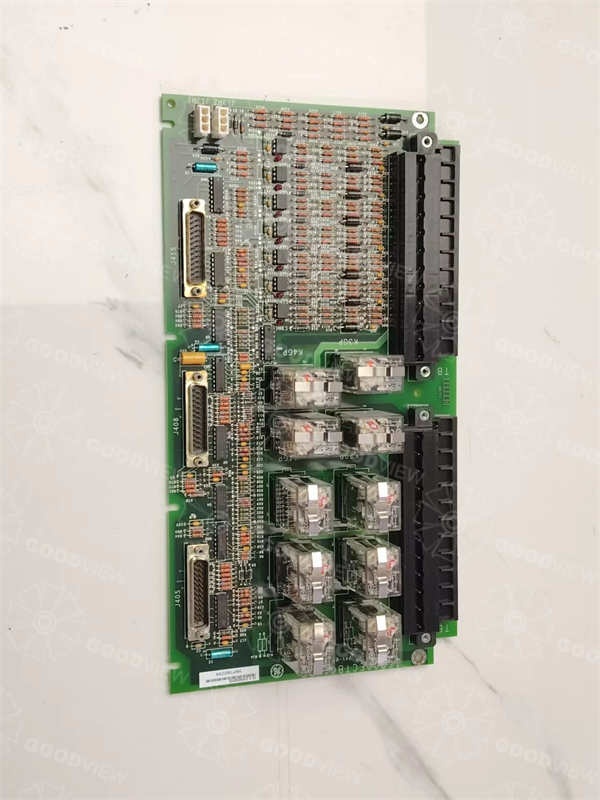
GE IS200ECTBG1ADE
The Real-World Problem It Solves
You’re troubleshooting a smaller cogeneration turbine where a full triple-redundant architecture is overkill and cost-prohibitive. The old 24VDC relay interface keeps chattering because atmospheric humidity has oxidized the breaker contacts, causing false “Breaker Open” trips. You need a simplex-configured contact board that punches through that grime with 70VDC wetting power. This ECTB board eliminates that headache. It burns through contact oxidation and drives the lockout relays with deterministic switching, even in mildly corrosive environments.
Where you’ll typically find it:
- Smaller Cogeneration & Biomass Plants: Simplex excitation control systems where full redundancy isn’t justified by the risk profile.
- Industrial Steam Turbine Generators: Single-channel lockout and breaker monitoring for non-critical power generation assets.
- Retrofit Projects: Replacing obsolete hard-wired relay panels in legacy turbine control rooms with a standardized simplex terminal board.
It turns a noisy, unreliable simplex contact interface into a hardened, wetting-powered safety loop.
Hardware Architecture & Under-the-Hood Logic
This board doesn’t have a microprocessor. It’s a passive, hardened signal interface designed for simplex control architectures. It acts as the heavy-duty gateway between the EMIO controller and the field-wired breakers and relays. The “G2” suffix denotes simplex-mode operation, while “DE” indicates project-specific I/O mapping.
- 70VDC Wetting Power Generation: The onboard regulator produces a rock-solid 70VDC bias. This high-voltage potential is applied across all contact inputs. When a breaker or auxiliary contact closes, the 70VDC arcs momentarily, vaporizing any surface oxidation to ensure a solid electrical connection.
- Resistor-Isolated Input Monitoring: Each of the 52G, 86G, and six auxiliary inputs passes through a precision series resistor. This protects the downstream EMIO control circuitry from voltage surges or accidental short circuits originating from the field wiring.
- Simplex Control Logic: Unlike the G1A’s redundant voting scheme, the G2 variant operates in single-channel mode. The EMIO processor directly commands the four Form-C relays and two trip outputs without requiring consensus from multiple redundant controllers.
- Signal Fan-Out to Controllers: All monitored contact statuses are replicated and distributed across the backplane to the M1, M2, and C controllers. Even though the board operates in simplex mode, all three processors still receive identical real-time data for diagnostics and historical trending.
Field Service Pitfalls: What Rookies Get Wrong
Installing a G2 Simplex Board in a Redundant Rack
A rookie pulls a fried IS200ECTBG1ADE from a triple-redundant 9FA gas turbine and swaps it with a warehouse-stock IS200ECTBG2ADE. The turbine powers up, but the EMIO throws a “Architecture Mismatch” alarm and refuses to arm the trip outputs. The G2 hardware is hardcoded for simplex logic and cannot participate in 2-out-of-3 voting.
- Field Rule: Always match the hardware revision suffix to your control architecture. If your system uses redundant (1oo2 or 2oo3) voting logic, you mustuse the G1A variant. The G2 variant is exclusively for simplex architectures. Never try to force a simplex board into a redundant system.
Letting the 70VDC Wetting Lugs Loosen During Cleaning
A mechanic performs a quarterly cabinet washdown and accidentally nudges the 70VDC input lugs on the ECTB. He doesn’t retorque them. A month later, the turbine trips on “False 86G Lockout” because the loose lug created a high-resistance connection, dropping the wetting voltage below the threshold needed to sense the closed breaker contact.
- Quick Fix: Torque all 70VDC and relay output lugs to 15 lb-in using a calibrated torque screwdriver. Mark the lug heads with a paint pen after tightening to visually verify they haven’t backed out during vibration events. Never skip the torque check after any cabinet intrusion.
Swapping a DE-Series Board for a Standard G2 Spare
You pull a smoked IS200ECTBG2ADE from a refinery turbine and replace it with a generic IS200ECTBG2A from the warehouse. The green LEDs turn on, but the turbine refuses to synchronize. The “DE” hardware has custom jumper configurations and burden resistor values specific to this refinery’s 480V PPT configuration. The standard card’s default settings are mismatched to the site’s I/O mapping.
- Field Rule: Always match the full part number, including the “DE” suffix. Photograph the jumper configuration (JP1-JP4) and resistor network settings on the failed board before removal. If the P/N ends in “DE”, a standard spare will not have the correct burden values or I/O mapping for the site-specific application.
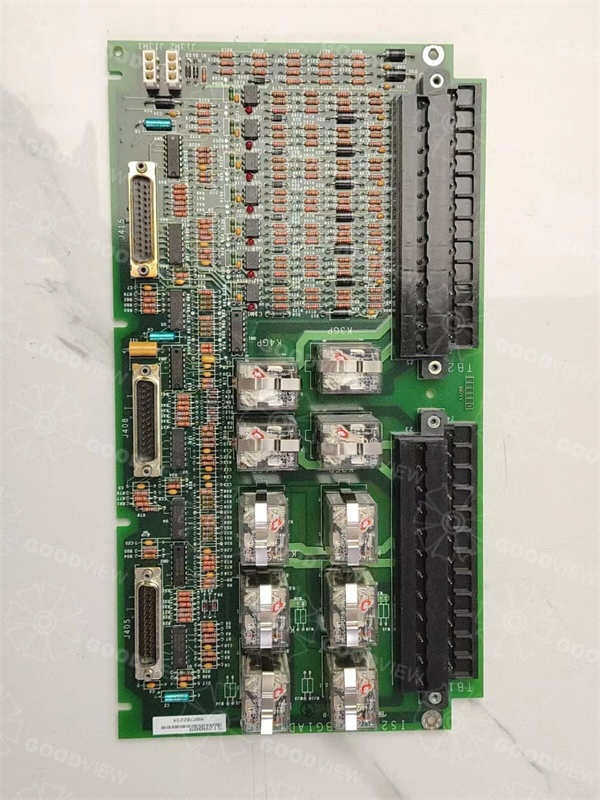
GE IS200ECTBG1ADE
Commercial Availability & Pricing Note
Please note: The listed price is for reference only and is not binding. Final pricing and terms are subject to negotiation based on current market conditions and availability.