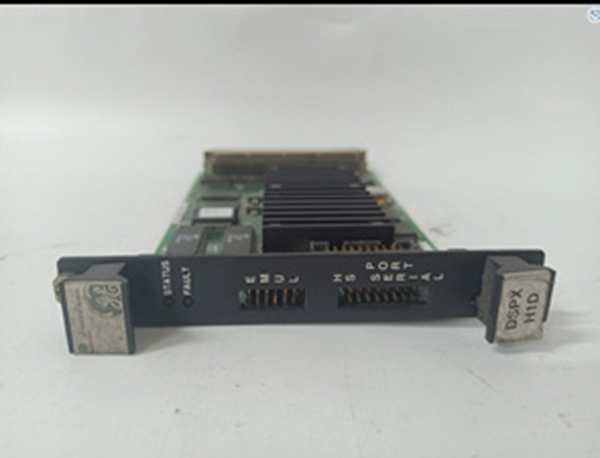
Description
Hard-Numbers: Technical Specifications
- Processor: 32-bit Floating-Point DSP at 160 MHz (320 MFLOPS)
- RAM: 128 MB DDR
- Flash Memory: 64 MB
- SRAM: 4 MB
- Analog Inputs: 8 channels (16-bit resolution, 500 kSPS)
- Digital/Pulse Inputs: 4 channels (up to 500 kHz)
- Communication Ports: 2x 10/100 Ethernet, 1x USB, 1x RS-485, Mark VIe Backplane
- Power Requirements: 24 VDC (±10%), 0.6 A max
- Operating Temperature: -40°C to +85°C
- Safety Compliance: IEC 61010-1, EN 61326-1, UL 61010-1
- MTBF: 2,200,000 hours (@ 40°C)
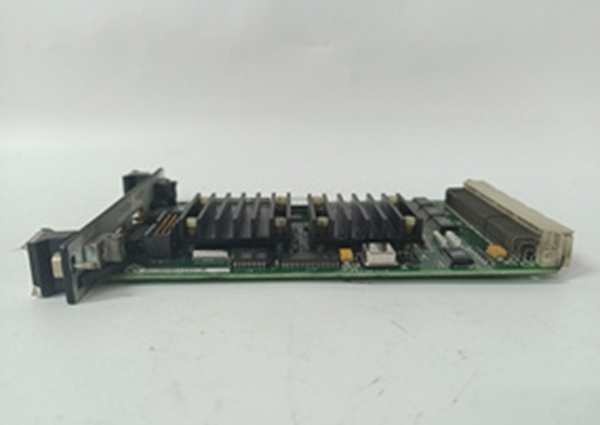
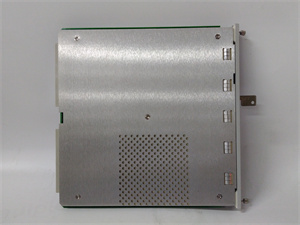
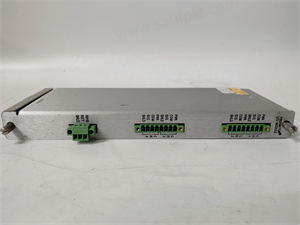
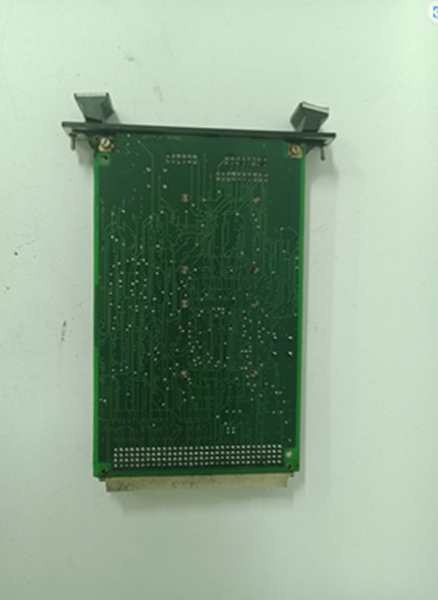
GE IS200DSPXH1D
The Real-World Problem It Solves
You’re staring at a 9FA gas turbine generator that’s oscillating on reactive power. The old analog exciter card can’t keep up with the grid’s rapid voltage swings, and the control valve is hunting. You need a processor that can calculate firing angles in microseconds and reject noise from nearby 4160V switchgear. This DSPX board solves that lag. It crams a 160MHz math engine into a single slot, stabilizing the volts and keeping the VARs locked tight without dropping a single sample.
Where you’ll typically find it:
- EX2100 Excitation Cabinets: Managing generator terminal voltage, power factor, and ceiling voltage limits.
- Innovation Series Drive Racks: Processing feedback from current transformers (CTs) for large AC motor drives.
- Retrofit Projects: Replacing obsolete analog regulator cards in legacy turbine-generator sets to meet modern grid codes.
It turns a sluggish, hunting voltage regulation system into a tight, deterministic control loop.
Hardware Architecture & Under-the-Hood Logic
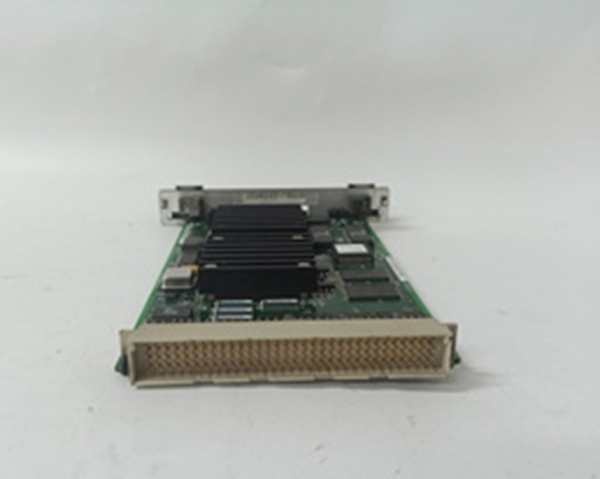
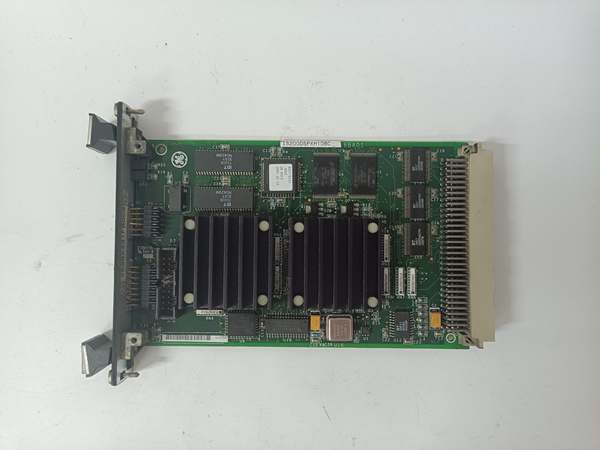
This isn’t a passive I/O card; it’s a high-speed industrial computer built for the violent electrical environment of a power plant. It rides the Mark VI backplane and acts as the brain for excitation or drive control. The “DBD” suffix means it’s built with lead-free solder and tweaked power distribution networks.
- Floating-Point Math Engine: The 160MHz DSP handles the heavy lifting—executing PID loops, power system stabilizer (PSS) algorithms, and limiter logic. It converts raw millivolt signals from CTs and PTs into precise thyristor firing angles.
- Dedicated ASIC Logic: Time-critical tasks like gating the thyristors and managing phase-locked loops are offloaded to a dedicated Application-Specific Integrated Circuit (ASIC). This guarantees nanosecond-level timing accuracy, completely independent of the processor’s workload.
- High-Speed Data Acquisition: Eight 16-bit ADCs sample your generator bus voltage and stator current at 500,000 samples per second. This massive oversampling prevents aliasing and catches transient grid disturbances that slower cards would miss.
- Multi-Protocol Backhaul: Processed control parameters and raw waveform data are packaged and fired out of the dual 10/100 Ethernet ports to the plant DCS and the Mark VI HMI, bypassing the congested backplane traffic.
Field Service Pitfalls: What Rookies Get Wrong
Attempting Local Repairs on Lead-Free (RoHS 6/6) Boards
A rookie spots a stray solder bridge on a capacitor near the DSP chip and tries to clean it up with a standard 63/37 leaded solder iron. The lead-free solder on the board requires much higher temperatures to melt. The tech cranks the iron to 400°C, delaminates the FR4 substrate, and destroys the $10,000 board.
- Field Rule: Never attempt to solder or rework RoHS 6/6 hardware in the field. These boards demand specialized lead-free solder paste and precise temperature profiled reflow ovens. If you find a physical defect, RMA it to a certified repair center. You are not equipped to fix it in a turbine cabinet.
Calibrating Analog Inputs with a Sloppy Multimeter
A tech calibrates the generator PT inputs using a cheap $50 handheld multimeter. He dials the software gain and offset to match the meter’s reading. Three weeks later, a grid transient causes a minor voltage dip, and the DSPX misinterprets the signal, tripping the unit on “Field Overcurrent.”
- Quick Fix: Always use a calibrated 6.5-digit benchtop multimeter (Fluke 8508A or equivalent) for analog input calibration. Verify the burden resistors on the board match your CT/PT ratios. Never trust a pocket meter for high-stakes excitation tuning.
Cooking the DSP Chip with Poor Cabinet Ventilation
A mechanic cleans the control cabinet filters but forgets to vacuum the fins on the DSPX board’s heatsink. Six months later, during a heatwave, the turbine trips on “Exciter Processor Overtemp.” The dust blanket acted as an insulator, baking the 160MHz DSP at 95°C until it throttled and crashed.
- Field Rule: Perform a monthly visual inspection of the DSPX heatsink. Use low-pressure, dry nitrogen or canned air to blow out the heatsink fins. If the control cabinet ambient temperature exceeds 55°C, verify the exhaust plenum fans are operational and the intake filters are <10% clogged.
Commercial Availability & Pricing Note
Please note: The listed price is for reference only and is not binding. Final pricing and terms are subject to negotiation based on current market conditions and availability.