Description
Hard-Numbers: Technical Specifications
- Processor: 32-bit Floating-Point DSP at 160 MHz (320 MFLOPS processing power)
- RAM: 128 MB DDR
- Flash Memory: 64 MB
- SRAM: 4 MB
- Analog Inputs: 8 channels (16-bit resolution, 500 kSPS)
- Digital/Pulse Inputs: 4 channels (up to 500 kHz)
- Communication Ports: 2x 10/100 Ethernet, 1x USB, 1x RS-485, Mark VIe Backplane
- Power Requirements: 24 VDC (±10%), 0.6 A max
- Operating Temperature: -40°C to +85°C
- Safety & EMC Compliance: IEC 61010-1, EN 61326-1, UL 61010-1
- MTBF: 2,200,000 hours (@ 40°C)
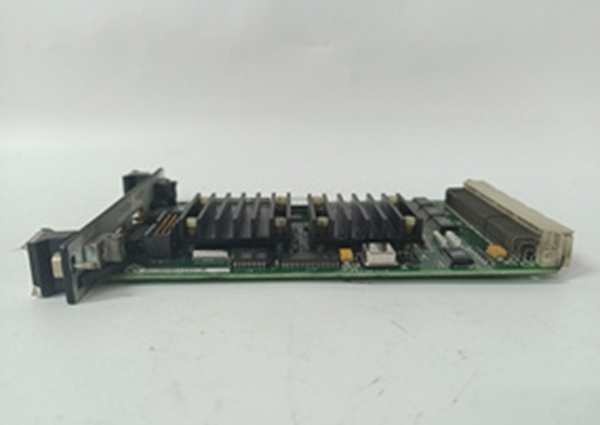
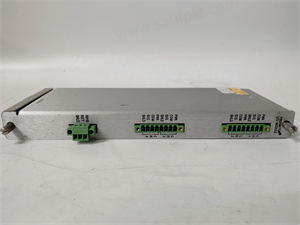
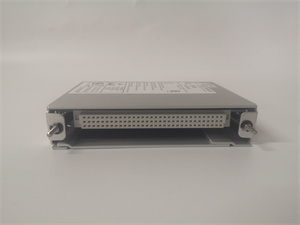
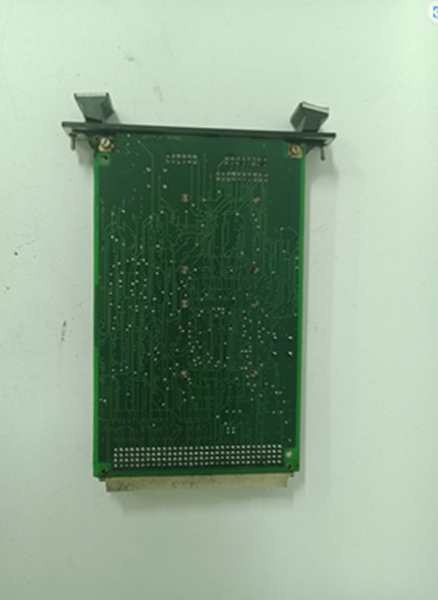
GE IS200DSPXH1D
The Real-World Problem It Solves
You are troubleshooting a 500MW steam turbine generator that keeps tripping on “Generator Field Overvoltage.” The old analog exciter control is hunting, unable to react fast enough to load swings from the grid. A standard PLC scan time of 50ms is far too slow for generator excitation. This DSPX board eliminates that lag. It crams a 160MHz floating-point processor and dedicated hardware logic (ASIC) into a single slot, calculating complex PID loops and firing thyristor gates in microseconds to keep the volts stable.
Where you’ll typically find it:
- EX2100 Excitation Control Cabinets: Managing generator terminal voltage, power factor, and reactive power output.
- Innovation Series Drive Racks: Processing feedback from current transformers (CTs) and potential transformers (PTs) for AC motor drives.
- Retrofit Projects: Replacing obsolete analog regulator cards in legacy turbine-generator sets.
It turns a sluggish, oscillating voltage regulation system into a tight, deterministic control loop.
Hardware Architecture & Under-the-Hood Logic
This isn’t your grandfather’s analog voltage regulator; it’s a high-speed computer built for the brutal electrical environment of a power plant. It sits on the Mark VI/Innovation Series backplane, acting as the brain for excitation or drive control. It handles the heavy math so the main controller doesn’t have to.
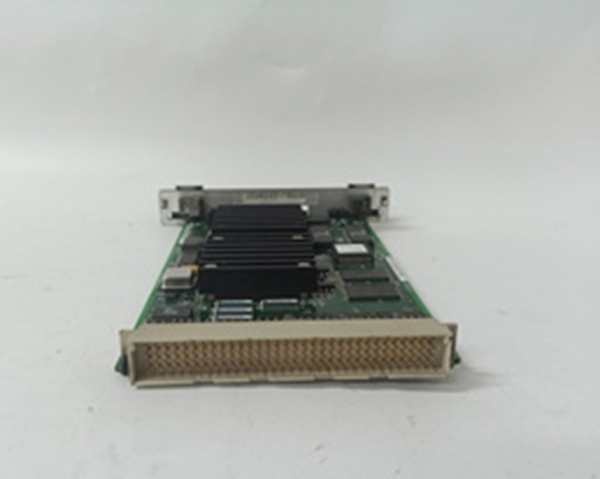
- Floating-Point Math Engine: The 160MHz DSP crunches the numbers for your excitation control strategy (like automatic voltage regulation or power system stabilizer algorithms). It converts raw millivolt signals from CTs and PTs into actionable firing angles for the thyristor bridge.
- Dedicated ASIC Logic: Complex, time-critical tasks—like gating the thyristors and managing phase-locked loops—are offloaded to a dedicated Application-Specific Integrated Circuit (ASIC). This guarantees timing accuracy down to the nanosecond, regardless of the processor’s workload.
- High-Speed Data Acquisition: Eight 16-bit ADCs sample your generator bus voltage and stator current at 500,000 samples per second. This extreme oversampling prevents aliasing and catches transient grid disturbances that slower cards would miss entirely.
- Multi-Protocol Backhaul: Processed control parameters and raw waveform data are packaged and fired out of the dual 10/100 Ethernet ports to the plant DCS and the Mark VI HMI, completely bypassing the slower backplane traffic.
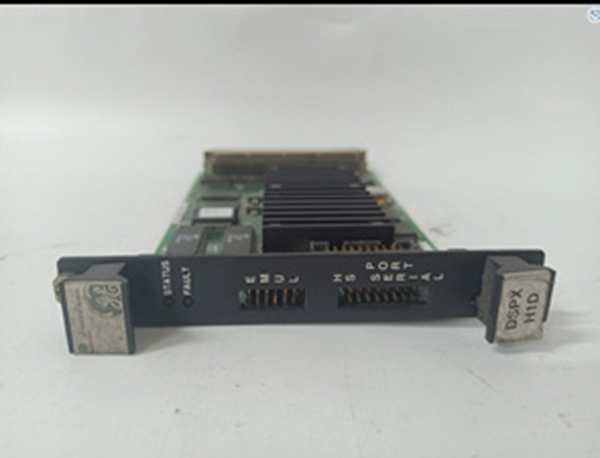
GE IS200DSPXH1D
Field Service Pitfalls: What Rookies Get Wrong
Loading Firmware via the Wrong Physical Port
A rookie needs to update the DSPX firmware during an outage. He plugs his laptop into the RJ45 Ethernet port on the front faceplate and tries to push the .binfile. The transfer times out repeatedly, and he spends four hours troubleshooting his laptop’s IP settings. The DSPX requires firmware loads specifically through the dedicated micro-USB port.
- Field Rule: Always use the front-panel USB port for firmware downloads and flash updates. Reserve the RJ45 Ethernet ports strictly for runtime communication with the plant network and the HMI. Never mix them up.
Ignoring the CT/PT Burden Resistor Calculations
A tech calibrates the generator metering and adjusts the PT ratios in the software to match the new 4000:5 CTs installed during the outage. He assumes the default burden resistors on the DSPX board are fine. Two weeks later, a massive fault current saturates the CTs, and the DSPX inputs clip, causing the exciter to go into a hard trip.
- Quick Fix: Calculate the burden resistor values for your specific CT and PT ratios before commissioning. If your primary current or voltage exceeds the DSPX’s input range (typically 5A or 150V), you must install external burden resistors or intermediate transducers. Match the hardware to the math, not the other way around.
Cooking the DSP Chip with Poor Cabinet Ventilation
A mechanic cleans the control cabinet filters but neglects to vacuum the fins on the DSPX board’s heatsink. Six months later, during a hot Texas summer, the turbine trips on “Exciter Processor Overtemp.” The dust blanket acted as an insulator, baking the 160MHz DSP at 95°C until it throttled and crashed.
- Field Rule: Perform a quarterly visual inspection of the DSPX heatsink. Use low-pressure, dry nitrogen to blow out the heatsink fins. If the control cabinet ambient temperature exceeds 50°C, verify the exhaust plenum fans are operational and the intake filters are <10% clogged.
Commercial Availability & Pricing Note
Please note: The listed price is for reference only and is not binding. Final pricing and terms are subject to negotiation based on current market conditions and availability.