Description
Key Technical Specifications
-
Model Number: IS200DAMAG1ACA
-
Manufacturer: General Electric
-
Logic Voltage: +5 V @ 1 A, ±12 V @ 150 mA from VME back-plane
-
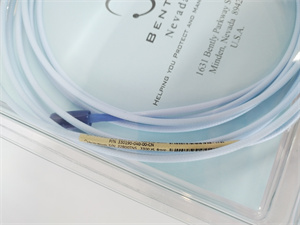
Fiber Ports: 6 × multimode ST, 850 nm, 5 MBd gate-pulse data
-
Analog I/O: 2 diff ±10 V inputs (bridge volts/amps), 1 ±10 V monitor output
-
Gate Drive: 15 V differential, 2 A peak, 20 µs pulse width, transformer-isolated
-
Isolation: 1500 Vrms fiber-to-logic, 500 V channel-to-channel
-
Connectors: 96-pin VME, six ST fiber, two 12-pos pluggable for local PT/CT
-
Diagnostics: 4 LEDs (RUN, FAULT, TX, RX) visible through bezel
-
Operating Temperature: –20 °C to +70 °C inside exciter cabinet
-
Dimensions: 17.8 cm × 33.0 cm, single-slot 6U VME

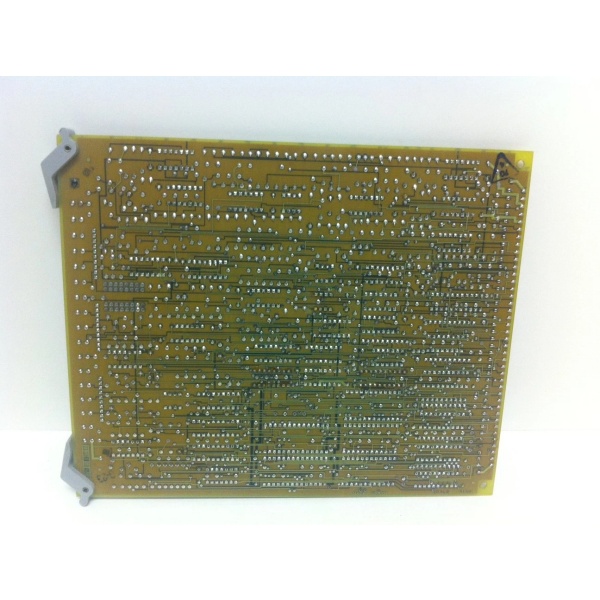
GE DS3800NAIF1A1A
Field Application & Problem Solved
A frame-9 combined-cycle block still running an EX2100 static exciter doesn’t fire IGBTs with copper—it fires them with light. The IS200DAMAG1ACA is the last copper-to-glass translator. It sits in the 13-slot VME frame, receives gate-timing words from the Mark VI CPU, and spits out six 15 V differential pulses through fiber to the gate-driver cards on the bridge. When the board fails you lose one or more phases, field current gets lumpy, and the VAR meter starts hunting; swap the card, snap the six ST connectors back in, and the bridge comes back smooth—no re-cal, no firmware flash. You’ll find this PCB in every EX2100 cabinet from 50 MW peakers to 400 MW combined-cycle blocks. Its value is noise immunity: fiber can’t be bothered by 6.9 kV switch-gear hash, so the gate pulses stay crisp even when the yard looks like a lightning storm.
A frame-9 combined-cycle block still running an EX2100 static exciter doesn’t fire IGBTs with copper—it fires them with light. The IS200DAMAG1ACA is the last copper-to-glass translator. It sits in the 13-slot VME frame, receives gate-timing words from the Mark VI CPU, and spits out six 15 V differential pulses through fiber to the gate-driver cards on the bridge. When the board fails you lose one or more phases, field current gets lumpy, and the VAR meter starts hunting; swap the card, snap the six ST connectors back in, and the bridge comes back smooth—no re-cal, no firmware flash. You’ll find this PCB in every EX2100 cabinet from 50 MW peakers to 400 MW combined-cycle blocks. Its value is noise immunity: fiber can’t be bothered by 6.9 kV switch-gear hash, so the gate pulses stay crisp even when the yard looks like a lightning storm.
Installation & Maintenance Pitfalls (Expert Tips)
Fiber bend radius—break a strand and gate pulses drop
The multimode fiber needs 1.5 in minimum bend radius. Techs zip-tie it tight to tidy the door and fracture the core; you see 5 % low field volts and blame the bridge. Use stick-on radius clips and leave a 3 in service loop—problem gone for life.
The multimode fiber needs 1.5 in minimum bend radius. Techs zip-tie it tight to tidy the door and fracture the core; you see 5 % low field volts and blame the bridge. Use stick-on radius clips and leave a 3 in service loop—problem gone for life.
Dirty ST ferrule—bit-error rate jumps, bridge trips
Coal dust on the ferrule scatters 850 nm light; BER climbs and the Mark VI flags “BRIDGE FAULT.” Hit every ST with one-shot cleaner before you close the door—30 s of housekeeping saves a 2 hr crane call.
Coal dust on the ferrule scatters 850 nm light; BER climbs and the Mark VI flags “BRIDGE FAULT.” Hit every ST with one-shot cleaner before you close the door—30 s of housekeeping saves a 2 hr crane call.
Battery dead—SRAM loses gate timing, bridge hunts
The 3 V lithium cell backs the gate-timing table. When it drops below 2.2 V the table corrupts and the bridge hunts ±3 °. Cell is solder-tab; cut it out, add a CR2032 holder on the faceplate, and reload the table via ControlST—five-minute fix, no crane needed.
The 3 V lithium cell backs the gate-timing table. When it drops below 2.2 V the table corrupts and the bridge hunts ±3 °. Cell is solder-tab; cut it out, add a CR2032 holder on the faceplate, and reload the table via ControlST—five-minute fix, no crane needed.
Wrong keying—+15 V on fiber power pin cooks the LED
The fiber and analog headers are keyed alike but pin-outs differ. Land the gate cable on the analog header and you stuff +15 V onto the 1.7 V LED—poof, no light. Match the white wire-stripe to the silk-screen triangle before you push the plug home.
The fiber and analog headers are keyed alike but pin-outs differ. Land the gate cable on the analog header and you stuff +15 V onto the 1.7 V LED—poof, no light. Match the white wire-stripe to the silk-screen triangle before you push the plug home.
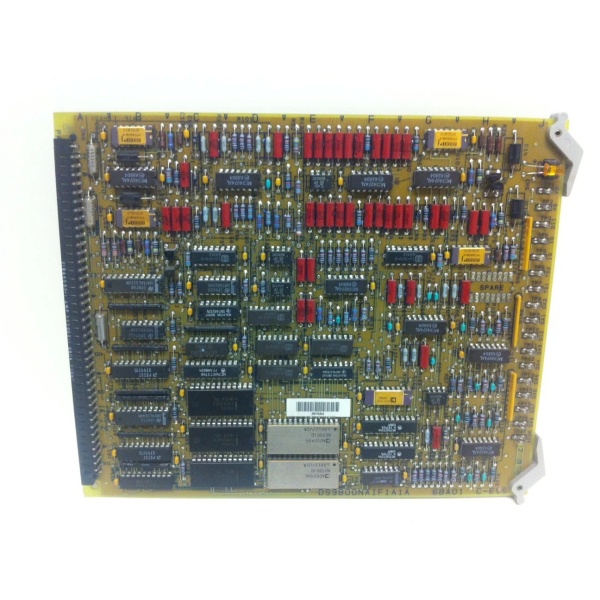
GE DS3800NAIF1A1A
Technical Deep Dive & Overview
IS200DAMAG1ACA is a fiber-optic gate-drive front-end frozen in 2000 silicon. A 32-channel FPGA converts 16-bit gate-timing words from the VME bus into 5 MBd light pulses; six ST ports carry the pulses to the gate-driver cards; return fiber brings bridge fault status. Because the card carries both logic and light power, you can swap it hot and the exciter never knows—just kill the 125 VDC field breaker first or you’ll arc-weld the gate leads. Think of it as a ruggedized fiber optic modem for SCR/IGBTs; treat the ST ferrules like optical jewels and the bridge will keep the generator floating at exactly 13.8 kV for another thirty years .
IS200DAMAG1ACA is a fiber-optic gate-drive front-end frozen in 2000 silicon. A 32-channel FPGA converts 16-bit gate-timing words from the VME bus into 5 MBd light pulses; six ST ports carry the pulses to the gate-driver cards; return fiber brings bridge fault status. Because the card carries both logic and light power, you can swap it hot and the exciter never knows—just kill the 125 VDC field breaker first or you’ll arc-weld the gate leads. Think of it as a ruggedized fiber optic modem for SCR/IGBTs; treat the ST ferrules like optical jewels and the bridge will keep the generator floating at exactly 13.8 kV for another thirty years .