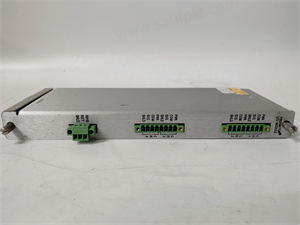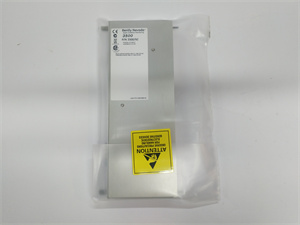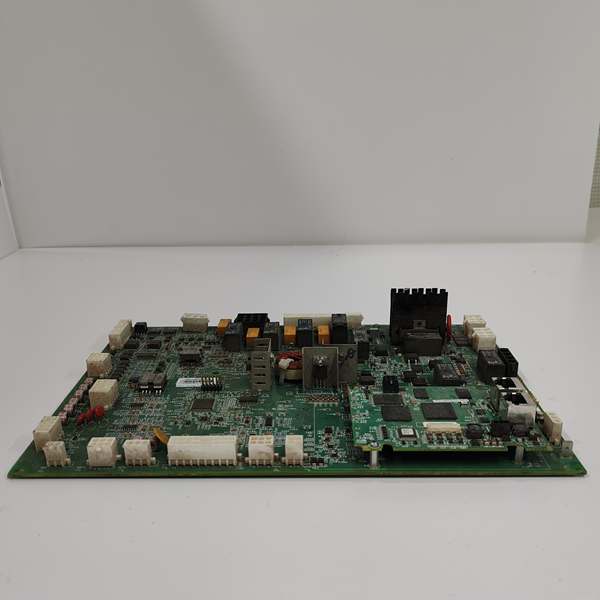
Description
Hard-Numbers: Technical Specifications
- Processor Logic: FPGA-based deterministic logic execution
- Backplane Interface: IONet (High-Speed Fiber/Electrical Hybrid)
- Supported Signal Types: Digital Discrete I/O, Differential Analog Inputs
- Operating Temperature: -20°C to +70°C
- Power Supply: 5VDC and 24VDC derived from backplane
- Watchdog Timer: Hardware-enforced 500ms default interval
- Isolation Rating: 1500 VAC Channel-to-Backplane
- MTBF: ≥ 350,000 hours
- Form Factor: Single-slot 6U CompactPCI
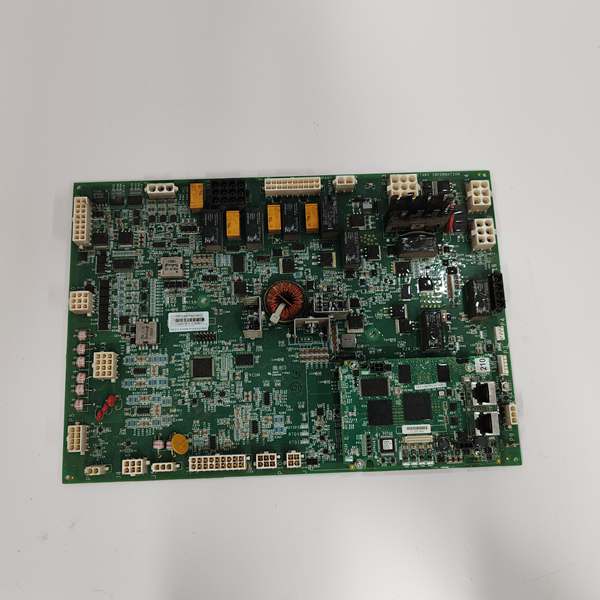
The Real-World Problem It Solves
You’re deep in a turbine retrofit project, and the old relay logic is giving out. You need a module that doesn’t just pass data; it needs to execute local control station logic—like emergency override sequences or local emergency stop chains—without waiting for the main CPU to wake up. This CSLA board eliminates that latency by handling critical logic locally on the backplane, preventing missed shutdowns during a main processor watchdog timeout.
Where you’ll typically find it:
- Combined-Cycle Power Plants: Managing local emergency shutdown logic for gas and steam turbine trains.
- Offshore Platform Turbine Skids: Executing redundant safety chains in high-humidity, salt-spray environments.
- Heavy Industrial Retrofits: Replacing obsolete hard-wired relay panels in 1980s-era turbine controls.
It keeps the local safety logic running even if the main Mark VIe controller goes dark.
Hardware Architecture & Under-the-Hood Logic
This isn’t a passive I/O card; it’s a dedicated logic executioner. It rides the Mark VIe backplane and acts as a high-speed decision-maker for critical control loops, operating independently of the main CPE processor.
- IONet Slave Interface: The CSLA sits on the IONet backplane as a slave device. It constantly listens for configuration updates and synchronization pulses from the master Mark VIe controller.
- Local FPGA Execution: The onboard Field Programmable Gate Array (FPGA) executes the compiled control logic (emergency stops, permissive interlocks). Because it’s hardware-based, it reacts to inputs in nanoseconds, not milliseconds.
- Signal Debounce & Filtering: Raw 24VDC or 120VAC signals hit the input buffers. Hardware debounce circuits eliminate the “contact bounce” from old mechanical relays, ensuring a clean logic state before the FPGA makes a decision.
- Fail-Safe Output Drive: If the CSLA loses its heartbeat from the main controller or detects an internal watchdog fault, it forces all output drivers into a pre-defined safe state (typically de-energized) to protect the turbine.
Field Service Pitfalls: What Rookies Get Wrong
Swapping in a Standard H1A for a Project-Specific H1AZZ
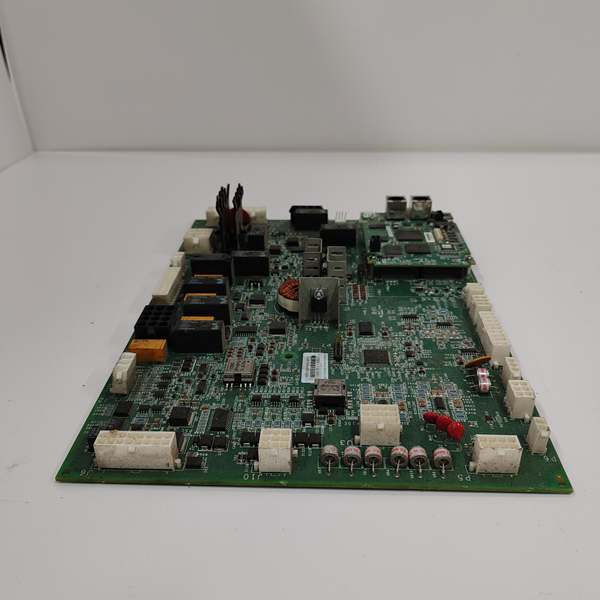
A rookie finds a dead IS200CSLAH1AZZ in a refinery turbine and swaps it with a generic IS200CSLAH1A from the warehouse. The card fits, the LEDs turn green, but the turbine refuses to start. The “ZZ” revision contains custom firmware hooks and I/O mapping specific to that refinery’s DCS. The generic card doesn’t recognize the proprietary sequence calls.
- Field Rule: Always match the full part number, including the revision suffix. If the failed unit has a letter suffix (like “ZZ”), you must source that exact custom revision. A standard spare will not work.
Ignoring the 24VDC Power Plane Dips
You’ve got a CSLA board driving eight 24VDC solenoid valves in a steam turbine skid. During peak startup, when all eight valves fire simultaneously, the local 24VDC power plane on the board dips below 21VDC. The FPGA resets, and the turbine trips on “Logic Processor Fault.”
- Quick Fix: Measure the 24VDC supply voltage at the backplane connector while the turbine is running through a load cycle. If you see the voltage dipping below 22VDC, add a local 24VDC buffer capacitor bank directly to the power distribution bars in the cabinet.
Miswiring the Emergency Stop Chain
A tech lands the plant-wide emergency shutdown (ESD) signal onto the wrong input pin on the CSLA terminal block. The logic compiles fine, but the physical safety chain is broken. During a drill, the turbine doesn’t trip, nearly causing a catastrophe.
- Field Rule: Always perform a “Wiring Continuity Pull Test” before loading the logic. Trace every emergency stop and permissive wire from the field device back to the exact terminal on the CSLA. Verify the logic diagram matches the physical landing one-for-one. Never assume the drawings are 100% accurate.
Commercial Availability & Pricing Note
Please note: The listed price is for reference only and is not binding. Final pricing and terms are subject to negotiation based on current market conditions and availability.