Description
Hard-Numbers: Technical Specifications
- CPU Clock Speed: 1.0 GHz Multi-core
- Form Factor: CompactPCI (6U)
- Backplane Interface: IONet (High-speed Fiber/Electrical Hybrid)
- Supported Protocols: Modbus TCP/IP, Profibus DP, HART (pass-through)
- Redundancy Configuration: 1:1 (Active/Standby)
- Switchover Time: ≤ 20 ms
- Operating Temperature: -20°C to +70°C
- Power Draw: 3.3V @ 1.5A, 5V @ 2.0A
- Isolation Rating: 1500 VAC Channel-to-System
- Memory: 512 MB DDR2 SDRAM
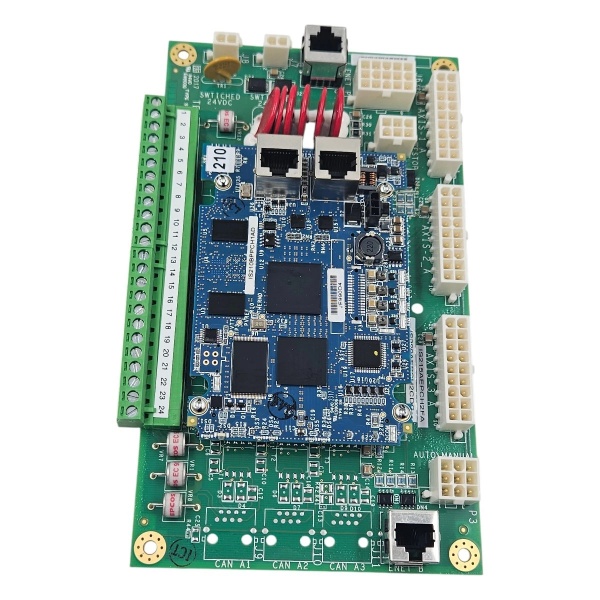
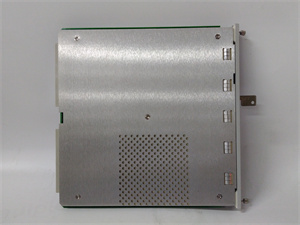
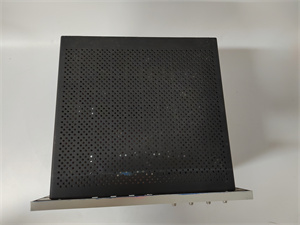
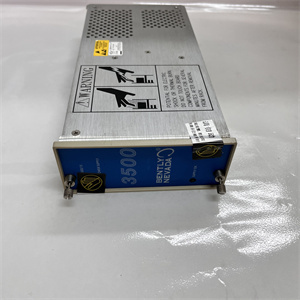
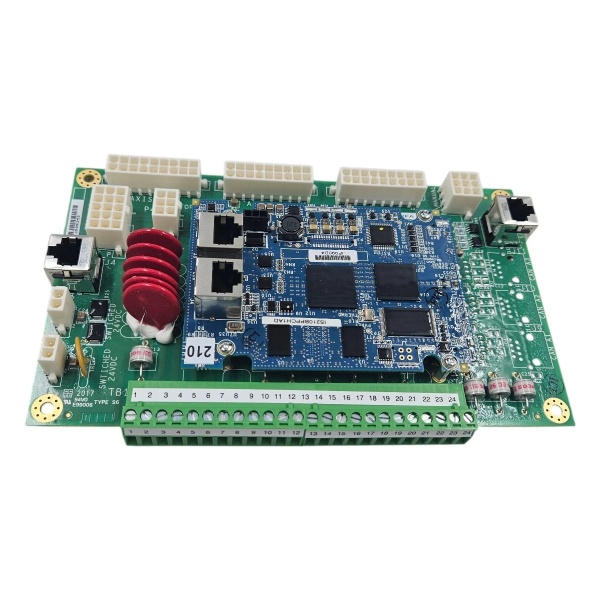
GE IS200AEPCH2CDC
The Real-World Problem It Solves
You’ve got a 9FA gas turbine running flat-out, and the 4-20mA loop to your fuel gas valve is getting noisy from a nearby VFD. A standard I/O card will stutter, causing the turbine to hunt and waste fuel. This CPCI-based processor rips through the data at 1.0 GHz, filtering the junk and executing redundant control logic so fast the turbine never feels a hiccup when a primary card fails.
Where you’ll typically find it:
- Heavy-Duty Gas Turbine Skids: Processing fuel gas pressure, compressor discharge temperature, and IGV positioning loops.
- Combined-Cycle Steam Turbines: Managing high-pressure main steam valves and bypass controls where millisecond latency matters.
- Refinery Cogen Units: In Class 1 Div 2 areas where heat dissipation and vibration resistance are non-negotiable.
It turns a catastrophic single-point failure into a seamless handoff, keeping the megawatts flowing.
Hardware Architecture & Under-the-Hood Logic
This isn’t just an I/O card; it’s a standalone industrial PC crammed onto a 6U CPCI board. It rides the Mark VIe backplane, acting as the brain for your most critical analog loops. It doesn’t rely on the main controller for crunching numbers; it does the heavy lifting itself.
- Signal Front-End & Conditioning: Raw signals hit the precision input amplifiers. Hardware filters chop out the 60Hz hum from your power grid and the switching noise from 480V drives before the ADC even sees the data.
- Multi-Core Execution: The 1.0 GHz processor runs the PID loops, performs linearization for your thermocouples, and handles the HART signal extraction simultaneously.
- Redundant Handshake: It constantly pings its redundant twin via the IONet backplane. If the primary CPU misses three heartbeats or the backplane CRC fails, the secondary CPU takes over the output drivers in under 20 milliseconds.
- Packetized Backhaul: Processed values and diagnostic health words are shoved into IONet packets and fired up to the main controller, keeping the central CPU free to manage the overall unit sequence.
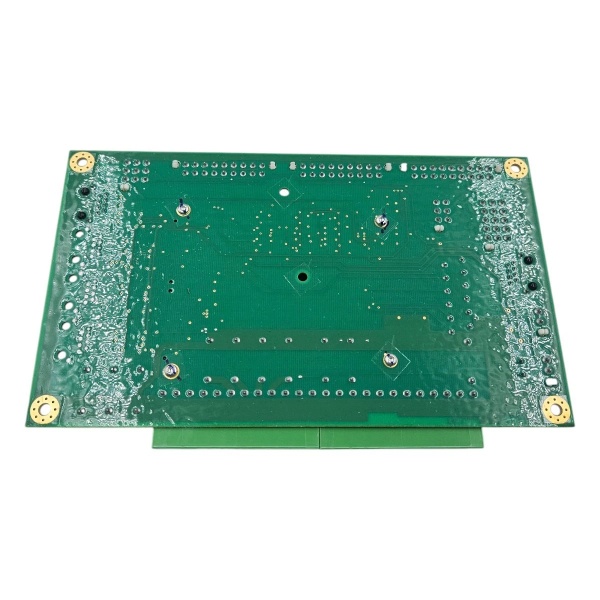
GE IS200AEPCH2CDC
Field Service Pitfalls: What Rookies Get Wrong
Ignoring the Heatsink and Airflow in CPCI Racks
A rookie swaps a failed H1 card for this H2 CPCI beast. The H2 pulls almost double the current (~10 Watts) of the old card. Three weeks later, the turbine trips on “Processor Over-Temp” during a summer heatwave. The intake filters on the rack are caked in cement dust.
- Field Rule: Inspect and vacuum the rack’s intake filters monthly. Feel the rear exhaust plenum. If the air isn’t hot, your fans are dead or the airflow is blocked. Never run an H2 processor in a rack with failed cooling fans.
Swapping H1 for H2 Without a Firmware Cross-Check
You pull a smoking IS200AEPCH1CDC and slam in a new IS200AEPCH2CEC because “it’s newer and faster.” The green LED lights up, but the HMI screams “Firmware Mismatch” and the turbine refuses to roll. The 1.0 GHz architecture requires a newer bootloader than what’s currently loaded on your controller.
- Quick Fix: Before touching the hardware, load the latest Mark VIe firmware package onto your laptop. Run the compatibility checker in ToolboxST. You’ll likely need to flash the controller and the backup EEPROM on the new card before it’ll play nice with the rest of the rack.
Botching the CPCI Lever Lock
The CPCI form factor uses a lever on the front faceplate to drive the board into the backplane connector. A lazy tech just pushes the board in by hand and engages the lever halfway. Over time, the weight of the cables hanging off the front connectors causes the board to creep out of the backplane by a millimeter.
- Field Rule: Always use the front panel lever to seat the board. Push the board in until it hits the backstop, then swing the lever down until it locks flush against the front bracket. Give the top edge a gentle upward push to ensure the gold pins are fully mated.
Commercial Availability & Pricing Note
Please note: The listed price is for reference only and is not binding. Final pricing and terms are subject to negotiation based on current market conditions and availability.