Description
Hard-Numbers: Technical Specifications
- CPU Clock Speed: 1.0 GHz Multi-core
- Input Channel Count: Up to 16 channels (configurable)
- Output Channel Count: Up to 8 channels (configurable)
- Supported Signal Types: 4-20mA, 0-10V, RTD (Pt100/Pt1000), TC (K/J/T types)
- Isolation Rating: 1500 VAC channel-to-channel and channel-to-backplane
- Redundancy Switching Time: ≤ 30 ms
- Communication Protocol: IONet, Modbus TCP/IP
- Operating Temperature: -20°C to +70°C
- MTBF: ≥ 400,000 hours
- Power Dissipation: Approx. 12 Watts
- Safety Certification: SIL 3
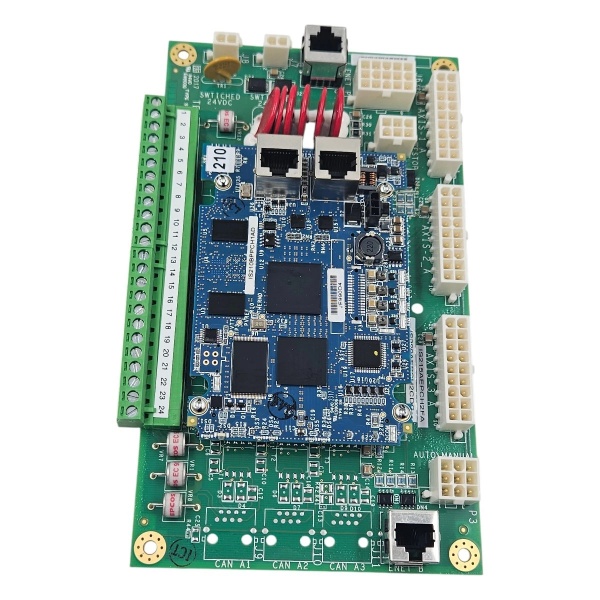
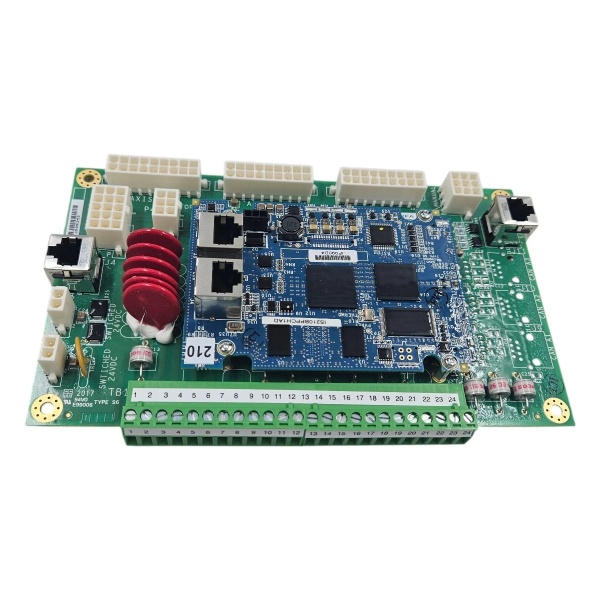
GE IS200AEPCH2CDC
The Real-World Problem It Solves
You’re staring down a triple-redundant Mark VIe rack in a 600MW combined-cycle plant. A single-point failure on your primary gas valve control loop means an automatic trip and a six-figure daily production loss. You need a processor that doesn’t just sit there; it needs to mirror data, detect a heartbeat failure in milliseconds, and hand off control to a backup twin without the turbine even noticing. This module eliminates the anxiety of single-point failures in high-stakes control loops.
Where you’ll typically find it:
- Large Combined-Cycle Power Plants: Managing fuel gas metering valves and steam bypass controls in 9F-class gas turbines.
- Offshore Platforms: Providing salt-spray resistant control for LNG compressor drives and main propulsion turbines.
- Refinery Cogen Units: Handling critical pressure and temperature feedback for safety instrumented systems (SIS).
It turns a catastrophic single-point failure into a routine maintenance ticket.
Hardware Architecture & Under-the-Hood Logic
This isn’t a passive I/O card; it’s a 1.0 GHz multi-core processor disguised as an I/O module. It sits on the Mark VIe IONet backplane, acting as the traffic cop for mission-critical analog data.
- Redundant Data Mirroring: Two identical AEPCH2CDC modules are slaved together. The primary processor executes the control logic while simultaneously mirroring its entire state table and output command words to the secondary processor via a high-speed heartbeat link.
- Signal Acquisition & Conditioning: Raw 4-20mA loops and RTD Wheatstone bridges feed into the module’s front-end. High-precision ADCs digitize the signals, while onboard filters scrub the electrical hash from nearby 4160V motor drives.
- Switchover Logic: The module monitors the primary CPU’s “heartbeat” and the integrity of the backplane sync bus. If it detects a loss of heartbeat or a sync bus failure, it executes a hardware-level switchover in under 30 milliseconds, transferring output drive authority to the secondary processor.
- Fault Reporting: Built-in diagnostics constantly monitor for open-wire conditions, over-range signals, and internal memory corruption. Status is broadcast to the HMI and logged in the system event historian.
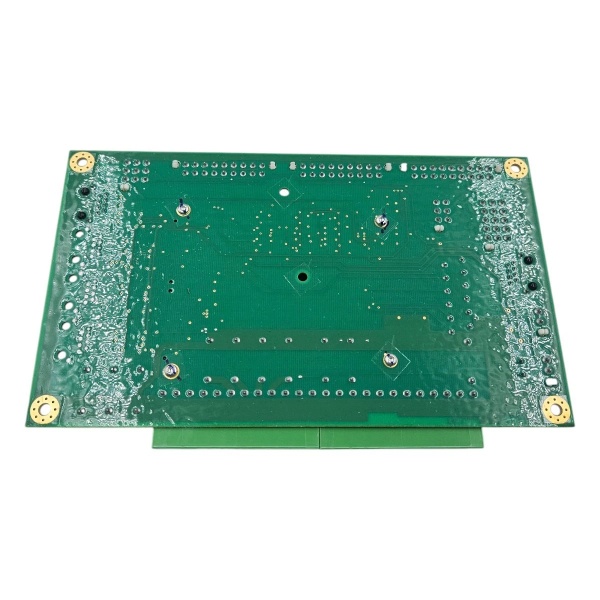
GE IS200AEPCH2CDC
Field Service Pitfalls: What Rookies Get Wrong
Swapping H1 for H2 Without Checking Firmware
A rookie pulls a failed IS200AEPCH1CDC out of the rack and jams in a shiny new IS200AEPCH2CDC. The card fits, the green LED comes on, but the turbine throws a “Processor Mismatch” alarm and refuses to go to full speed. The H2’s 1.0 GHz multi-core architecture and faster backplane handshake aren’t recognized by the older Mark VIe firmware.
- Field Rule: Always verify the controller firmware revision before upgrading hardware generations. Update the Mark VIe firmware to the latest compatible version using ToolboxST before attempting to run an H2-series processor. Never mix H1 and H2 racks without a full firmware audit.
Starving the Module of Backplane Power
You cram the H2 processor into a packed 13-slot VME rack alongside three other high-draw modules (like servo drives or high-speed counters). During a summer heatwave, the turbine inexplicably drops into “Limp Home” mode. The rookie blames the sensor. The veteran knows the H2’s 1.0 GHz processor is pulling ~12 watts, and the backplane 5V rail has browned out.
- Quick Fix: Check the 5V and 3.3V backplane current draw on the rack summary screen in ToolboxST. If you’re pushing the 80% threshold of the rack’s power supply capacity, redistribute high-draw modules to different racks or upgrade the rack’s power supply unit (PSU).
Improperly Seating the IONet Connectors
The H2 module uses high-density pin headers for IONet communication. A technician reseats the module after a cleaning but fails to push it fully home. The turbine runs fine for a week until a minor vibration event loosens the connector enough to drop the redundant link.
- Field Rule: Listen for the audible “click” when seating any AEPCH module. After installation, gently tug on the top edge of the module. If it wiggles, it’s not seated. Visually inspect the alignment of the gold-plated IONet pins before closing the rack door.
Commercial Availability & Pricing Note
Please note: The listed price is for reference only and is not binding. Final pricing and terms are subject to negotiation based on current market conditions and availability.