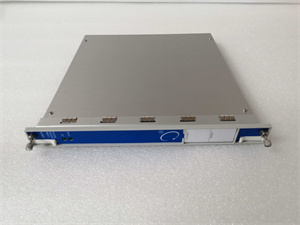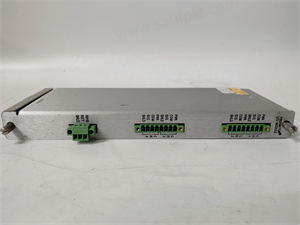
Description
Hard-Numbers: Technical Specifications
- Channel Count: 16 independent, isolated input channels .
- Signal Types: 4-20 mA (active/passive, with HART support), RTD (Pt100, Pt1000; 2, 3, or 4-wire) .
- ADC Resolution: 24-bit Sigma-Delta converter .
- Accuracy: ±0.1% of span (typical, including temperature drift) .
- Sampling Rate: ≤ 5 ms for a full 16-channel scan .
- HART Support: Native, transparent pass-through for device diagnostics and calibration .
- Electrical Isolation: >500 VAC channel-to-channel and channel-to-backplane .
- Safety Certification: IEC 61508 SIL 2 .
- Required Terminal Board: IS200TBSAH (standard) or IS200TBIAH (isolated) .
- Operating Temperature: 0°C to +60°C .
- Hot-Swap: Supported, but requires “Module Isolate” command in ToolboxST prior to removal .
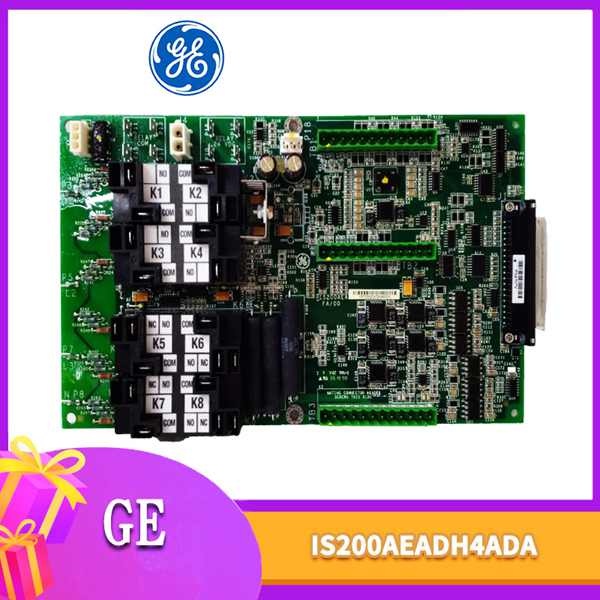
GE IS200AEADH4ADA
The Real-World Problem It Solves
You’ve got a turbine control panel stuffed with individual cards for pressure transmitters (4-20mA), RTDs, and a separate HART multiplexer. It eats up slots, increases wiring complexity, and becomes a maintenance nightmare. This single module consolidates it all—handling sixteen different signals, including smart HART data, in one slot with fortress-grade isolation.
Where you’ll typically find it:
- Gas Turbine Combustion Controls: Monitoring fuel gas pressure (4-20mA), compressor discharge temperature (RTD), and exhaust thermocouples (via separate transmitters) on a single module.
- Balance of Plant (BOP) Systems: Acquiring feedwater flow, deaerator level, and lube oil temperature signals across a distributed plant site.
- Safety Instrumented Systems (SIS): In SIL 2-rated applications where redundant, isolated measurement of critical parameters (like high-pressure alarms) is mandatory.
It replaces a rack of specialized hardware with one configurable, HART-enabled workhorse.
Hardware Architecture & Under-the-Hood Logic
This isn’t a simple multiplexer; it’s a bank of sixteen independent, isolated signal conditioners and ADCs, all managed by a dedicated communication coprocessor. Each channel is a complete measurement chain.
- Per-Channel Signal Conditioning & Isolation: Each input channel has its own front-end circuit. For 4-20mA, it routes through a precision shunt. For RTDs, it provides excitation current. Crucially, each channel is galvanically isolated from the others and the backplane (>500 VAC) to break ground loops .
- 24-bit Sigma-Delta Conversion: The conditioned analog signal is digitized by a high-resolution Sigma-Delta ADC on each channel. This architecture provides exceptional noise rejection and resolution, critical for detecting small process deviations .
- HART Signal Extraction: The module’s circuitry doesn’t filter out HART’s 1200/2200 Hz FSK digital signals. Instead, it detects them superimposed on the 4-20mA analog carrier, extracts the digital data packets, and buffers them for transmission.
- Data Packetization & Transmission: The onboard processor packages the digitized analog values and extracted HART data into IONet packets. It sends these to the Mark VIe controller over the high-speed backplane, making all data available in ToolboxST and AMS Device Manager.
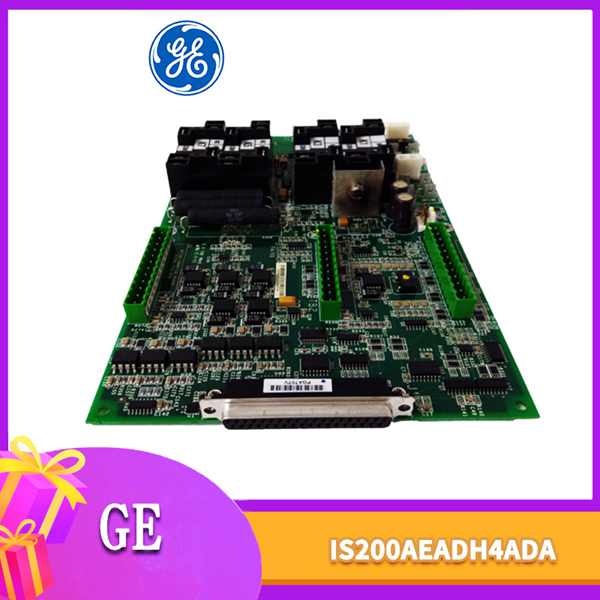
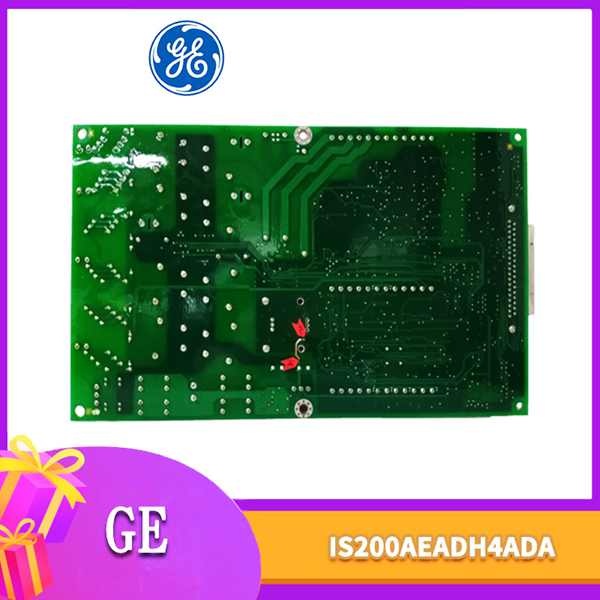
GE IS200AEADH4ADA
Field Service Pitfalls: What Rookies Get Wrong
Using the Wrong Terminal Board
A rookie grabs a standard TBAI terminal board from the shelf to install this high-performance card. The module fits, but the HART signals are attenuated or shorted, and channel isolation is compromised.
- Field Rule: Always use the specified terminal board. This module requires either the IS200TBSAH (standard) or IS200TBIAH (isolated) terminal board . Never substitute with other AEAD terminal boards.
Mismatched Wiring for RTD Types
You wire a 3-wire RTD but leave the channel configured for “2-Wire” in ToolboxST. The module can’t perform lead resistance compensation, baking the resistance of hundreds of feet of wire into the temperature reading.
- Quick Fix: Match the wiring configuration in software to the physical sensor. In ToolboxST, drill into the channel properties and set the RTD Wiring option to “2-Wire,” “3-Wire,” or “4-Wire” to match your physical termination at the terminal board.
Forgetting the “Isolate” Command Before Hot-Swap
You need to replace a faulty channel. Following standard practice, you pull the module while the turbine is running. The backplane detects a missing card, declares a system fault, and may initiate a partial trip.
- Field Rule: Before removing ANY I/O module in a running Mark VIe system, execute the “Module Isolate” command in ToolboxST. This safely quiesces the module’s I/O points and prevents a backplane fault when you pull the card.
Please note: The listed price is for reference only and is not binding. Final pricing and terms are subject to negotiation based on current market conditions and availability.