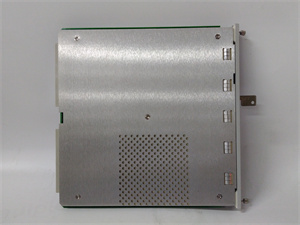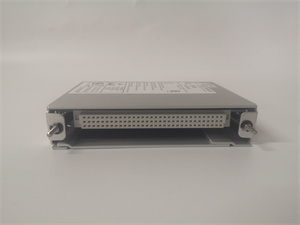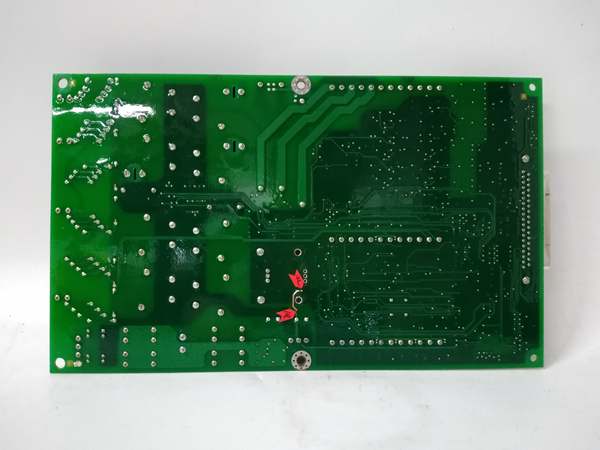
Description
Hard-Numbers: Technical Specifications
- Power Supply Input: 125 Vac/dc or 24 Vdc (depending on hardware configuration).
- Communication Ports: Multiple fiber optic ports for VSPA I/O pack connectivity.
- Network Protocol: IONet (Industrial Optical Network).
- Operating Temperature: -30°C to +65°C (-22°F to +149°F).
- Humidity: 5% to 95%, non-condensing.
- Vibration: 1.5 G peak, 5-500 Hz, per IEC 60068-2-6.
- Mounting: Standard Mark VI rack slot.
- Status Indicators: Multiple LEDs for power, faults, and communication status.
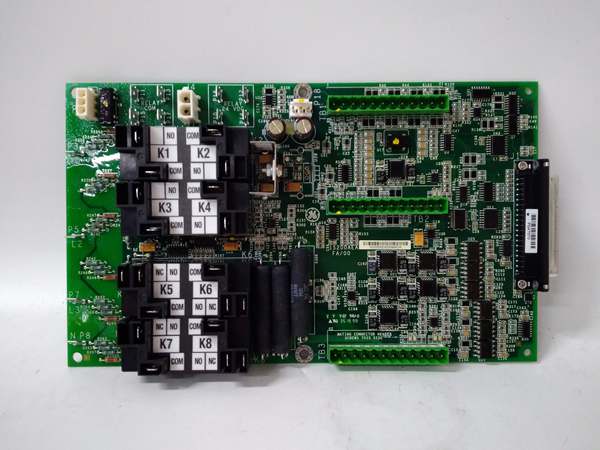
GE IS200AEAAH2B
The Real-World Problem It Solves
In compact turbine packages, you can’t cram a full-sized Mark VI rack with every conceivable I/O card. This AEAA board acts as a smart aggregator, connecting smaller, distributed VSPA packs to the main controller via high-speed fiber optics, keeping the footprint tight and the data flowing without bottlenecks.
Where you’ll typically find it:
- Aeroderivative Gas Turbine Packages: Managing the I/O for fuel valves, vibration probes, and temperature sensors in smaller, modular turbine skids.
- Compressor Stations: As the central interface for VSPA packs monitoring suction/discharge pressures and anti-surge controls.
- Combined Cycle Units: In satellite control rooms where the main Mark VI rack is centralized, and remote I/O is needed for auxiliary systems.
It prevents data bottlenecks and simplifies wiring in distributed control architectures.
Hardware Architecture & Under-the-Hood Logic
Think of this as the air traffic controller for your high-speed I/O. It doesn’t do the heavy lifting of final control elements; it just makes sure the data gets where it needs to go, fast.
- VSPA Aggregation: The AEAA board establishes and maintains high-speed fiber optic links with multiple VSPA I/O packs distributed throughout the turbine package.
- Data Consolidation: It collects digital and analog data from these remote packs and formats it into a single, high-bandwidth stream for the Mark VI controller.
- Diagnostic Management: It constantly polls the VSPA packs for their health status. If a VSPA goes offline or detects a sensor fault, the AEAA flags it immediately, often lighting up its own fault LED and sending a diagnostic message to the HMI.
- Redundancy & Failover: In some configurations, it can support redundant fiber paths, automatically switching to a backup link if the primary one is severed or contaminated.
Field Service Pitfalls: What Rookies Get Wrong
Scrubbing Fiber Ports with Rubbing Alcohol
A dirty fiber connector is the #1 cause of intermittent VSPA link failures. Rookies reach for the isopropyl alcohol, which leaves a residue that attracts dust and degrades the optical signal over time.
- Field Rule: Never use liquids. Use a dedicated fiber optic cleaning pen and a fresh, lint-free cleaning swab for both the connector and the AEAA board’s receptacle. Inspect the connector tip under a microscope if problems persist.
Assuming a Red FAULT LED Means a Dead Board
You pop the rack door, see the big red FAULT light, and immediately condemn the AEAA card. Nine times out of ten, the fault is a single VSPA pack that’s lost its mind or has a bad power supply.
- Quick Fix: Check the VSPA status LEDs at the remote I/O location first. If one is flashing a fault code, trace the fiber from that VSPA back to the AEAA. A single bad VSPA can drag the whole AEAA link down.
Forcing the Fiber Connectors
Those LC or ST connectors are delicate. Techs try to muscle them in when they don’t click, damaging the ceramic ferrule and ruining the polish.
- Field Rule: Align the connector squarely. It should slide in smoothly with a distinct “click.” If it doesn’t seat easily, inspect the ferrule end-face for chips or cracks. Don’t force it.
Ignoring the Power Supply Stability
The AEAA board is sensitive to power fluctuations. A sagging 24Vdc supply or a noisy 125Vac line can cause the board to reset, dropping all VSPA communications and triggering a turbine trip.
- Field Rule: Monitor the supply voltage at the AEAA’s power terminals with a multimeter during turbine operation. Look for dips below 21Vdc or spikes above 130Vac. Consider adding a small isolation transformer or power conditioner if the site power is notoriously dirty.
Please note: The listed price is for reference only and is not binding. Final pricing and terms are subject to negotiation based on current market conditions and availability.
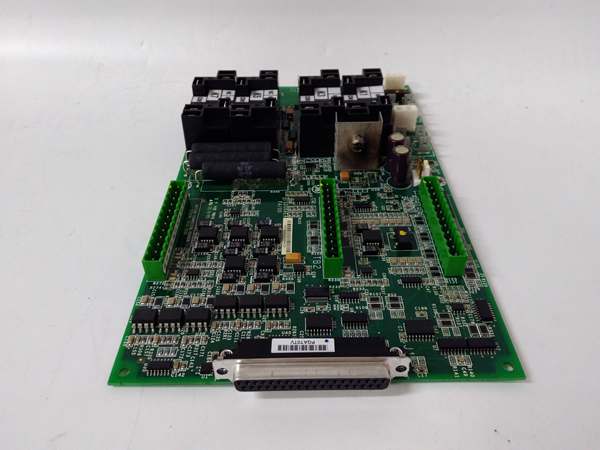
GE IS200AEAAH2B