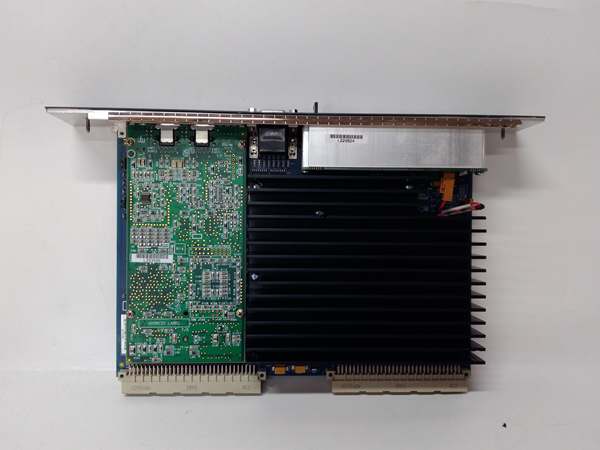
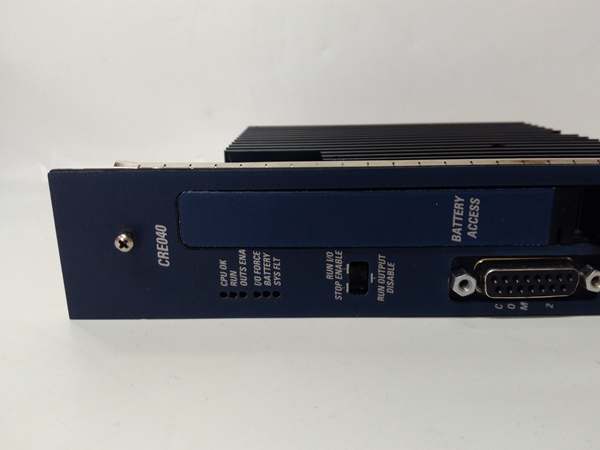
Description
Hard-Numbers: Technical Specifications
-
Processor: 1800 MHz (1.8 GHz) Intel Pentium-M microprocessor
-
User Memory: 64 MB battery-backed RAM + 64 MB non-volatile flash
-
Scan Rate: 0.024 ms per 1000 Boolean contacts/coils (deterministic)
-
Backplane: VME64 (64-bit data path, 33 MHz) for I/O and smart modules
-
Redundancy: Hot Standby (HSB) with automatic failover, requires IC698RMX016 module per CPU
-
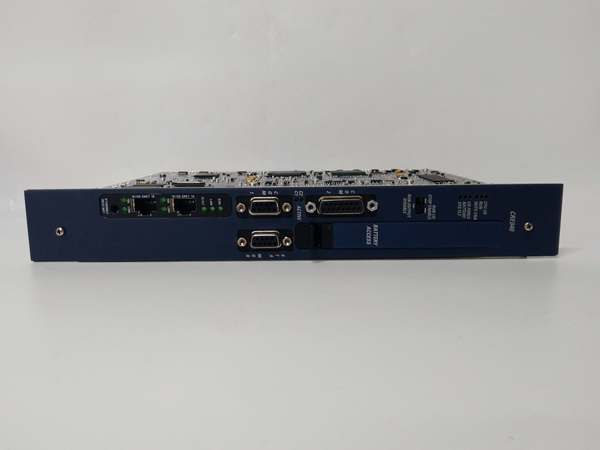
Ethernet: 2× RJ45 ports (10/100 Mbps, auto-negotiating, auto-crossover detection)
-
Serial Ports: 2× isolated (RS-232 + RS-485) for Modbus RTU, SNP, Serial I/O
-
Station Manager: 1× RS-232 port for diagnostics and firmware updates
-
Max I/O: 32 Kbits discrete, configurable %W registers up to 4 MB
-
Power Draw: +5 VDC at 6.8 Amps nominal (+12V/-12V at 0.003A each)
-
Operating Temp: 0°C to 60°C (requires fan kit for cooling)
-
Programming: Ladder Logic, Structured Text, Function Block, SFC via Proficy Machine Edition
-
Web Server: Up to 16 simultaneous web/FTP connections for remote monitoring

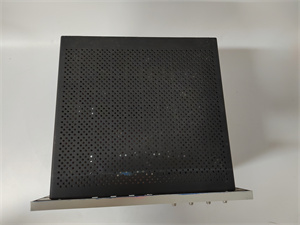
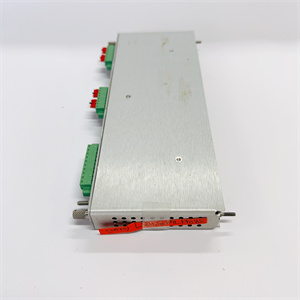
GE IC698CRE040
The Real-World Problem It Solves
You know the scenario: a turbine trip or reactor shutdown because a single CPU faulted out, taking your entire control system offline. The IC698CRE040 eliminates this vulnerability with true hot-standby redundancy—two CPUs running in lockstep, synchronized via dedicated fiber-optic links through RMX modules. When the primary fails, the standby assumes control before the I/O modules even detect a disruption.
Where you’ll typically find it:
-
Combined-cycle power plant turbine control and boiler feed pump systems where 100ms downtime equals $50K in lost generation
-
Offshore platform ESD (Emergency Shutdown) and process safety systems requiring SIL-rated availability
-
Refinery catalytic reformer units where unplanned shutdowns trigger multi-day restart procedures
Bottom line: It keeps your most critical control loops alive during CPU hardware failures, power supply faults, or planned maintenance without process interruption or manual intervention.
Hardware Architecture & Under-the-Hood Logic
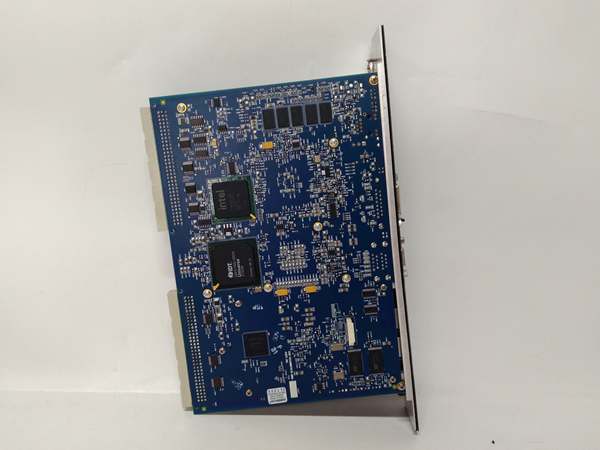
The IC698CRE040 mounts in Slot 1 of a standard VME rack (IC698CHS117 or similar). It’s not just a processor—it’s a deterministic controller with a full Pentium-M core running GE’s PACSystems firmware. The module communicates with Series 90-70 I/O and third-party VME modules via the 64-bit backplane. For redundancy, each CPU pairs with an IC698RMX016 module that handles memory synchronization through high-speed fiber-optic links.
Signal flow and processing logic:
-
Dual Execution: Both primary and standby CPUs execute identical logic scans simultaneously, with the primary controlling I/O and the standby tracking in shadow mode
-
Data Synchronization: The IC698RMX016 modules transfer memory states, register values, and I/O data between CPUs via dedicated fiber links every scan cycle
-
Health Monitoring: Each CPU monitors the other’s heartbeat via the redundancy link; loss of sync or hardware fault triggers automatic failover
-
Bumpless Transfer: On failover, the standby CPU assumes I/O control with complete knowledge of loop states, setpoints, and alarm conditions—no initialization required
-
I/O Arbitration: The VME backplane allows either CPU to take control of I/O modules seamlessly; output modules hold last state during transition (<100ms)
GE IC698CRE040
Field Service Pitfalls: What Rookies Get Wrong
Forgetting the RMX Module You install two IC698CRE040s in the rack and wonder why redundancy won’t establish. The CRE040 has no built-in sync port—it requires the IC698RMX016 Redundant Memory Xchange module in an adjacent slot to handle the fiber-optic data link between CPUs.
Field Rule: Every redundant CPU pair needs TWO RMX modules (one per CPU) connected by fiber cable. Check the RMX LEDs—”LINK” solid green means sync is active. No RMX, no redundancy, no exceptions.
Mixing CPE and CRE Versions The IC698CPE040 (non-redundant) and IC698CRE040 (redundant) look identical and share firmware. Rookies try to configure a CPE as a backup to a CRE, or mix CRE020 (700 MHz) with CRE040 (1.8 GHz) in the same pair. The redundancy link either won’t establish or will fault intermittently.
Quick Fix: Verify the part number etched on the PCB edge—”CRE” not “CPE”—and confirm both CPUs show identical processor speeds (1.8 GHz) and firmware revisions in the programming software. Mismatched memory sizes or scan rates cause sync faults under load.
Hot-Swapping Without Sync Verification Pulling the primary CPU for replacement before confirming the standby has achieved “RUN” status drops the entire control strategy. The RX7i requires explicit synchronization before manual switchover.
Field Rule: Never remove the active CPU until the standby shows solid “RUN” LED (not “STBY” flashing) and the RMX “SYNC” LED is solid. Use the programming software to force a switchover test first—if it doesn’t transfer cleanly in 50ms, check the fiber connections and RMX module seating before touching hardware.