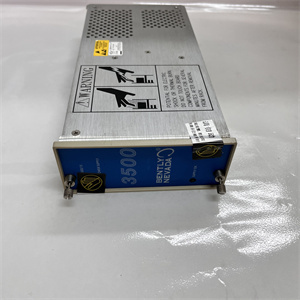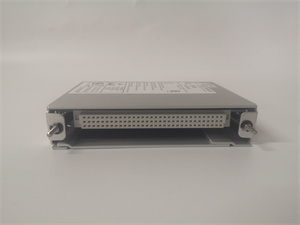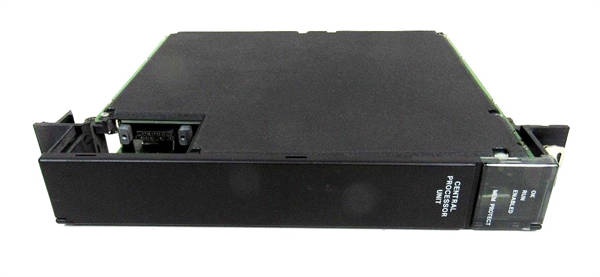
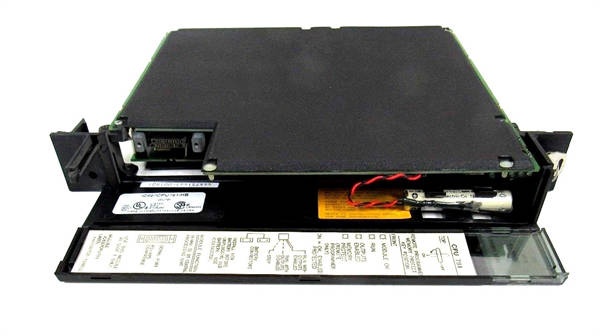
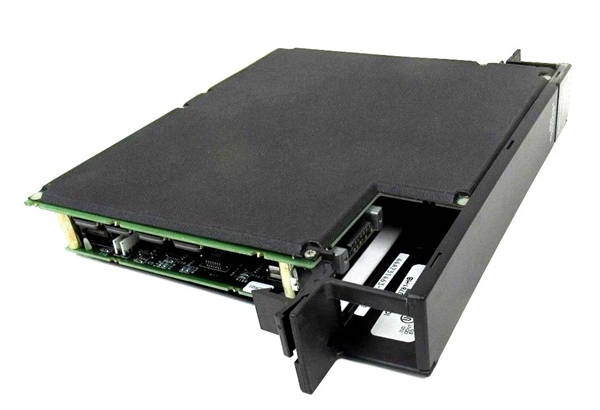
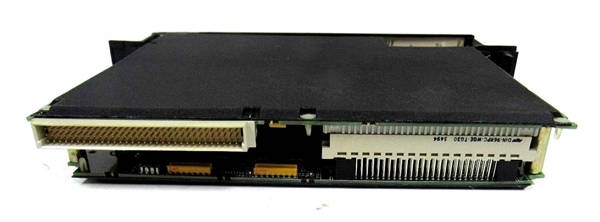
Description
Hard-Numbers: Technical Specifications
- Processor Type: Intel 80486DX2 @ 66MHz (or equivalent GE embedded processor)
- User Memory: 512 KB battery-backed RAM
- Flash Memory: 256 KB (firmware storage)
- Scan Time: 0.4 ms per 1K logic (typical)
- Communications: Built-in Ethernet (10BaseT), RS-485 port, RS-232 serial port
- Ethernet Port: 10 Mbps RJ45, auto-negotiation
- Serial Port 1: RS-232, configurable for SNP/SNPX serial protocol
- Serial Port 2: RS-485, configurable for Genius I/O communications
- Programming Software: Proficy Machine Edition Logic Developer (LM90 or newer)
- Switchover Time: <50 ms (automatic, seamless transfer)
- Isolation Rating: 500V RMS between CPU and backplane
- Operating Temperature: 0°C to 60°C (32°F to 140°F)
- Storage Temperature: -40°C to 85°C (-40°F to 185°F)
- Power Draw: 2.5A @ 5VDC from backplane
- Backplane Current: 5V: 2.5A max
- LED Indicators: RUN, OK, FAULT, HS (Hot Standby status), SYNC (synchronization active)
- Battery Backup: 3.6V lithium (CR2032) for RAM retention
- Module Slot: Series 90-70 CPU slot (slot 1 or slot 2 in redundant rack)

GE IC697CPU781
The Real-World Problem It Solves
In critical infrastructure, downtime is measured in millions per hour. The IC697CPU781 provides automatic redundancy—if one CPU fails, the backup takes over without operator intervention. Your plant keeps running while you swap out the failed unit.
Where you’ll typically find it:
- Power plant boiler control systems where a controller failure could trigger turbine trips
- Municipal water treatment SCADA systems controlling chlorine dosing and filtration
- Offshore platform emergency shutdown systems where availability is non-negotiable
Bottom line: It buys you peace of mind with sub-50ms failover that keeps the process alive.
Hardware Architecture & Under-the-Hood Logic
The IC697CPU781 operates in a paired configuration with an identical backup CPU in a separate rack. Both CPUs execute identical logic programs in lockstep synchronization over a high-speed fiber or copper link (HSYNC cable). The primary CPU controls the I/O backplane and field devices. The backup CPU runs in hot standby mode, continuously monitoring the primary’s health through heartbeat signals. If the primary fails (hardware fault, watchdog timeout, or manual switchover), the backup assumes control of the I/O backplane within 50ms. The module uses a watchdog timer that resets the CPU if logic execution stalls beyond a configurable threshold. All program variables, I/O states, and status are continuously synchronized between the two processors.
Internal signal flow:
- Both CPUs power up and initialize firmware from flash memory
- Primary and backup exchange handshake via HSYNC link (fiber or copper)
- Primary CPU assumes active role; backup enters hot standby monitoring mode
- Primary reads input modules via backplane, executes logic program
- Primary writes outputs to I/O modules, maintains I/O table in RAM
- Backup receives mirrored I/O states and logic execution status from primary
- Heartbeat signals exchanged every 10-20ms; watchdog monitors both CPUs
- Backup CPU runs shadow logic but does not drive I/O outputs
- On primary fault (loss of heartbeat, watchdog timeout, or manual trigger), backup switches to active mode
- Backup takes control of backplane I/O within 50ms; primary enters fault state
- Operators replace failed primary, re-sync, and system returns to redundancy

GE IC697CPU781
Field Service Pitfalls: What Rookies Get Wrong
Failing to synchronize firmware versions causes switchover failuresI’ve seen technicians replace a failed CPU with a spare unit running different firmware. The hot standby pair rejects synchronization, and switchover fails when needed. You end up with two CPUs that can’t talk to each other.
- Field Rule: Both CPUs must run identical firmware versions. Check the CPU firmware revision in Machine Edition before installation. If mismatched, flash both units to the same version before enabling hot standby. Document firmware versions in your maintenance log.
Ignoring memory battery backup causes program lossThe IC697CPU781 relies on a 3.6V lithium battery to retain RAM memory when power is removed. I’ve seen entire plants lose their logic programs because technicians ignored low battery warnings for months.
- Field Rule: Replace the backup battery every 2-3 years regardless of health. Monitor the battery voltage in PLC diagnostics. If voltage drops below 2.8V, replace immediately—memory loss is imminent. Always pull backup memory to PCM or flash before servicing power systems.
Incorrect HSYNC cabling breaks synchronizationThe hot standby link (HSYNC) is the lifeline between CPUs. I’ve seen technicians use cheap copper patch cables instead of the recommended fiber optic link, or they route HSYNC cables through high-noise trays near VFD power lines.
- Field Rule: Use fiber optic HSYNC cables for any rack separation over 10 meters. For copper, use shielded twisted pair and keep runs under 10 meters. Route HSYNC cables away from power cables and motor leads. Verify link integrity with the CPU’s HSYNC LED—solid green means synchronized, flashing means trouble.
Forgetting to configure the switchover modeNew technicians often install hot standby CPUs but leave them in single-CPU mode. The backup CPU sits idle, and if the primary fails, your plant goes down anyway.
- Field Rule: Configure hot standby mode in Machine Edition hardware configuration. Enable “CPU Redundancy” and assign primary/backup roles to each CPU. Test switchover during commissioning by pulling power from the primary CPU—watch the backup take control. Document switchover time in your acceptance test.
Neglecting watchdog timer settings causes false tripsThe watchdog timer monitors CPU execution and triggers fault if logic stalls. I’ve seen technicians set the watchdog too tight, causing unnecessary trips during long scan times from complex logic.
- Field Rule: Set watchdog timeout to 3-4x your worst-case scan time. Monitor scan time in Machine Edition during commissioning. If scan time increases over time (new logic added, heavier I/O loads), adjust watchdog accordingly. A properly tuned watchdog should never trip on legitimate execution—only on genuine faults.
Improper grounding kills the synchronization linkThe hot standby link is sensitive to ground differentials between racks. I’ve seen synchronization fail because racks were grounded at different points in the plant, creating ground loops and noise on the link.
- Field Rule: Bond both redundant racks to the same single-point ground reference. Use the same grounding electrode for both racks. Measure ground potential difference between racks—should be less than 1VAC. If your racks are in different buildings, use fiber HSYNC cables to eliminate ground loops entirely.
Commercial Availability & Pricing Note
Please note: The listed price is for reference only and is not binding. Final pricing and terms are subject to negotiation based on current market conditions and availability.