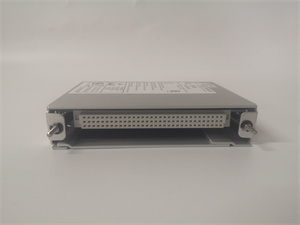
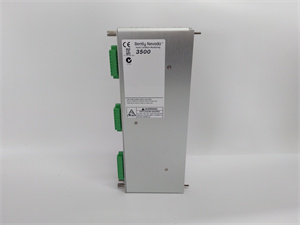
Description
Hard-Numbers: Technical Specifications
- Output Channels: 8 non-isolated, single-ended
- Output Ranges: 0 to +10 V, -10 to +10 V, 0-20 mA, 4-20 mA
- Resolution: 14.9 bits (voltage), 15.6-15.9 bits (current)
- Update Rate: 8 ms (without HART), 16 ms (with HART communication active)
- HART Protocol: HART 5.0 compliant
- Internal HART Modems: 2 (shared across 8 channels; max 2 concurrent HART sessions)
- Output Load (Current Mode): 850 Ω maximum
- Output Load (Voltage Mode): 5 mA maximum, 2 KΩ minimum resistance
- Settling Time (Voltage): 2 ms to ±0.1% of final value
- Settling Time (Current): 23 ms (no HART), 70 ms (with HART)
- Accuracy: ±0.25% of full scale at 25°C (typical); ±0.6% over operating temperature range
- Power Consumption: 375 mA @ +3.3 VDC (backplane), 315 mA @ +24 VDC (external supply)
- External Supply Range: 19.2-30 VDC
- Isolation: Non-isolated (channels share common ground)
- Hot-Swap Support: Yes
- Operating Temperature: 0°C to +60°C (32°F to 140°F)
- Dimensions: 34 x 145 x 140 mm
The Real-World Problem It Solves
When you’re driving smart valve positioners or HART-enabled transmitters, you need more than just a 4-20mA output. You need to poll device diagnostics, read valve signatures, and configure parameters without sending a technician to the field. This module does both: it drives the analog output signal and talks HART over the same wires. Two internal modems handle the digital traffic while the analog output holds steady.
Where you’ll typically find it:
- Refinery and chemical plant control loops with HART valve positioners requiring remote diagnostics
- Water treatment facilities monitoring smart flow meters and controlling dosing pumps
- Power plant feedwater and steam control systems where valve health data feeds predictive maintenance programs
Bottom line: One module, eight channels, analog output plus HART digital communication. No separate HART multiplexer or handheld communicator needed at the rack.
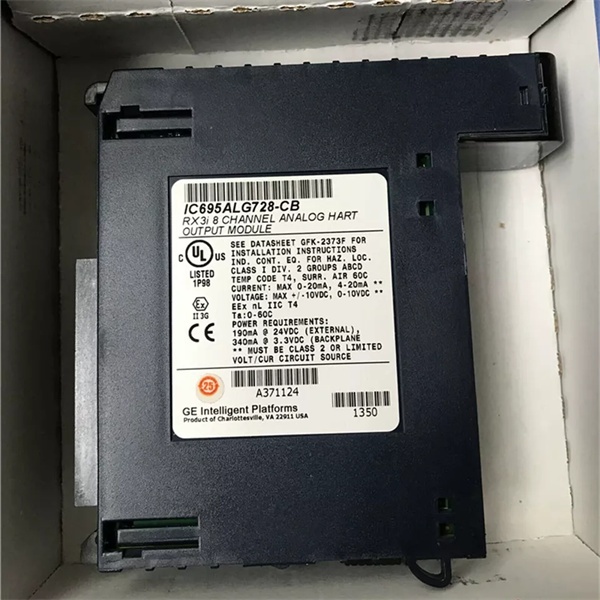
GE IC695ALG728
Hardware Architecture & Under-the-Hood Logic
The IC695ALG728 combines an 8-channel D/A converter with two internal HART frequency-shift keying (FSK) modems. The analog output path and HART communication path share the same pair of wires—they’re superimposed. The module uses the Bell 202 modem standard (1200 baud FSK) to communicate with HART devices on the loop.
Signal flow, step-by-step:
- CPU Write: The PLC logic writes a 16-bit or 32-bit count value to each channel’s %AQ reference address. The data format can be 16-bit integer, 32-bit integer, or IEEE 32-bit floating point.
- D/A Conversion: The module’s DAC converts the count to the configured analog output (e.g., 4-20 mA, 0-10 V).
- HART Superposition: If HART communication is enabled, the module’s internal modem imposes a digital FSK signal on top of the 4-20 mA current loop. This signal rides on the same wires as the analog output.
- Modem Sharing: The module has two HART modems. All 8 channels share these modems. At any given time, only two channels can conduct HART communication concurrently. The module arbitrates modem access based on configured poll rates and priority.
- HART Polling: The CPU can issue HART commands (read primary variable, read device diagnostics, write configuration) via special function blocks in the PLC program. The module handles the modem handshake and retries internally.
- Fault Handling: If the external +24 VDC supply fails, the outputs can be configured to Hold Last State or go to Downscale (0 mA / 0 V). Alarm limits and clamping are configurable per channel.
Field Service Pitfalls: What Rookies Get Wrong
HART Modem Bottleneck
The module has only two HART modems for eight channels. If you configure all eight channels to poll HART devices at a high rate, the modems become a bottleneck. You’ll see slow response times and HART communication timeouts on channels waiting for modem access.
- Field Rule: Design your HART polling strategy around the two-modem limit. Poll critical channels (safety valves, flow controls) more frequently and non-critical channels (level indicators, backup sensors) less frequently. A 2-second scan for all eight channels is realistic if you’re reading only primary variables. Diagnostic reads take longer.
Non-Isolated Channels Share Ground
This is a non-isolated module. All eight channels share a common ground return. If you’re driving valves in different ground domains (e.g., multiple field junction boxes with independent earth references), ground loops can corrupt the analog signal and interfere with HART communication.
- Quick Fix: Verify that all field devices connected to this module share a clean, single-point ground. If you have devices in different ground domains, use an isolated output module (like IC695ALG808) or install external signal isolators.
HART Communication Slows Current Settling
When HART communication is active on a channel, the FSK signal adds AC ripple to the current loop. Most devices filter this out, but some sensitive valve positioners interpret the ripple as noise and hunt. More importantly, the settling time increases from 23 ms to 70 ms when HART is active. If your control loop expects sub-30 ms response, you’ll miss your targets.
- Field Rule: For fast loops (flow, pressure) that need tight timing, either disable HART communication on those channels or account for the 70 ms settling time in your PID tuning. Use HART-enabled channels for slower loops (level, temperature) where 70 ms is negligible.
Commercial Availability & Pricing Note
Please note: The listed price is for reference only and is not binding. Final pricing and terms are subject to negotiation based on current market conditions and availability.