Description
Hard-Numbers: Technical Specifications
- Input Voltage: 24 VDC (charged from the RX3i backplane rail) .
- Output: Supplies backup power to the connected CPU.
- Operating Temperature: 0°C to +60°C (32°F to 140°F) .
- Life Expectancy: Over 10 years at 0-50°C; approximately 4.5 years at 60°C .
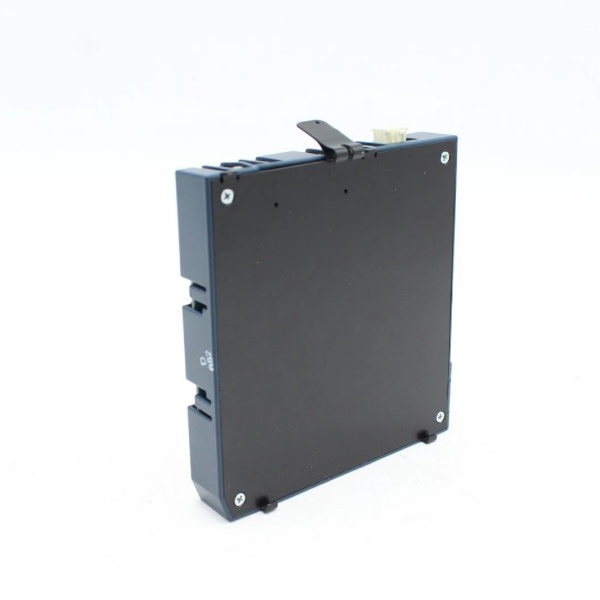
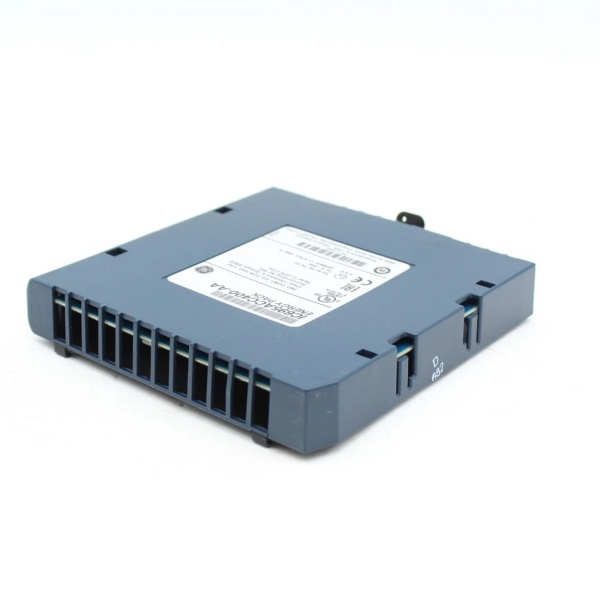
- Dimensions: 140 mm H x 124 mm D x 25.4 mm W (5.5″ x 4.87″ x 1″) including brackets and latch .
- Weight: 408 grams .
- Connection Cable: IC695CBL001 (3 ft / 0.91 m PVC cable) .
- Connector Type: Samtec IPD1-04-D-K (4-pin) .
- Compatible CPUs: CPE302, CPE305, CPE310 only. Not compatible with other RX3i CPUs .
- Mounting: Side-mounted on the left side of an RX3i module (typically the power supply in slot 0) .
- Certifications: Compliant with EU RoHS Directive .
GE IC695ACC400
The Real-World Problem It Solves
A sudden plant power drop wipes the CPU’s working memory—recipe parameters, machine states, production counters—forcing a full program reload and hours of re-initialization. This capacitor pack bridges that gap, providing just enough juice for an orderly shutdown and memory save.
Where you’ll typically find it:
- Batch Process Lines: In pharmaceutical or food & beverage plants where losing the active batch data means scrapping the entire run.
- Critical Infrastructure: On water treatment or compressor control systems where a memory loss could cause an unsafe restart condition.
- High-Cycle Machinery: On stamping presses or packaging lines where production counters and shift data are critical for OEE tracking.
It trades the periodic replacement of a lithium battery for a maintenance-free capacitor with a predictable, temperature-dependent lifespan.
Hardware Architecture & Under-the-Hood Logic
This is an active holdup circuit, not passive storage. It integrates charging, monitoring, and switching logic to manage the energy transfer between the system rail and the CPU’s memory bank.
- Charging Circuit: While system power is present, the module charges its internal capacitor bank from the 24VDC backplane rail via the dedicated cable .
- Status Monitoring: An onboard circuit monitors charge state and health, reporting status (Charging, Ready, Fault) back to the CPU for LED indication and diagnostic messaging .
- Power Failure Detection: The circuit continuously monitors the input 24VDC. Upon detecting a drop below threshold, it instantly switches to discharge mode.
- Controlled Discharge: It provides regulated power to the CPU for a finite period—just long enough for the processor to complete writing the contents of its volatile RAM to internal flash memory .
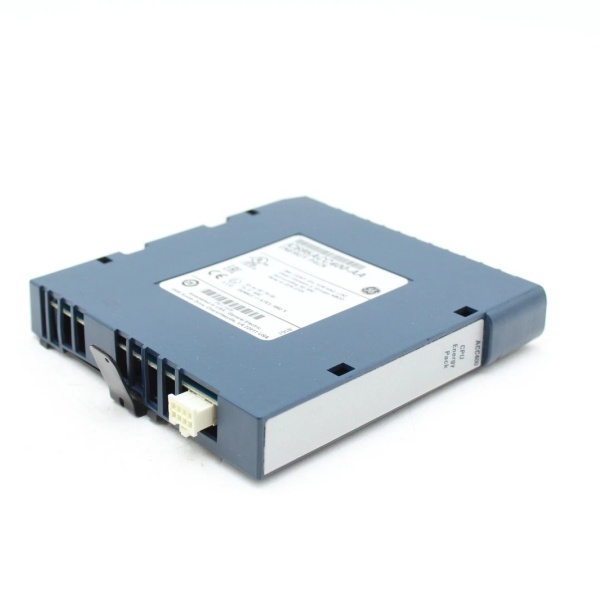
GE IC695ACC400
Field Service Pitfalls: What Rookies Get Wrong
Assuming Universal CPU Compatibility
Techs assume any RX3i CPU can use it. It only works with CPE302, CPE305, and CPE310 controllers. Plugging it into an incompatible CPU (like a CPE330) does nothing and wastes a slot .
- Field Rule: Check the CPU model stamped on the front label. If it’s not a 302, 305, or 310, this energy pack is the wrong part.
Misdiagnosing the “Charging” LED
After a prolonged outage that fully discharges the pack, the “Charging” state can last several minutes on first power-up. Rookies see this and immediately declare a faulty unit .
- Quick Fix: After installing a new unit or following a long-term power down, apply system power and wait. A solid “Charging” LED for up to 30-60 seconds is normal. Only fault it if the LED remains solid after 5 minutes or flashes an error code.
Ignoring the Thermal Lifespan Derating
The published 10+ year life is at 50°C ambient. In a hot cabinet running at 60°C, the lifespan cuts to roughly 4.5 years. Not planning replacements accordingly leads to unexpected failures .
- Field Rule: Log the installation date and monitor the cabinet’s internal temperature. For panels consistently above 50°C, schedule a proactive replacement at the 4-year mark, not the 10-year mark.
Please note: The listed price is for reference only and is not binding. Final pricing and terms are subject to negotiation based on current market conditions and availability.