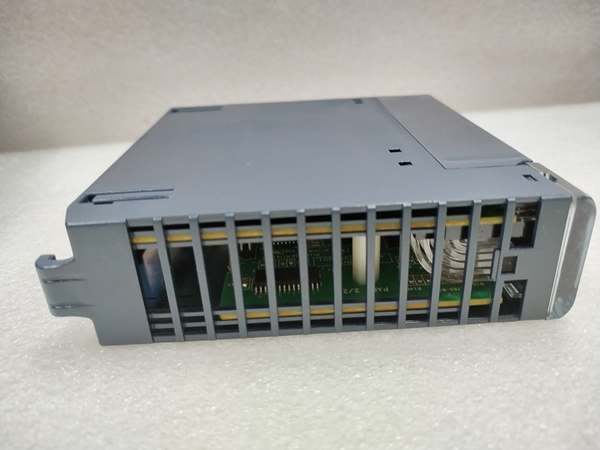
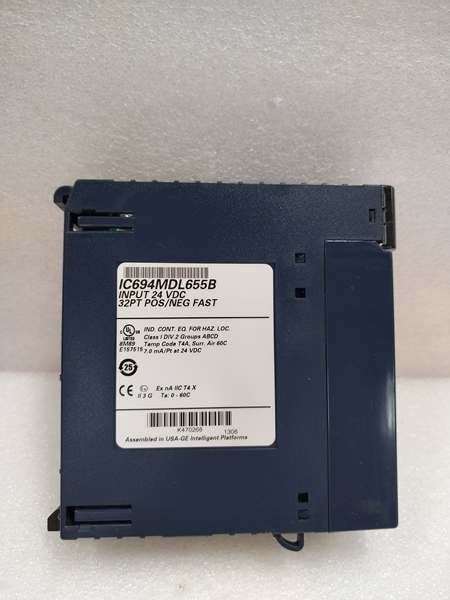
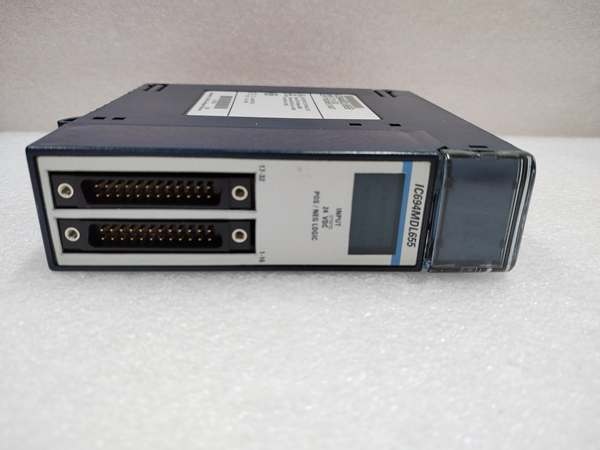
Description
Hard-Numbers: Technical Specifications
- Rated Voltage: 12/24 VDC
- Output Voltage Range: 12 to 24 VDC (+20%, -15%)
- Output Current: 0.5A maximum per point; 2A maximum per common terminal
- On Response Time: 2ms maximum
- Off Response Time: 2ms maximum
- Off-State Leakage: 1mA maximum
- Output Voltage Drop: 0.5V maximum
- Isolation (Field to Backplane): 250VAC continuous; 1500VAC for 1 minute (optical)
- Isolation (Group to Group): 250VAC continuous; 1500VAC for 1 minute
- Backplane Power Draw: 110mA @ 5VDC (all outputs energized)
- Operating Temperature: 0°C to +60°C (+32°F to +140°F)
- Weight: 0.31 lbs (0.14 kg)
- Hot-Swap Support: Yes (RX3i Universal Backplane)
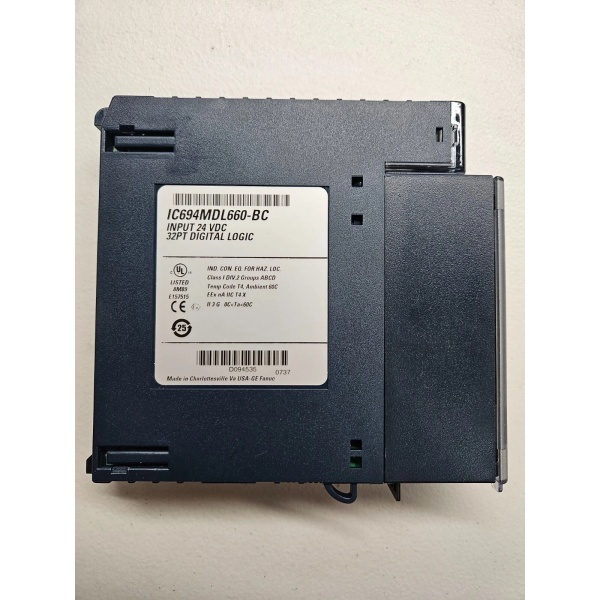
GE IC694MDL660
The Real-World Problem It Solves
You’re dealing with field devices that expect sinking outputs—PLCs that switch the load’s return path to DC common rather than sourcing current from the positive rail. This is the NPN-style wiring convention common in European equipment and Japanese machinery imports. If you try to drive a sinking-input device with a sourcing (positive logic) output module, you’ll get nothing. The IC694MDL741 gives you 16 sinking outputs in a single slot, with the same group isolation and current ratings as the MDL740.
Where you’ll typically find it:
- Control panels interfacing with European-standard sinking-input relay modules
- Legacy Japanese equipment with NPN-style I/O requirements
- Mixed-vendor systems where the output logic must match existing field device conventions
Bottom line: Same hardware specs as IC694MDL740—different wiring logic. Match the module to the field device requirements, not the other way around.
Hardware Architecture & Under-the-Hood Logic
This module has no onboard microprocessor—it’s a MOSFET switch array controlled directly by the CPU through the backplane. The critical difference from IC694MDL740 is the MOSFET placement: the switches sit on the low side of the output terminals, connecting the load to the negative power bus when energized. Optical isolators separate the field wiring from the 5V backplane logic.
Signal flow from command to load:
- CPU writes output state to %Q memory address mapped to this module’s slot position.
- Backplane bus transmits the 16-bit output word to the module’s input latches.
- Optical isolators receive the logic signals and convert them to isolated gate drive signals for the MOSFETs.
- MOSFET drivers switch the output terminals to DC common—each MOSFET acts as a low-side switch connecting the output terminal to the negative bus.
- Current flows from DC+ terminal, through the load, into the output terminal, and returns via the MOSFET to the negative power bus.
The two groups share no electrical connection—you can power Group 1 and Group 2 from completely separate 24V supplies without creating a ground loop.
Terminal Block Requirement: IC694TBB032 (box-style screw) or IC694TBS032 (spring clamp)—ordered separately.
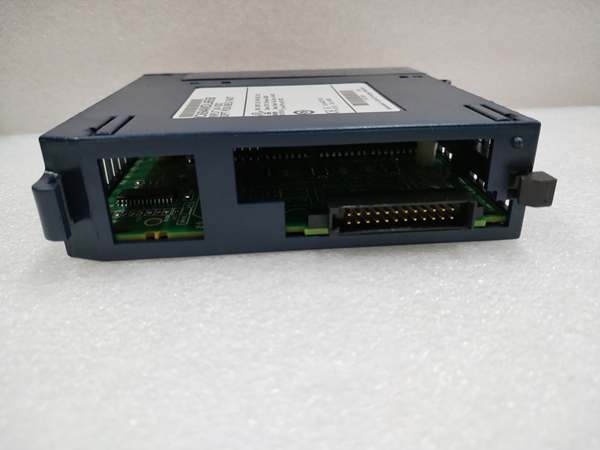
GE IC694MDL655
Field Service Pitfalls: What Rookies Get Wrong
Wiring the Load on the Wrong Side of the Output Terminal
Negative logic means this module sinks current—it pulls current from the load into the negative bus. Rookies wire one side of the load to DC common and the other to the output terminal, then can’t figure out why nothing switches. The MOSFET is on the low side, not the high side. Current has to flow INTO the output terminal, through the MOSFET, to the negative bus.
Field Rule: Load connects between DC+ (positive bus) and the output terminal. Current flows INTO the output terminal when energized. This is the opposite of IC694MDL740.
Confusing Negative Logic with Negative Voltage
The term “negative logic” trips people up. It doesn’t mean the module outputs -24V. It means the switching action happens on the negative side of the load. The output voltage is still positive 12-24VDC. The logic terminology refers to current flow direction, not polarity.
Quick Fix: Think of it as NPN vs PNP transistor logic. Negative logic = NPN-style sinking. Positive logic = PNP-style sourcing.
Mixing MDL740 and MDL741 in the Same System Without Documentation
Both modules look identical, have the same blue label bands, and mount in any RX3i slot. The only visual difference is the model number printed on the label. If you swap a MDL740 for a MDL741 (or vice versa) without updating the wiring, your outputs will either never switch or will stay stuck on—depending on the load configuration.
Field Rule: Before pulling a module, photograph the label. Check the model number. MDL740 sources current; MDL741 sinks current. They are NOT interchangeable without rewiring.
Ignoring the Per-Common Current Limit
Same trap as MDL740. Eight outputs at 0.5A each equals 4A total—double the 2A per-common rating. The module won’t fail immediately, but long-term thermal stress degrades the MOSFETs. This spec doesn’t change between positive and negative logic versions.
Quick Fix: Calculate worst-case simultaneous load per group. Split loads across groups or use interposing relays if you need all 16 outputs at full current.
Commercial Availability & Pricing Note
Please note: The listed price is for reference only and is not binding. Final pricing and terms are subject to negotiation based on current market conditions and availability.