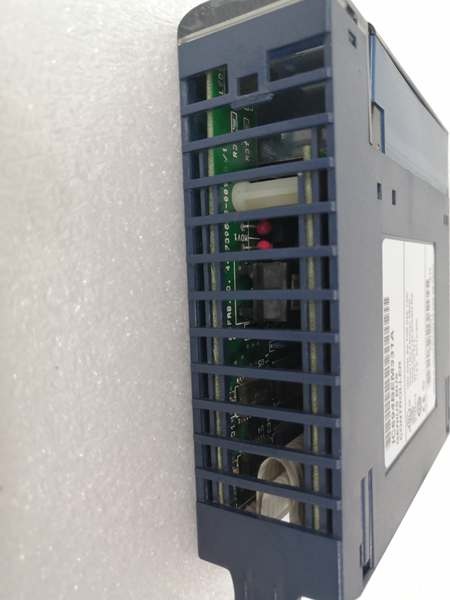
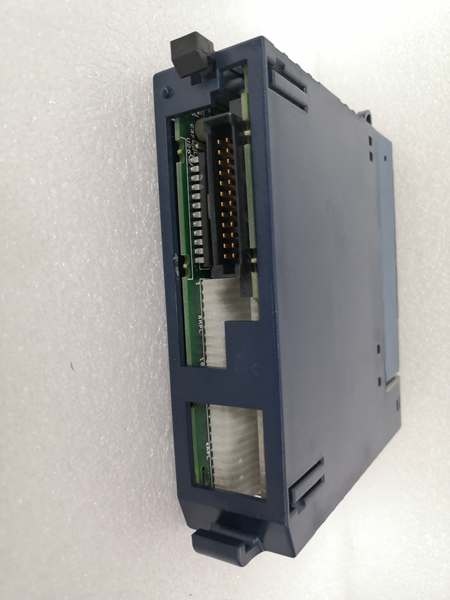
Description
Hard-Numbers: Technical Specifications
- Protocol Support: GE Genius I/O serial bus (proprietary token-passing)
- Baud Rates: 38.4 Kbaud, 76.8 Kbaud, 153.6 Kbaud (standard and extended)—software configurable
- Data Exchange: 128 bytes per device per bus scan
- Global Data: 128 bytes sent / 128 bytes received per bus scan
- Maximum Devices: 32 devices (all baud rates except 38.4K); 16 devices at 38.4 Kbaud
- Maximum Bus Length: 7,800 ft @ 38.4Kbaud / 4,500 ft @ 76.8Kbaud / 3,500 ft @ 153.6K extended / 2,000 ft @ 153.6K standard
- Bus Termination: 75, 100, 120, or 150Ω resistor at both ends (cable-dependent)
- Cable Types: Shielded twisted-pair, Twinax, or fiber optic with modems
- Isolation Rating: 2000V Hi-Pot / 1500V transient common-mode rejection
- Backplane Power: 300 mA @ 5 VDC (1.5W)
- Operating Temperature: 0°C to 60°C (32°F to 140°F)
- LED Indicators: OK (module status), COM (bus communication status)
- Max Modules per RX3i System: 8
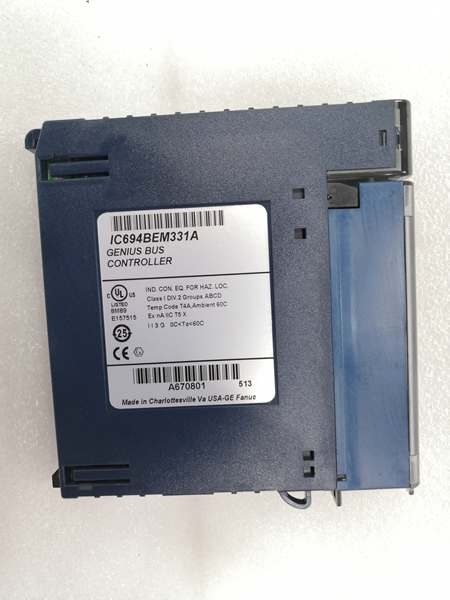
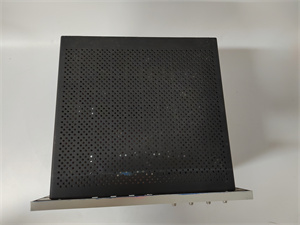
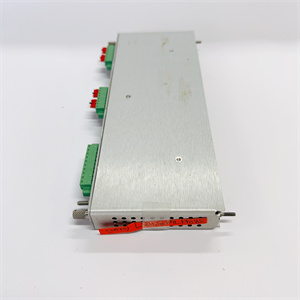
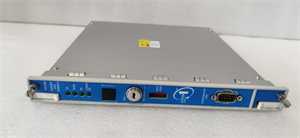
GE IC694BEM331
The Real-World Problem It Solves
Legacy plants are full of Genius I/O blocks installed in the 1990s—still working, still reliable, but trapped on an old controller platform. Rip-and-replace means weeks of downtime and six-figure re-wiring costs. The IC694BEM331 lets you drop a modern RX3i CPU into the rack and keep every Genius block, remote drop, and VersaMax station talking over the same serial bus.
Where you’ll typically find it:
- Upgraded control systems where RX3i replaces Series 90-30 or Series Six, but Genius I/O infrastructure stays in place
- Distributed I/O architectures spanning multiple buildings or process units (up to 7,800 ft of cable)
- Peer-to-peer data sharing between multiple PLCs using Global Data broadcast
Bottom line: It’s the migration path that lets you modernize the brain without rewiring the nervous system.
Hardware Architecture & Under-the-Hood Logic
The IC694BEM331 is a single-slot module that acts as a bridge between the RX3i backplane and the external Genius serial bus. It contains its own communication processor that manages token-passing arbitration, data exchange scheduling, and diagnostic reporting—entirely independent of the CPU scan.
- Configuration Download – On power-up, the CPU sends bus configuration to the GBC: baud rate, device serial numbers, Global Data mappings, and reference addresses (%I, %Q, %AI, %AQ).
- Token-Passing Arbitration – The GBC participates in token rotation around the bus. When it holds the token, it polls each device, exchanges data, and collects diagnostic messages.
- Data Exchange Execution – For each configured device, up to 128 bytes of input data are read into the CPU’s reference memory, and up to 128 bytes of output data are written to the device—all within a deterministic bus scan time (typically 2–5 ms at 38.4Kbaud with 32 devices).
- Global Data Broadcast – The GBC automatically transmits 128 bytes of Global Data every token rotation. Other GBCs on the same bus receive and store this data in their configured reference addresses—no ladder logic required.
- Fault Collection & Reporting – Genius blocks and devices autonomously report faults, alarms, and diagnostic conditions to the GBC. The GBC stores these messages, and the CPU reads them into the fault table for display in Proficy.
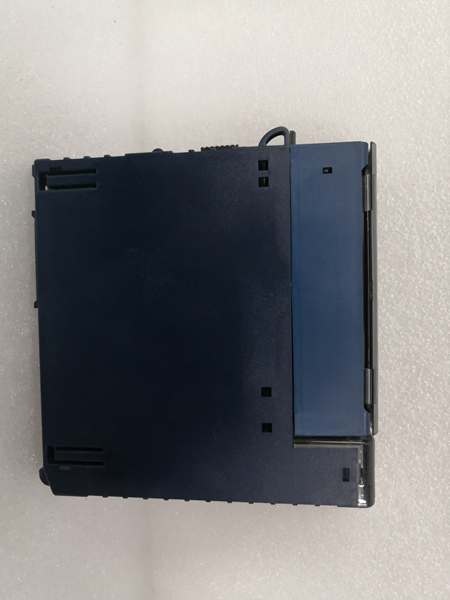
GE IC694BEM331
Field Service Pitfalls: What Rookies Get Wrong
Missing or Incorrect Bus Termination
The Genius bus requires termination resistors at both physical ends of the cable. Miss one end, use the wrong value, or forget to move the resistor when extending the bus, and you’ll get intermittent COM LED blinks, random device dropouts, and phantom faults that come and go with temperature and cable length.
Field Rule: Before powering up, walk the bus with a multimeter. Verify the correct resistor value (75–150Ω per cable spec) is installed across Serial 1 and Serial 2 terminals at the first and last devices—and only at those devices.
Shield Continuity Breaks
The Genius bus uses a shielded twisted-pair. The shield must be continuous through every device on the bus. A single break—often at a junction box or when someone swaps a terminal block—turns the shield into an antenna and invites noise-induced communication failures.
Quick Fix: Use the Shield IN / Shield OUT terminals on each device. Connect Shield OUT from one device to Shield IN on the next. At the last device, leave Shield OUT unconnected but verify shield continuity from end to end with a continuity tester.
Baud Rate Mismatch Between Devices
All devices on a Genius bus must operate at the same baud rate. The GBC’s baud rate is software-configured in Proficy, but Genius blocks have DIP switches or hardware jumpers. If the GBC is set to 153.6K and a block is jumpered for 38.4K, the block won’t communicate—and the COM LED will blink or stay off.
Field Rule: Document the baud rate for every device before swapping a GBC. After installation, verify every device appears in the Proficy hardware configuration scan before walking away.
Commercial Availability & Pricing Note
The IC694BEM331 remains a commonly stocked item due to the large installed base of Genius I/O networks. New, reconditioned, and exchange units are available through GE/Emerson authorized distributors and third-party industrial automation suppliers.
Typical Price Range (Reference Only):
- New unit: 800 – 1,200 USD
- Reconditioned/exchange: 400 – 700 USD
- Repair service: 200 – 400 USD
Please note: The listed price is for reference only and is not binding. Final pricing and terms are subject to negotiation based on current market conditions and availability.