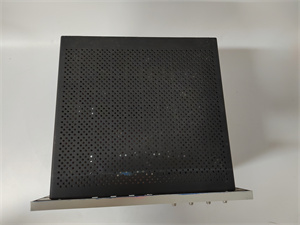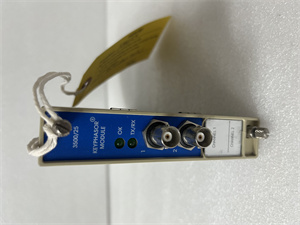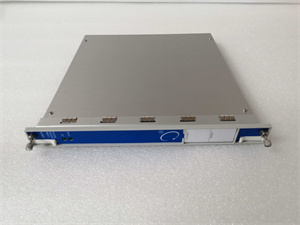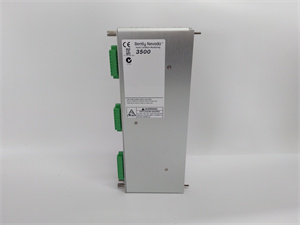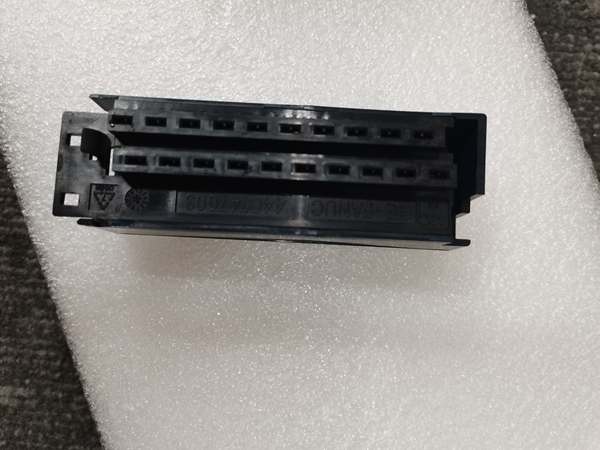
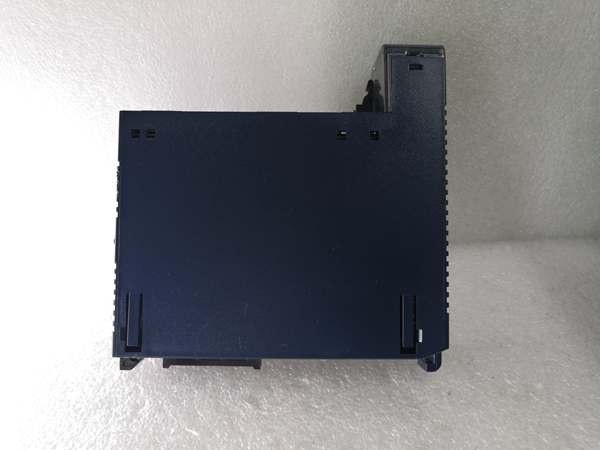
Description
Hard-Numbers: Technical Specifications
- Output Channels: 8 single-ended (1-8 selectable via software configuration)
- Current Range: 0-20 mA or 4-20 mA (per-channel configurable)
- Voltage Range: 0 to +10V (unipolar) or -10V to +10V (bipolar)
- Resolution: 15-bit (unipolar modes); 16-bit (bipolar voltage mode)
- Update Rate: 8 milliseconds (all eight channels)
- Accuracy (Current Mode): ±0.1% of full scale at 25°C (typical); ±0.25% maximum
- Accuracy (Voltage Mode): ±0.25% of full scale at 25°C (typical); ±0.5% maximum
- Maximum Load (Current Mode): 0-850Ω at 20V supply; up to 1350Ω at 30V supply
- Maximum Load (Voltage Mode): 5 mA (minimum 2 kΩ resistance)
- Compliance Voltage: VUSER – 3V minimum to VUSER maximum
- Isolation Rating: 250VAC continuous; 1500VAC for 1 minute (field-to-backplane, optical)
- Internal Power Draw: 110 mA from +5VDC backplane; 315 mA from external +24VDC
- External Power Required: 20-30 VDC isolated (mandatory), 10% max ripple
- Operating Temperature: 0°C to +60°C (+32°F to +140°F)
- Weight: 0.69 lbs (0.31 kg)
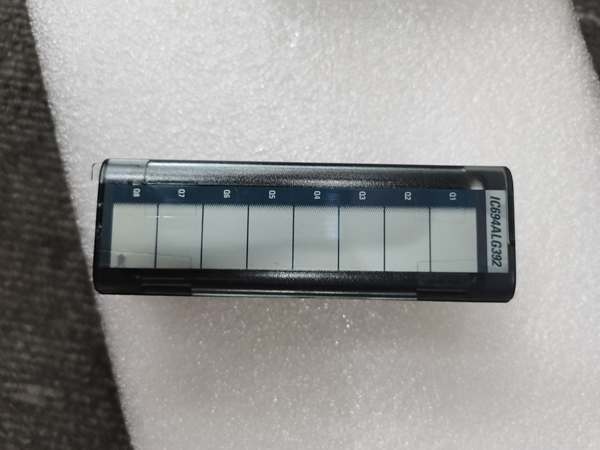
GE IC694ALG392
The Real-World Problem It Solves
Turbine control systems—gas turbines, steam turbines, combined cycle plants—run 24/7/365 for years. When an analog output module fails in a Mark I or Mark II Speedtronic system, you can’t just swap in any RX3i analog module. The -CD variant is qualified specifically for these legacy turbine control applications. Same hardware as the base IC694ALG392, but with the documentation, traceability, and vendor validation that turbine OEMs and plant owners demand for critical control loops.
Where you’ll typically find it:
- GE Mark I/Mark II Speedtronic turbine control retrofits and upgrades
- Gas turbine fuel valve and IGV (inlet guide vane) positioning
- Steam turbine governor and bypass valve control
- Combined cycle plant auxiliaries—feedwater pumps, condensate pumps, cooling water
Bottom line: Functionally identical to IC694ALG392, but with application-specific qualification for turbine control environments where documentation and traceability matter.
Hardware Architecture & Under-the-Hood Logic
Hardware is identical to the standard IC694ALG392. No different DACs, no different isolation barriers, no different firmware. The -CD suffix indicates application qualification, not hardware revision. This module has been tested and validated for turbine control operating conditions—vibration, temperature cycling, EMI from high-power generators—and documented accordingly for OEM and utility procurement requirements.
Signal processing flow (same as base module):
- CPU writes commanded values to %AQ reference addresses (one word per channel).
- Module receives digital values via backplane bus every I/O scan.
- Configuration data (range selection per channel) is read from CPU memory.
- Individual DACs convert digital values to analog voltage references.
- Output driver stages produce current or voltage based on per-channel configuration.
- External +24VDC powers the output drivers through an isolated supply domain.
- In current mode, open-wire detection monitors loop continuity and reports faults.
No channel-to-channel isolation. All eight outputs share a common isolated power domain.
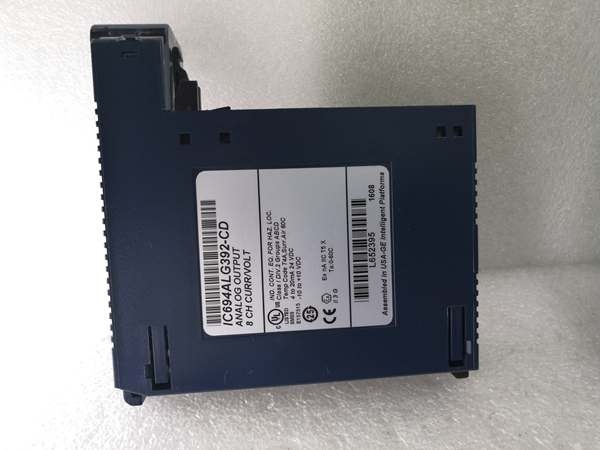
GE IC694ALG392
Field Service Pitfalls: What Rookies Get Wrong
Don’t Substitute Non-CD Modules Without Engineering Approval
The -CD module costs more than the standard IC694ALG392. Rookie mistake: ordering the cheaper base module to save money. Some plants will reject the substitution during audit. Turbine control procurement specifications often require documented traceability and qualification testing. The -CD variant comes with paperwork that satisfies OEMs and utilities.
Field Rule: Before substituting a base IC694ALG392 for a -CD variant, check the plant’s procurement specification. If the spec calls for “turbine control qualified” or “Mark I/II compatible,” the -CD suffix is required.
The Hardware Is Interchangeable—The Paperwork Is Not
Electrically and functionally, IC694ALG392 and -CD are identical. If you have a -CD module fail at 3 AM and only have a base module in stock, the base module will work. But expect questions during your next audit or insurance inspection.
Quick Fix: Keep the failed -CD module’s label. Document the substitution in your maintenance log with date, time, reason, and approval signature. Swap back to a -CD module during the next planned outage.
External 24VDC Is Still Mandatory
Same as the base module—the -CD variant requires external isolated +24VDC. No power from the backplane for the output drivers. If someone tells you “the turbine control version has different power requirements,” they’re wrong.
Field Rule: Verify +24VDC at the USER SUPPLY terminals before commissioning. No voltage, no output—turbine control or otherwise.
What Makes This a “CD” Variant?
The -CD suffix indicates application-specific qualification, not hardware differences:
| Aspect | (Base) | -CD (Turbine) |
|---|---|---|
| Hardware | Identical | Identical |
| Specifications | Identical | Identical |
| Firmware | Identical | Identical |
| Documentation | Standard | Turbine control qualified |
| Traceability | Standard | Enhanced (lot tracking, test records) |
| Application | General purpose | Mark I/Mark II Speedtronic systems |
| Cost | Lower | Higher (qualification premium) |
The premium you pay for -CD covers:
- Application-specific testing (vibration, thermal cycling, EMI)
- Documentation package for OEM/utility procurement
- Lot traceability for critical applications
- Vendor validation for turbine control environments
If you’re maintaining a Mark I or Mark II turbine control system, order the -CD variant to satisfy procurement specs. If you’re retrofitting a generic process control system, the base saves money with no performance penalty.
Commercial Availability & Pricing Note
Please note: The listed price is for reference only and is not binding. Final pricing and terms are subject to negotiation based on current market conditions and availability.