Description
Hard-Numbers: Technical Specifications
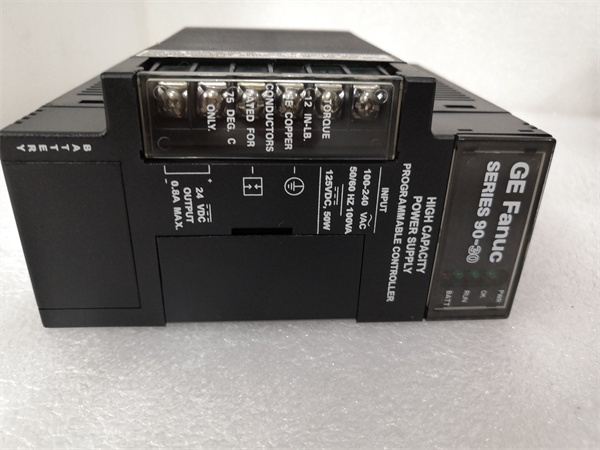
- Input Voltage: 120/240 VAC or 125 VDC nominal
- AC Input Range: 85-264 VAC (50/60Hz)
- DC Input Range: 100-300 VDC
- Total Output Capacity: 30W maximum
- +5VDC Output: 5.0-5.2VDC (5.1VDC nominal), 15W max
- +24VDC Relay Output: 24-28VDC, 15W max
- +24VDC Isolated Output: 21.5-28VDC, 20W max
- +5VDC Backplane Current: Approximately 3A maximum
- Input Power: 90VA (AC) / 50W (DC) at full load
- Inrush Current: 4A peak, 250ms maximum
- Holdup Time: 20ms minimum
- Overvoltage Protection: 6.4-7VDC on +5V rail
- Overcurrent Protection: 4A maximum on +5V rail
- Communication: RS-485 serial port (9-pin sub-D connector)
- Operating Temperature: 0-60°C
- Mounting Location: Leftmost slot of baseplate only
- Internal Fuse: GE catalog 44A724627-109 (field-replaceable)
- Certifications: CE compliant, cULus listed, Class I Division 2 rated
- Physical Size: Reduced height/depth vs standard PWR321 (compact form factor)
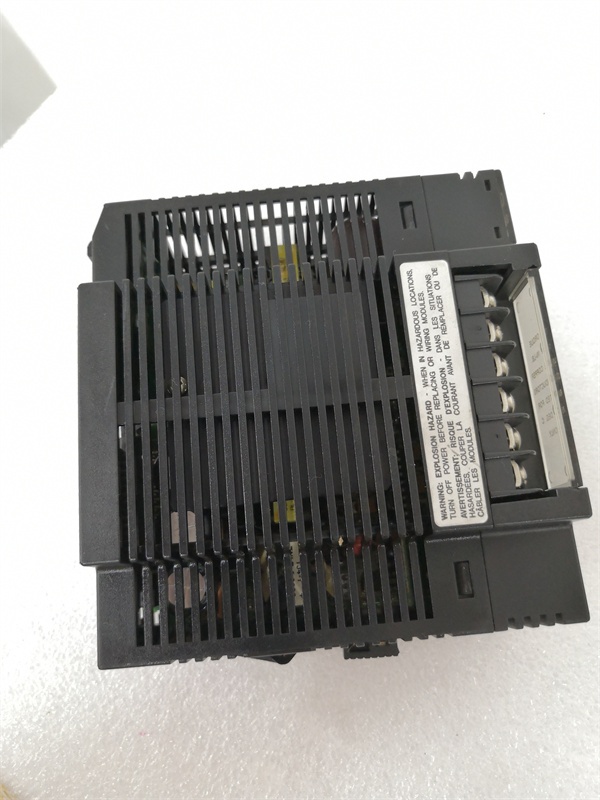
GE IC693PWR330
The Real-World Problem It Solves
The PWR330E solves the same cabinet space crunch as earlier PWR330 revisions—delivering full 30W PWR321 functionality in physically smaller package. Revision E includes component-level refinements that further improve reliability in the compact form factor: extended-lifespan electrolytic capacitors (2000+ hours at 105°C), enhanced EMI filtering for VFD-heavy installations, and optimized thermal interface materials between power semiconductors and heatsink. These upgrades translate to longer MTBF in tight, hot machine consoles where earlier revisions might fail prematurely.
Where you’ll typically find it:
- Machine tool OEM control panels requiring reduced-depth supplies for mechanical clearance
- Food processing equipment retrofits fitting into NEMA-rated washdown enclosures with limited internal space
- Mobile equipment PLC systems (AGVs, autonomous harvesters) where vibration and heat combine to stress power supplies
Bottom line: PWR330E delivers same 30W punch as PWR321 but fits where standard supplies don’t, with Revision E’s component upgrades making it more resilient in harsh, confined environments.
Hardware Architecture & Under-the-Hood Logic
The PWR330E shares identical electrical architecture to PWR321 and earlier PWR330 revisions—AC/DC input, EMI filtering, bridge rectification, high-frequency switching, three isolated output rails. The Revision E updates focus on component quality and thermal management in the compact form factor: higher-grade electrolytic capacitors with extended lifespan ratings (2000-3000 hours at 105°C vs 1000-2000 hours in earlier revisions), improved ferrite cores on the EMI filter for better high-frequency noise suppression, and upgraded thermal interface material (thermal pads or epoxy) between switching transistors and heatsink for better heat transfer in tight spaces.
Internal signal flow and protection logic:
- Input stage: AC/DC enters through EMI filter and bridge rectifier, feeding bulk capacitor for 20ms holdup time. Revision E uses higher-lifespan capacitors and improved ferrite material for better EMI suppression in noisy environments.
- Primary switching: High-frequency DC-DC converter generates intermediate bus voltage. Revision E likely includes updated switching transistors with lower thermal resistance and improved thermal coupling to heatsink—critical for 30W thermal load in reduced volume.
- Output isolation: Three separate secondary windings create isolated rails with same current capability as PWR321. Revision E uses upgraded rectifier diodes with better thermal characteristics, reducing voltage sag under heavy transient loads.
- Protection circuitry: Current limiters on each rail sense output current—when you hit 110% of rated load, PWM throttles back. If short circuit occurs, protection crowbar fires, shutting down that rail instantly while leaving other rails alive.
- Diagnostic monitoring: Voltage dividers feed into supervisory circuit that drives front-panel LEDs and RS-485 status registers. Revision E threshold tuning matches PWR321 behavior—no electrical differences in diagnostic response compared to earlier PWR330 revisions.
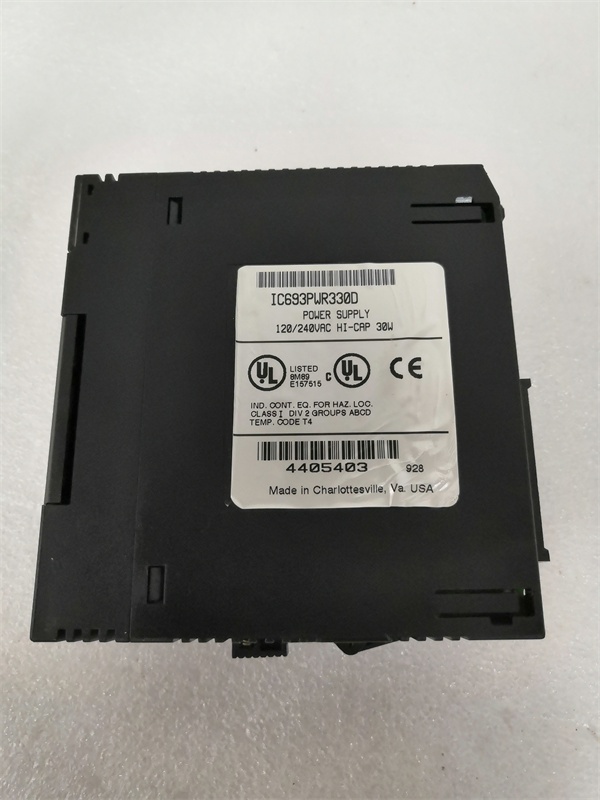
GE IC693PWR330
Field Service Pitfalls: What Rookies Get Wrong
Terminal Block Count and LayoutPWR330E uses 5-terminal blocks vs 6-terminal blocks on later revisions. Techs swap a PWR321W/U/Y for PWR330E without realizing the terminal arrangement differs both in screw count and potentially in terminal assignment. Fewer connection points means your existing wiring might need consolidation.
Field Rule: Compare terminal block screw count and layout before removing the old module. PWR330E will have 5 screws—verify your existing wiring diagram maps to the reduced block layout. The terminal block is removable—swap it if you’re retrofitting and want to preserve wire connections, but prepare for possible wire consolidation if you’re coming from a 6-terminal .
Thermal Expectations in Confined SpacesRevision E includes improved thermal management, but that doesn’t eliminate thermal stress in sealed or poorly ventilated compartments. Techs jam into tight machine consoles with zero forced airflow and expect the “upgraded thermal design” to handle 30W continuously without problems. Compact form factor reduces convection paths—thermal management is more critical, not less.
Quick Fix: Calculate clearance around before installation. You need at least 25mm (1 inch) of clearance above and below for convection cooling. If you’re installing in a tight machine console, add forced ventilation or derate your load. Don’t assume Revision E’s thermal improvements make it immune to confined-space overheating.
Fuse Rating Verification uses the same internal fuse catalog number as (GE 44A724627-109), but techs get confused by the compact layout and struggle to locate the fuse holder. The fuse is there, but access might be tighter due to reduced component spacing in Revision E design.
Field Rule: Remove the module from the baseplate for fuse replacement—don’t try to access the fuse in situ if clearance is tight. The compact design means less working room around the fuse holder. Work on a bench where you can see clearly, and verify the fuse catalog number printed on the fuse end cap matches GE 44A724627-109.
Capacitor Aging and Holdup TimeRevision E uses extended-lifespan capacitors (2000-3000 hours at 105°C), but techs assume this means “never replace” and ignore scheduled maintenance in high-ambient applications. Extended lifespan buys time, but doesn’t eliminate aging—especially in 55-60°C cabinet temperatures where actual operating conditions exceed rated temperatures.
Field Rule: Implement scheduled replacement based on actual operating conditions, not just published specs. If your cabinet runs at 55°C ambient, Revision E capacitors still degrade faster than spec sheet suggests. Track installation dates and plan preventive replacement before failure—don’t wait for the red FAULT light.
Voltage Drop on +5VDC RailRevision E’s reinforced PCB traces and upgraded components reduce but don’t eliminate voltage drop under full 3A load. Techs swap standard for expecting to fix chronic voltage sag complaints in densely packed racks. The +5VDC still drops 0.2-0.3V under full load—that’s normal, not a supply defect.
Quick Fix: Measure voltage at the supply terminals first. If you see 5.1VDC at the supply but 4.7VDC at the far end of the backplane, your problem is wiring or terminal resistance, not the supply. Revision E helps, but it can’t fix undersized backplane wiring or corroded terminals. Check your backplane wiring gauge and terminal condition before blaming the module.
Connector Clearance in Tight Installations‘s compact design positions the RS-485 serial connector closer to adjacent modules or cabinet edges. Techs install and realize they can’t plug in programming cables without removing neighboring modules or disassembling cabinet components. The connector exists, but physical access is tighter due to reduced form factor.
Field Rule: Check connector clearance before final installation. Verify you can plug in your RS-485 cables without hitting adjacent modules or cabinet structures. If access is tight, leave one empty slot next to or reroute your cables. Don’t discover access problems after the cabinet is buttoned up and the machine is assembled.
EMI Filtering ExpectationsRevision E includes enhanced EMI filtering, but techs expect it to solve noise issues caused by poor grounding practices or unshielded cabling. The upgraded ferrite cores help, but they can’t fix fundamental installation mistakes like running sensor cables alongside VFD power conductors or daisy-chaining grounds.
Field Rule: Use Revision E’s improved filtering as insurance, not a cure-all. Implement proper grounding practice—single-point ground reference, shielded cables, separation of power and signal conductors. If you still have noise problems after installing Revision E, check your installation basics before blaming the module.
Commercial Availability & Pricing Note
Please note: The listed price is for reference only and is not binding. Final pricing and terms are subject to negotiation based on current market conditions and availability.